





 Portuguese
  English
  Spanish
  4 min of reading
  0 comments


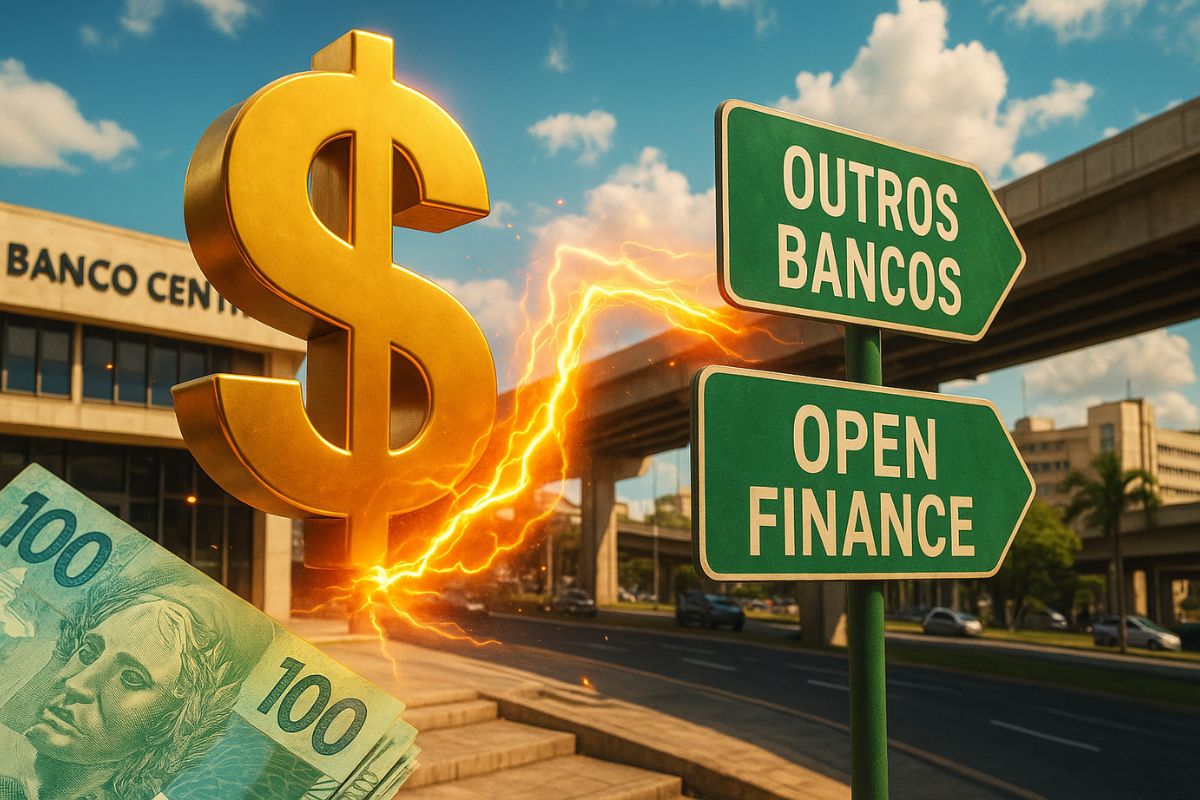
Implemented by the Central Bank, the Open Finance system transfers to the customer control over their financial data, stimulates competition among banks, and promises a new era of fairer and more personalized credit in Brazil.
The Open Finance system, created by the Central Bank, is changing the way Brazilians deal with money and banks. For the first time, the customer has the power to decide who can access their financial data, allowing different institutions to compete to offer better rates, limits, and credit conditions.
This opening of the financial system represents a unprecedented advance in transparency and banking competition. With more information available about consumer history, banks can assess risks more accurately, which tends to reduce interest rates and expand access to credit especially for those previously seen as “high-risk profiles.”
How the Open Finance System Works
Before the implementation of Open Finance, each bank kept its customers’ data in closed systems. Now, you choose with whom you want to share your information in a secure, free, and controlled manner.
-
The largest food company on the planet, JBS, has just opened a 4,000 square meter laboratory in Florianópolis to develop customized proteins that modulate muscle mass gain, immune response, and metabolic performance.

-
After nearly 30 bids and competition among industry giants, a Spanish company purchases one of the largest airports in Brazil for almost R$ 3 billion and takes over the management of Galeão in a concession that will last until 2039.

-
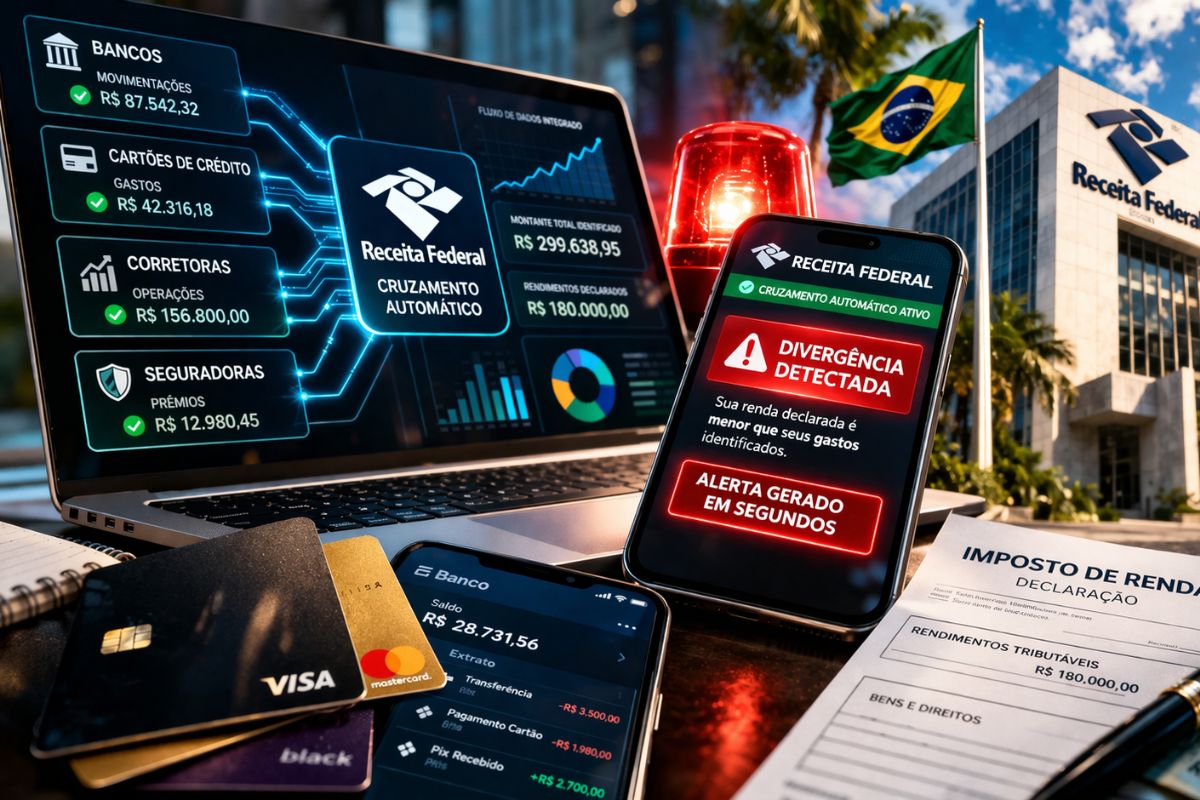
The Federal Revenue Service now automatically cross-references everything you declare with data from banks, credit cards, brokerage firms, and insurance companies, and any discrepancy between your income and your expenses triggers an alert in seconds.
-
Amid global tensions, Brazil blocks the United States’ proposal at the WTO and paves the way for a trade crisis and possible retaliations.
By authorizing access, other banks and fintechs can know your transaction, payment, and investment history.
With this, institutions can offer personalized proposals, such as loans with lower interest rates, higher limits, and services tailored to your financial profile.
The process is 100% digital and supervised by the Central Bank, which ensures the use of encryption and two-factor authentication.
Additionally, you can revoke consent at any time, keeping full control over what is shared and for how long.
Direct Benefits for the Consumer
The system brings practical and immediate advantages for those who adhere to the new way of relating to banks.
The data sharing allows negotiating better conditions and centralizing financial information in one place.
Among the main benefits are:
- Lower Interest Rates: with the complete history, banks better assess the risk and can offer lower rates.
- More Credit and Higher Limits: the more transparent your profile is, the higher the chances of obtaining credit.
- Personalized Services: financial products shaped according to your behavior and needs.
- Less Bureaucracy: credit analysis and portability between institutions are done in just a few clicks.
- Unified Financial Management: it is possible to view all accounts and investments in a single application.
Open Finance in Numbers
The Open Finance is already the largest system of its kind in the world, according to data from the Brazilian Federation of Banks (Febraban).
In August 2025, the model was already connecting 65 million accounts, moving about R$ 1.2 billion per month in payments.
Currently, more than 700 financial institutions participate in the ecosystem, including banks, cooperatives, and fintechs.
In the first four years, 62 million data sharing consents were granted, demonstrating the growing adherence of users.
Financial institutions, in turn, invested around R$ 2 billion in the development and expansion of the system.
Security, Risks, and Challenges
The main doubt of those who have not yet joined the system is about data security.
The Central Bank guarantees that Open Finance uses international standards of digital protection, with advanced encryption and multiple layers of authentication.
Nevertheless, experts warn that the risk of fraud exists, especially if the user clicks on fake links or uses non-regulated applications.
About 30% of the recorded complaints involve companies outside the official system, which reinforces the importance of sharing information only through verified channels.
Another challenge is the inefficiency in using the data. According to Febraban, many institutions still cannot translate the information received into concrete benefits for the customer.
Additionally, there are reports of technical problems and outdated data, indicating that the system is still undergoing adjustments.
What’s Next for Open Finance
Brazil is now a global reference in Open Finance. The system continues to expand, with new integrations planned for the coming years, including insurance, pensions, and foreign exchange.
The third phase, implemented in 2022, introduced payment initiation, allowing transfers and Pix to be made directly through apps of other institutions.
The fourth phase, known as Open Investment, expanded the scope to investments and foreign exchange products, paving the way for a more integrated and competitive financial ecosystem.
The Central Bank is also studying expanding the model to other sectors, such as health, enabling clinics and hospitals to access medical records safely and standardized—a movement that could give rise to the so-called Open Health.
The Open Finance system is transforming the relationship between consumers and banks in Brazil, offering more power, transparency, and competitiveness.
However, the success of the model depends on financial education, trust, and responsible use of information.
And you, do you think Open Finance is really the future of the Brazilian banking system? Have you authorized sharing your data? Let us know in the comments how you see this change—we want to know if you trust or still distrust this new phase of the financial market.









Seja o primeiro a reagir!