





 Portuguese
  English
  Spanish
  5 min of reading
  0 comments


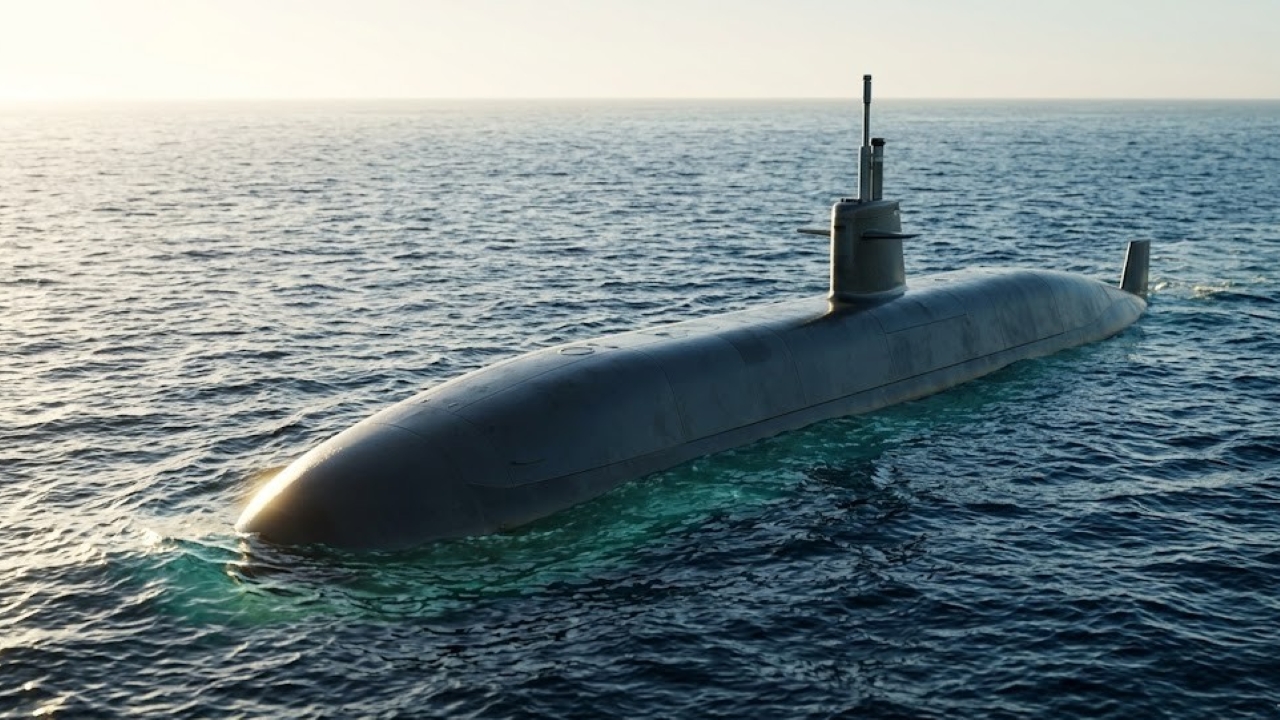
U.S. Military Project Bets on Submarine Autonomy, Long Range, and Uncrewed Operations in Extended Missions Amid Testing Delays and Growing Interest in Naval Systems Capable of Operating Discreetly in the Maritime Environment.
The unmanned underwater vehicle developed by Boeing for the U.S. Navy integrates the American strategy to expand the use of autonomous systems in naval operations.
Designed to navigate uncrewed for long periods, the equipment combines great autonomy, modular cargo compartment, and the ability to perform missions such as surveillance, data collection, and, according to public documents from the U.S. government, launching underwater mines.
The platform is officially presented as a multi-mission system.
-
A forgotten cord on the floor of a basement in Vienna leads a plumber to a box containing 30 kilograms of gold with Mozart’s face, hidden before World War II. The treasure, worth 2.3 million euros, was just centimeters away from a worker who ignored the sign a day earlier.

-
A couple buys an old chalet, breaks the kitchen floor for renovation, and finds over a thousand coins of gold and silver hidden since the English Civil War over 4 centuries ago.

-
Rigid bags with their days numbered: new trend prioritizes comfort in 2026.

-
YouTuber creates an excavator equipped with a giant 4.5-meter sword to challenge his brother to a rematch, and the invention quickly goes viral on social media.


Therefore, although the program is often associated with laying mines at sea, this is not the only intended function.
Public materials from Boeing and reports from U.S. government agencies indicate that the vehicle was also conceived for intelligence, surveillance, and reconnaissance operations, as well as activities related to the underwater environment and ocean floor.
What Is the Orca XLUUV
The acronym XLUUV stands for Extra Large Uncrewed Undersea Vehicle, a term used to designate a large unmanned underwater vehicle.
The Orca was developed based on autonomous navigation concepts already explored by Boeing and has been treated by the U.S. Navy as a relevant platform for extended missions, with low need for human intervention during its course.
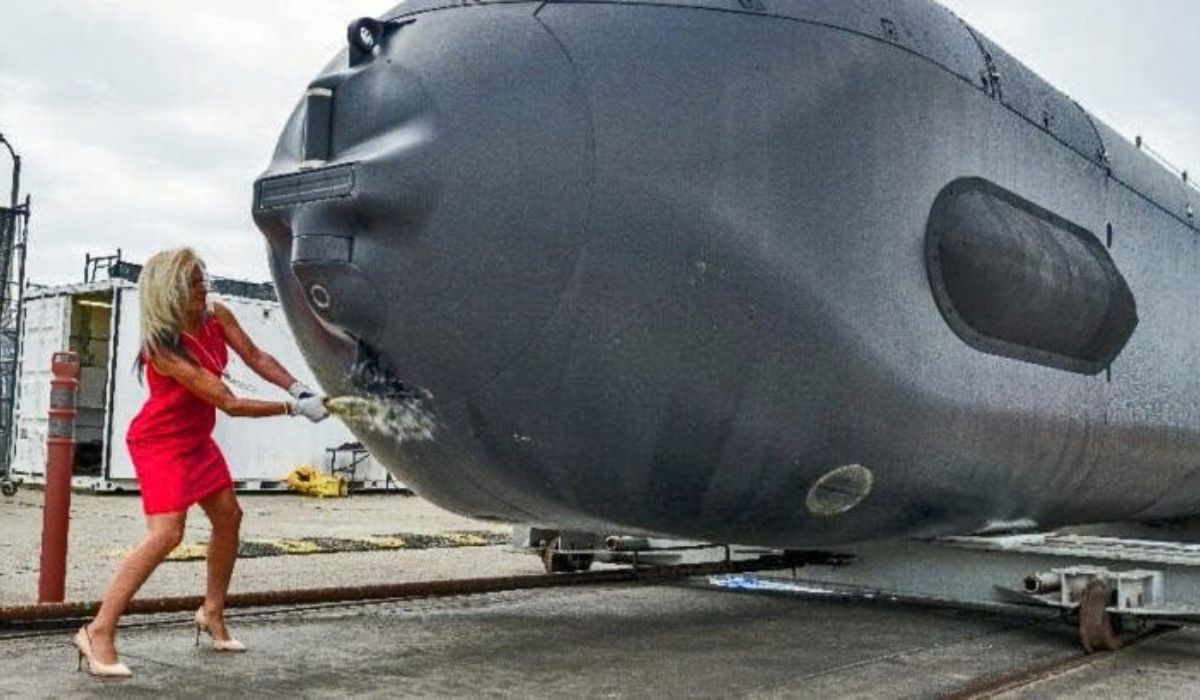
In December 2023, the U.S. Navy reported that it had received the first test asset of the program, identified as XLE0.
The delivery was regarded as a milestone for the project but did not signify the full operational maturity of the system.
According to NAVSEA, the testing phase would serve to gather data and guide the next specimens.
Dimensions, Range, and Autonomy of the Submarine Drone
The most cited public data about the Orca points to a vehicle of large dimensions.
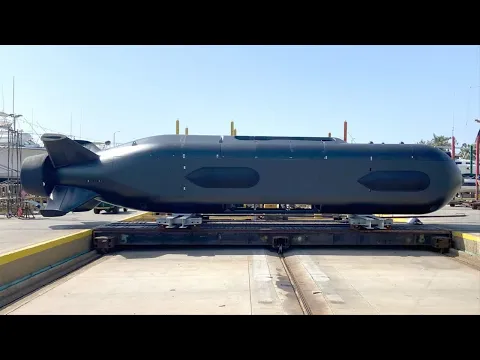
The basic structure disclosed by Boeing measures 51 feet, equivalent to about 15.5 meters.
With the mission module, technical analyses and specialized publications situate the set around 85 feet, approximately 26 meters, with a displacement close to 85 tons.
The range publicly disclosed by the manufacturer reaches 6,500 nautical miles, about 12,000 kilometers.
This number exceeds the 10,000 kilometers mentioned in the original text and helps explain why the program is often associated with long-distance operations.
Boeing also states that the system was designed to carry out extended-duration missions with “minimal human touch,” a phrase used by the company to indicate low need for intervention throughout the navigation.
This performance depends on a hybrid arrangement.
The Orca uses batteries and marine diesel generators, according to the manufacturer’s institutional description.
In practice, this allows for combining periods of submerged operation with system recharge cycles, always according to the mission profile and the platform’s energy limits.
At the same time, autonomous navigation relies on a set of sensors and embedded positioning systems.
Boeing reports that the vehicle uses an inertial navigation unit, depth sensors, and Doppler Velocity Logs, among other resources aimed at conducting long distances and missions in a complex underwater environment.

Cargo Compartment and Missions of the Orca XLUUV
One of the central points of the project is the internal mission compartment.
According to Boeing, this section measures 34 feet, equivalent to 10.4 meters, and can carry up to 8 tons of dry cargo.
The space was designed to accommodate different modules, allowing for the vehicle to be adapted according to the planned task.
This modular format explains why the Orca appears in public documents as a versatile platform.
Instead of a submarine built for a single role, it is a system designed to receive sensors, communication equipment, and specific mission packages.
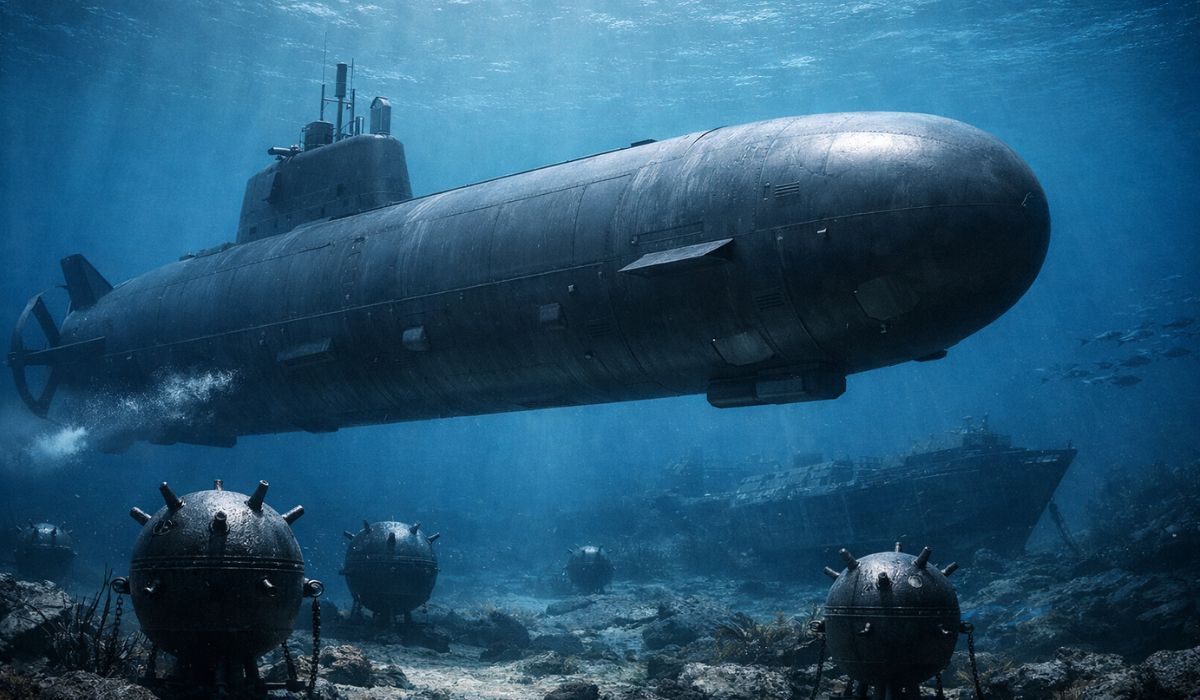
Among the uses mentioned in official reports and analyses about the program is the launching of underwater mines without sailors on board.
A report from the Government Accountability Office, the U.S. Congress oversight agency, stated in 2022 that the Navy sought to deliver five XLUUVs for the fleet with the purpose of launching underwater mines without the need for a crew.
The same document identified this need as one of the central reasons for the program.
Still, the available public materials treat the Orca as a broader employment platform.
Stealth and Limits of What Is Known
Much of the descriptions about the Orca highlight its ability to operate discreetly.
This point frequently appears in texts about autonomous submarines, especially because submerged operation and the uncrewed profile reduce human exposure and alter how naval resources are employed.
Still, there is not enough public basis to assert that the Orca is “totally invisible” or “undetectable” in an absolute sense.
What the available documents support is that the platform was designed to operate autonomously for extended periods and with characteristics compatible with discreet missions in the underwater environment.
More categorical formulations than this do not find secure confirmation in the consulted official sources.
There is also no detailed public confirmation, in open sources, concerning the exact behavior of the vehicle at each stage of recharging, motor activation, or data transmission in real operational scenarios.
For this reason, more specific information about the tactical profile and detection degree should be treated with caution.
Costs, Delays, and Status of the Military Program
The cost of the Orca is another subject surrounded by simplifications in widely circulated texts.
The value of US$ 43 million frequently cited cannot be accurately treated as a consolidated unit price for each operational vessel.
Public documents show that the contracts and estimates for the program involve distinct phases, as well as items related to development, testing, and infrastructure.
In 2022, the GAO reported that the XLUUV effort was at least US$ 242 million above the original estimate and delayed by at least three years.
According to the agency, the planned cost for the five contracted vehicles reached US$ 621 million, a figure that included the addition of a test vehicle worth US$ 73 million.
The report also pointed to management failures, project revisions, and manufacturing difficulties as factors for increased costs and timeline delays.
These data indicate that the Orca cannot be objectively described as a consolidated and low-cost solution to replace crewed submarines.
What can be stated with confidence is that the platform remains relevant in the strategy of uncrewed underwater vehicles of the U.S. Navy, but the program still faces challenges regarding timelines, integration, and costs.







-

3 pessoas reagiram a isso.