





 Portuguese
  English
  Spanish
  5 min of reading
  0 comments


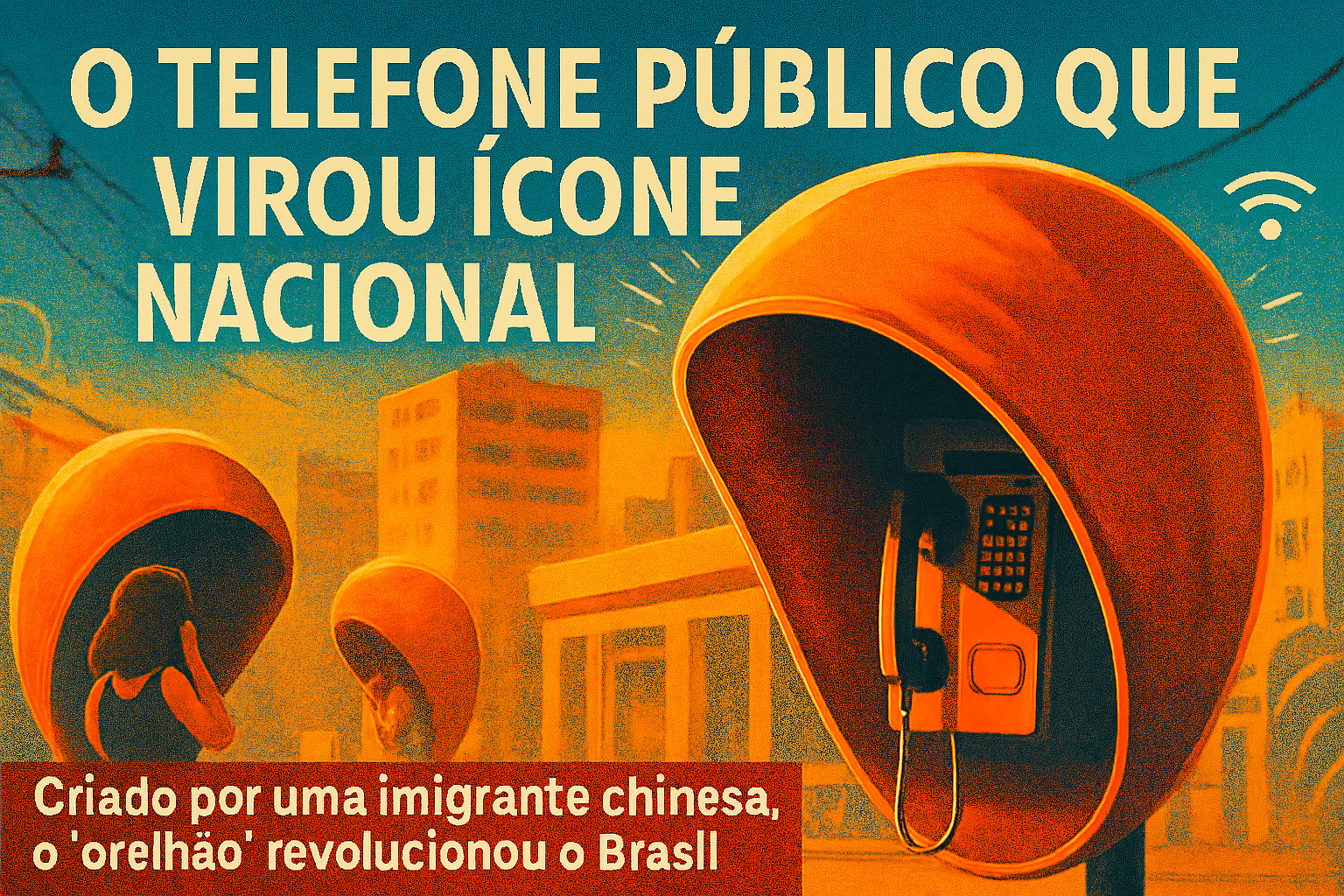
Created by Chinese Immigrant Chu Ming Silveira, the Public Phone Reached 1 Million Units and Revolutionized Telephony in Brazil.
Before cell phones, apps, and instant messaging, all of Brazil relied on a single urban symbol for communication: the public phone. Colorful, durable, and unmistakable, it spread across all cities in the country, from rural areas to metropolises, becoming a landmark in the Brazilian landscape and a symbol of the democratization of telephony. But what few people know is that this invention, so Brazilian in its appearance and purpose, was born from the mind of a Chinese immigrant, Chu Ming Silveira, a visionary engineer who transformed a technical challenge into one of the greatest public design successes in national history.
The Engineer Who Changed the Daily Life of Brazilians
Chu Ming Silveira was born in 1941 in Shanghai, China, and arrived in Brazil as a child, fleeing the instability of post-war Asia.
She graduated in architecture and urbanism from Mackenzie Presbyterian University in São Paulo and began working at the Brazilian Telephone Company (CTB) in the 1970s, right at a time when the country faced a huge challenge: expanding public telephony to a population that still did not have access to landlines.
-
The Argentine government celebrates the lowest poverty rate in 7 years, but experts warn that the methodology has changed, real wages have fallen, unemployment has risen, and the number of people on the streets of Buenos Aires has increased by 57% since Milei took office.

-
7.8 magnitude earthquake in Indonesia frightens the population, triggers tsunami alert, and hits an island with over 200,000 inhabitants this Thursday.

-
Google will finally let you change that embarrassing Gmail address you created in your teenage years without losing any accounts, logins, or old emails: the feature is already available in the United States.

-
Heading to Brazil in a Bonanza F33 single-engine aircraft: a couple departs from Florida on a visual flight, makes technical stops in the Caribbean to refuel and organize paperwork, and begins the staged crossing until they reach the country.




At that time, the few existing public phones were installed in enclosed booths, similar to those used in London and New York, but which did not adapt well to the Brazilian climate and vandalism. Chu Ming received a direct mission from the company: to create a durable, practical solution that could be mass-installed in public places.
That’s when the idea of the “public phone” was born.
The Invention of the Public Phone and the Birth of an Urban Icon
The project started in 1971 when Chu Ming presented the first prototype of a public telephone with a fiberglass shell, in an oval shape. The design was not only aesthetic; every detail was carefully thought out with technical precision.
The oval shape aimed to amplify the user’s voice, acting as a natural sound chamber that reduced external noise while protecting the device from rain and sun. The shell, made of reinforced fiberglass, was light, durable, and easy to maintain, making mass production possible.
The name “public phone” came about popularly: the shape resembled a large ear turned towards the speaker.
After the project’s approval by CTB, the model was named Chu-II, in honor of the inventor. In 1972, installations began in São Paulo, and success was immediate.
From São Paulo to All of Brazil
The invention quickly crossed state lines. In the following years, the public phone spread to all capitals and towns, becoming a landmark in the expansion of telecommunications in Brazil during the military regime and the period of accelerated urbanization.
Between the 1970s and 1990s, over 1 million public phones were installed across the national territory, according to data from the former Telebrás. They were found in squares, street corners, bus stations, airports, and schools, allowing Brazilians from all social classes to make local and long-distance calls without needing their own phone.
At its peak, there was one public phone for every 200 inhabitants in the country — a feat that placed Brazil among the most connected nations in the world for public telephony.
Functional Design, Clear Sound, and Symbol of an Era
The public phone was more than a public telephone: it was a design masterpiece.
Its elegant and functional shape led it to be recognized as one of the most emblematic industrial design projects of the 20th century in Brazil.
The structure reflected the spirit of the country: resilient, adaptable, and popular. Beyond its practical function, the public phone became a meeting and communication point where people scheduled appointments, exchanged news, and even waited for calls from relatives at important moments.
In the 1980s, the piece was incorporated into the popular imagination. It appeared in soap operas, movies, commercials, and even songs, portrayed as a symbol of modern urban life.
International Recognition and Lasting Legacy
Chu Ming Silveira received posthumous recognition for her contribution to engineering and design.
In 2013, she was honored by the Telefônica Vivo Foundation, and in 2014, her name was inscribed in the São Paulo Communication Museum.
Her work was also recognized by the Brazilian Association of Industrial Design (ABDI), which classified the public phone as an “iconic piece of functional and social design.”
Chu Ming’s project inspired similar versions in other Latin American countries, such as Argentina, Chile, and Paraguay, where models based on the Brazilian public phone were installed by companies associated with Telebrás.
The Decline of the Public Phone and the Advancement of the Digital Era
With the advance of cell phones and mobile internet, the use of public phones began to drop rapidly from the 2000s onwards. According to Anatel, in 2001 Brazil still had 1.3 million active public phones, but by 2023 this number had dropped to less than 30,000 functioning units.
Many were deactivated or became pieces of urban decoration.
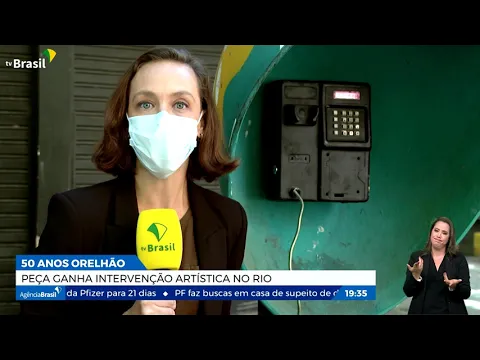
Some municipalities, such as São Paulo and Belo Horizonte, chose to reuse the shells as public Wi-Fi points, mini libraries, and interactive art pieces.
Despite the decline, the public phone remains alive in the memories of millions of Brazilians who grew up using their tokens and phone cards.
The Forgotten Engineer That Brazil Rediscovered
For decades, the name of Chu Ming Silveira was left out of history books. Only in the 2000s, with the increase in discussions about women in science and engineering, her story began to be rescued.
Today, she is considered one of the great inventors in Brazilian history, alongside figures like Santos Dumont and Vital Brazil. In 2021, Google Brazil honored Chu Ming with a special Doodle, highlighting the cultural and social impact of the public phone.
The public phone represented more than a technological advance — it symbolized the democratization of voice in a country of continental dimensions. Each call made under that oval dome brought people closer, shortened distances, and told stories.
Today, even nearly extinct, public phones continue to represent a time when talking to someone was a collective and symbolic act, and when a Chinese engineer helped Brazil to hear itself better.










-

-

3 pessoas reagiram a isso.