





 Portuguese
  English
  Spanish
  4 min of reading
  0 comments


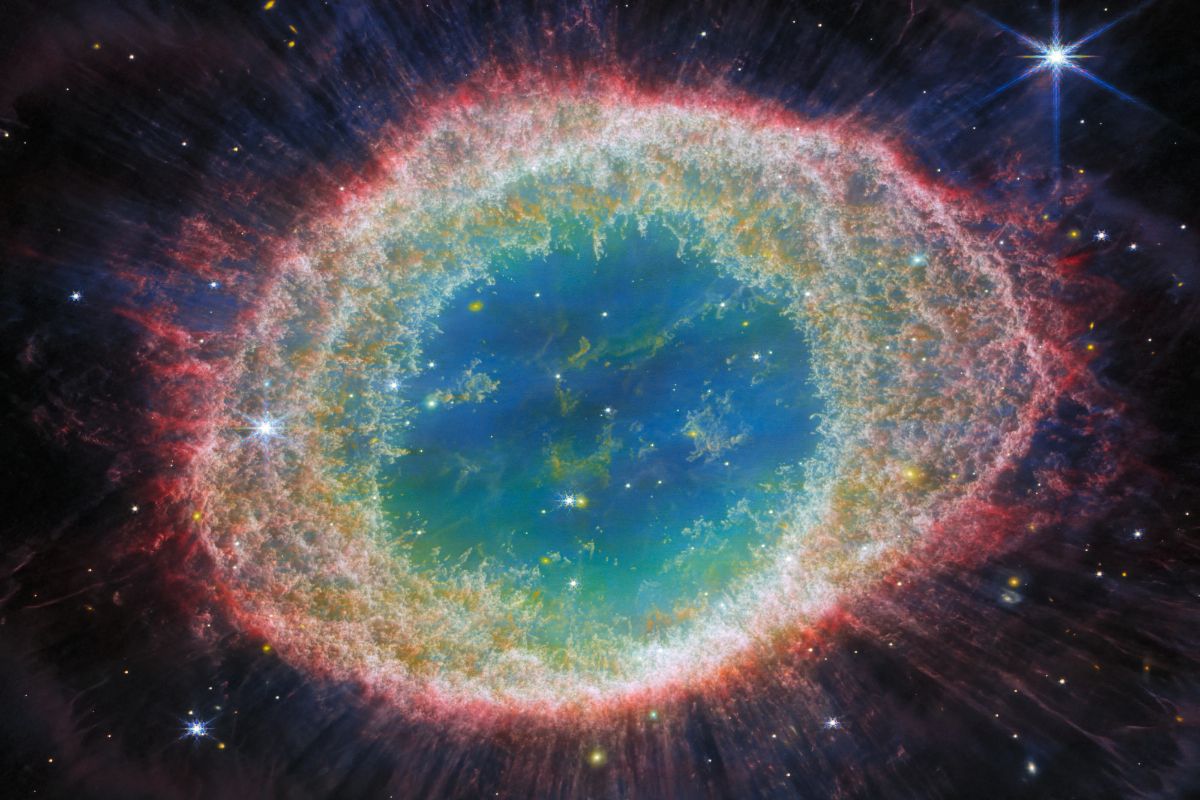
The James Webb Space Telescope (JWST) Is Revolutionizing Astronomy, Probing the First Galaxies and Unraveling Cosmic Mysteries with State-of-the-Art Technology.
The James Webb Space Telescope (JWST) marked the beginning of a new era in astronomical observation. This revolutionary observatory, with an approximate cost of $10 billion for NASA, was designed to investigate the most remote phases of the universe’s history, seeking the first luminous glows after the Big Bang.
Operating 1.5 million kilometers from Earth, at the second Lagrange point (L2), the James Webb Space Telescope utilizes state-of-the-art technology to capture images of the cosmic dawn. It is a testament to engineering and international collaboration, designed to answer fundamental questions about our origins.
A New Era in Astronomy: Presenting the James Webb Space Telescope
The James Webb Space Telescope is acclaimed as the leading observatory of the next decade. Its objective is to probe more than 13.5 billion years into the past, opening a window to the childhood of the universe and the formation of the first stars and galaxies. This capability is crucial for understanding how current cosmic structures, including our Milky Way, emerged.
-
Friends have been building a small “town” for 30 years to grow old together, with compact houses, a common area, nature surrounding it, and a collective life project designed for friendship, coexistence, and simplicity.

-
This small town in Germany created its own currency 24 years ago, today it circulates millions per year, is accepted in over 300 stores, and the German government allowed all of this to happen under one condition.

-
Curitiba is shrinking and is expected to lose 97,000 residents by 2050, while inland cities in Paraná such as Sarandi, Araucária, and Toledo are experiencing accelerated growth that is changing the entire state’s map.

-
Tourists were poisoned on Everest in a million-dollar fraud scheme involving helicopters that diverted over $19 million and shocked international authorities.


Positioned as a complement to the Hubble Space Telescope, the JWST distinguishes itself by its coverage of longer wavelengths (infrared) and vastly improved sensitivity. It is not a replacement but a uniquely capable observatory, paving new paths for investigation that were previously unattainable and answering questions that Hubble helped to formulate.
Unprecedented Engineering: The Architecture of the James Webb Space Telescope
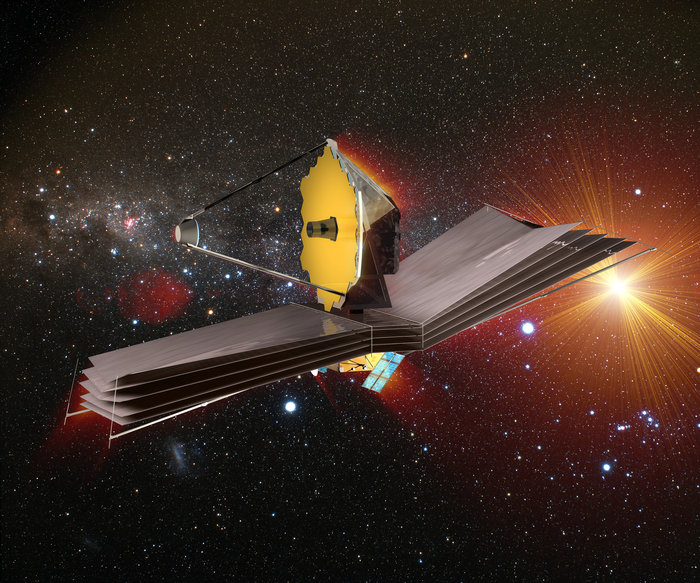
The JWST is the result of a partnership between NASA, the European Space Agency (ESA), and the Canadian Space Agency (CSA). Thousands of scientists and engineers from 14 countries and over 29 U.S. states collaborated on the project, which began in 1996. ESA provided the NIRSpec spectrograph, part of the MIRI instrument, and the Ariane 5 launcher, while CSA contributed the FGS sensor and the NIRISS instrument.
The optical heart of the James Webb Space Telescope is its 6.5-meter primary mirror, composed of 18 hexagonal beryllium segments coated with a thin layer of gold to reflect infrared light. To operate, its instruments must be maintained at cryogenic temperatures, which is made possible by a five-layer sunshade the size of a tennis court, keeping the cold side of the telescope below -233°C. The telescope was launched on December 25, 2021, from French Guiana.
From the Big Bang to Exoplanets
Since the start of its operations, the James Webb Space Telescope has provided data that transform our understanding of the primitive universe. It identified galaxies such as JADES-GS-z13-1, existing just 330 million years after the Big Bang, challenging theories with its strong Lyman-alpha emission. It also revealed the “Little Red Dots” (LRDs) and “Red Monsters,” massive primitive galaxies suggesting a more efficient star formation than previously thought.
In the field of exoplanets, the JWST detected methane, CO2, and potentially Dimethyl Sulfide (a biosignature) in the atmosphere of the Hycean world K2-18 b. It also investigates terrestrial exoplanets like LHS 475b and planetary evolution around stellar remnants, such as WD 1856+534 b, the coldest exoplanet directly observed. These discoveries are moving exoplanetology towards a robust comparative science.
The Operational Journey and Next Steps of the James Webb Space Telescope
The James Webb Space Telescope has exceeded performance expectations, with sharper images and more sensitive instruments than projected. Its expected longevity, due to orbital precision and efficient propellant use, may exceed 20 years, extending into the 2040s. Despite this, the observatory faces budgetary pressures, with a potential 20% cut starting in the fiscal year 2026.
Despite impacts from micrometeoroids, including one larger than expected in May 2022, the overall performance of the telescope has not been significantly hindered, and mitigation measures have been implemented. Cycle 4 of observations is the largest to date, with programs ranging from solar system bodies to the study of forming galaxies and observing asteroid 2024 YR4 to refine its orbit and assess impact risks.
The Legacy of Webb: More Than a Successor to Hubble, a New Vision of the Cosmos
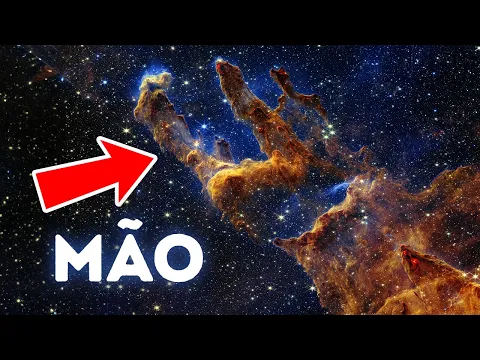

The James Webb Space Telescope has already established itself as a game changer in astronomy. Its infrared capabilities complement Hubble, allowing the observation of the primitive universe, penetrating dust clouds where stars and planets are born, and analyzing the atmospheres of exoplanets with unprecedented detail. It is not a replacement but a powerful extension of our observational capabilities.
The investment of $10 billion is materializing into knowledge that redefines our understanding of the universe. The JWST is a engine of discoveries, inspiring new generations and demonstrating the power of international collaboration and human ingenuity in the quest for answers to the most fundamental questions about our cosmic origins.










Seja o primeiro a reagir!