





 Portuguese
  English
  Spanish
  5 min of reading
  0 comments


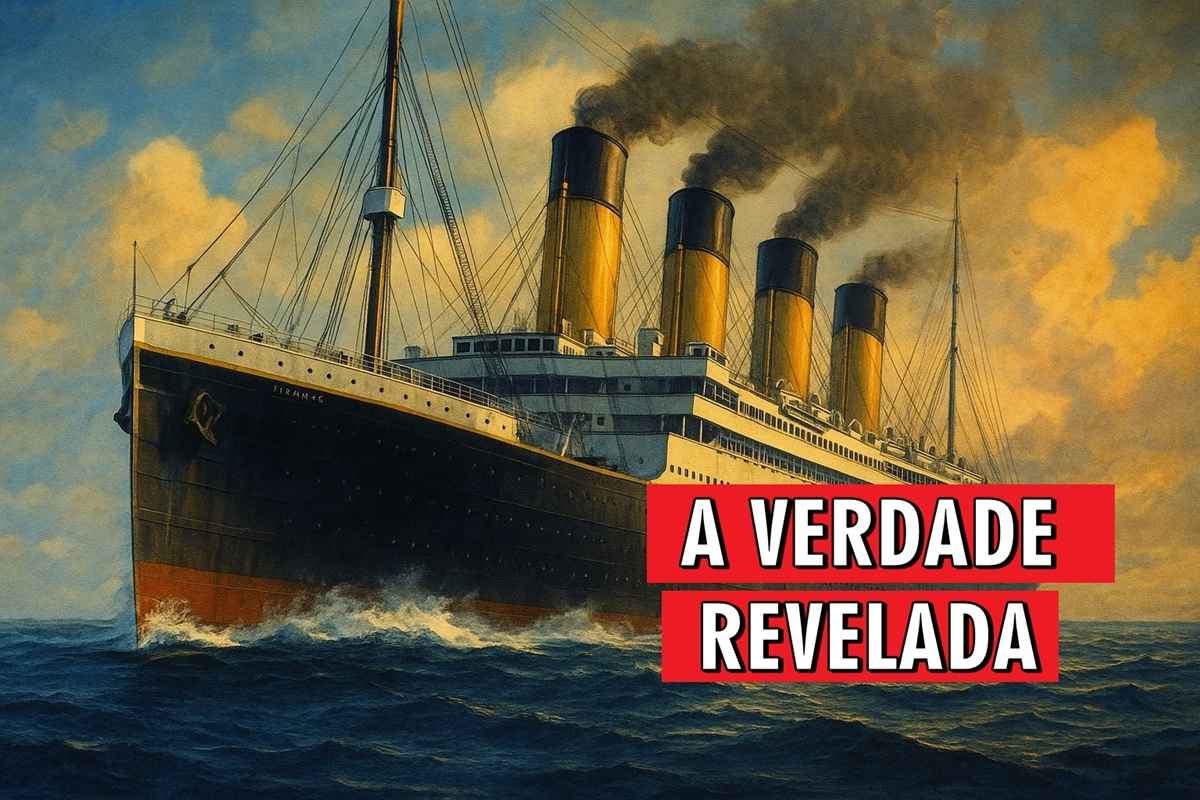
Long Before Becoming a Symbol of Maritime Tragedy, the Titanic Already Carried the Reputation of Being “Unsinkable”. This Belief, Reinforced by Newspapers and Even by Its Own Builder, May Not Have Emerged After the Sinking, as Many Believe. A 1911 Document May Change Everything We Know.
For more than a century, the image of the Titanic has been linked to a persistent idea: that the ship was considered “unsinkable” before it sank.
This belief gained strength the day after the disaster, when newspapers like the The New York Times published headlines claiming that the White Star Line had guaranteed that the ship could not sink.
But did this idea already exist before the maiden voyage?
-
Friends have been building a small “town” for 30 years to grow old together, with compact houses, a common area, nature surrounding it, and a collective life project designed for friendship, coexistence, and simplicity.

-
This small town in Germany created its own currency 24 years ago, today it circulates millions per year, is accepted in over 300 stores, and the German government allowed all of this to happen under one condition.

-
Curitiba is shrinking and is expected to lose 97,000 residents by 2050, while inland cities in Paraná such as Sarandi, Araucária, and Toledo are experiencing accelerated growth that is changing the entire state’s map.

-
Tourists were poisoned on Everest in a million-dollar fraud scheme involving helicopters that diverted over $19 million and shocked international authorities.


In recent years, various scholars have questioned this narrative.
Some have asserted that the term only became popular after the tragedy. However, a little-known document from 1911 may have changed everything.
A Term That Gained Strength After the Sinking
The Titanic left Southampton on April 10, 1912, and sank in the early hours of April 15 after colliding with an iceberg.
Since then, it has become a symbol of human arrogance toward nature, with the expression “unsinkable” repeated for decades.
In 1999, Professor Richard Howells from the University of Leeds stated that the ship was never actually described that way before the tragedy.
According to him, the idea that the Titanic was unsinkable was a later construction.
Howells declared: “It is unlikely that the general population thought of the Titanic as a unique and unsinkable ship before its maiden voyage. When the news of the disaster broke, the story was completely different — it was as if the Titanic had been universally acclaimed as unsinkable all along.“
The same view is shared by the Royal Museums Greenwich, which states on its website: “The Titanic was never really described as ‘unsinkable’.” Even Wikipedia reinforces this: “Contrary to popular mythology, the Titanic was never described as ‘unsinkable’ without reservations until after it sank.”
A 1911 Document Reveals Another Story
Despite this dominant narrative, a 1911 document may put everything into question. The passage, written a year before the tragedy, mentions the Titanic and its sister ship, the Olympic, as follows: “…these two wonderful ships were designed to be unsinkable.”
Historian Joshua Allen Milford believes that the public already considered the two ships unsinkable even before the Titanic’s maiden voyage. According to him, the accident of the Olympic with HMS Hawke in 1911, without sinking, reinforced this idea.
“When the Olympic collided with the Hawke and did not sink, the theory of unsinkability was solidified for the future Titanic,” Milford told MailOnline. “That was one of the reasons expectations for the ships were so high and may have even driven ticket sales.”
“Practically Unsinkable” Was the Common Expression
The Harland & Wolff company, which built both ships, reportedly used expressions like “practically unsinkable” to refer to them.
The specialized periodical The Shipbuilder, according to Milford, would have used the same language even in the early stages of construction.
He believes that the newly discovered document from 1911, which mentions the ships “designed to be unsinkable,” was published exactly in that periodical.
This would indicate that the reputation of the Titanic was already being built based on promises of extraordinary safety.
Other sources also corroborate this version. An article published in June 1911 by the Irish News and the Belfast Morning News, during the launch of the Titanic’s hull, described its watertight compartment system and concluded that the ship was “practically unsinkable.”
The Captain’s Own Words Reinforce the Idea
The idea of absolute safety was also defended by the Titanic’s own captain. In 1907, Edward Smith stated: “I cannot imagine any condition that could cause the sinking of a ship. I cannot conceive of any catastrophic disaster… modern shipbuilding has gone beyond that.”
This statement shows that even years before the tragedy, there was already a consolidated thought that new ships like the Titanic were above any real threat.
The Sinking That Disproved the Belief
The tragedy came to disprove the exaggerated confidence. On its maiden voyage to New York, the Titanic was carrying 2,224 people.
At 11:40 PM on April 14, 1912, the ship collided with an iceberg. James Moody, who was on duty, answered the lookout’s call, who said: “Iceberg, right ahead.”
The impact caused the rupture of several watertight compartments, which were not high enough to contain the water when flooded in sequence. At 2:20 AM, the ship sank completely.
More than 1,500 people died, including some of the richest men of the time, such as John Jacob Astor IV, Benjamin Guggenheim, and Isidor Straus, co-owner of Macy’s. In total, only 700 people survived, rescued hours later by the RMS Carpathia.
Luxurious Structure and Limited Safety
The Titanic was presented to the world as the largest and most modern passenger ship. It featured a pool, gym, libraries, restaurants, and luxurious first-class cabins.
But there was a severe flaw: the number of lifeboats was insufficient for everyone on board.
This happened because of outdated maritime safety regulations.
The exaggerated confidence in the ship’s technology may also have contributed to security measures not being taken seriously.
Discovery of the Wreckage and Cultural Impact
Only in 1985 were the wreckage of the Titanic found on the ocean floor, split into two pieces. The discovery made headlines worldwide and reignited fascination with this story.
Since then, books, movies, and documentaries have contributed to further cementing the image of the Titanic as “the unsinkable ship that sank.”
But now, with the 1911 document, this image becomes more than just a popular myth; it is backed by documentary evidence predating the tragedy.
The Final Revelation
More than a hundred years after the sinking, the 1911 document brings a new perspective. Although many experts argue that the term “unsinkable” only became popular after the tragedy, the found description proves that this idea was already circulating beforehand.
Even if the word was not used officially and absolutely in all marketing materials, there is evidence that the Titanic and its sister ship were indeed presented as ships with above-standard safety.
This seemingly small detail helps to reconstruct how the public viewed the Titanic before the tragedy and how excessive confidence in engineering may have shaped decisions with fatal consequences.










Seja o primeiro a reagir!