





 Português
  Inglês
  Espanhol
  3 min de leitura
  10 comentários


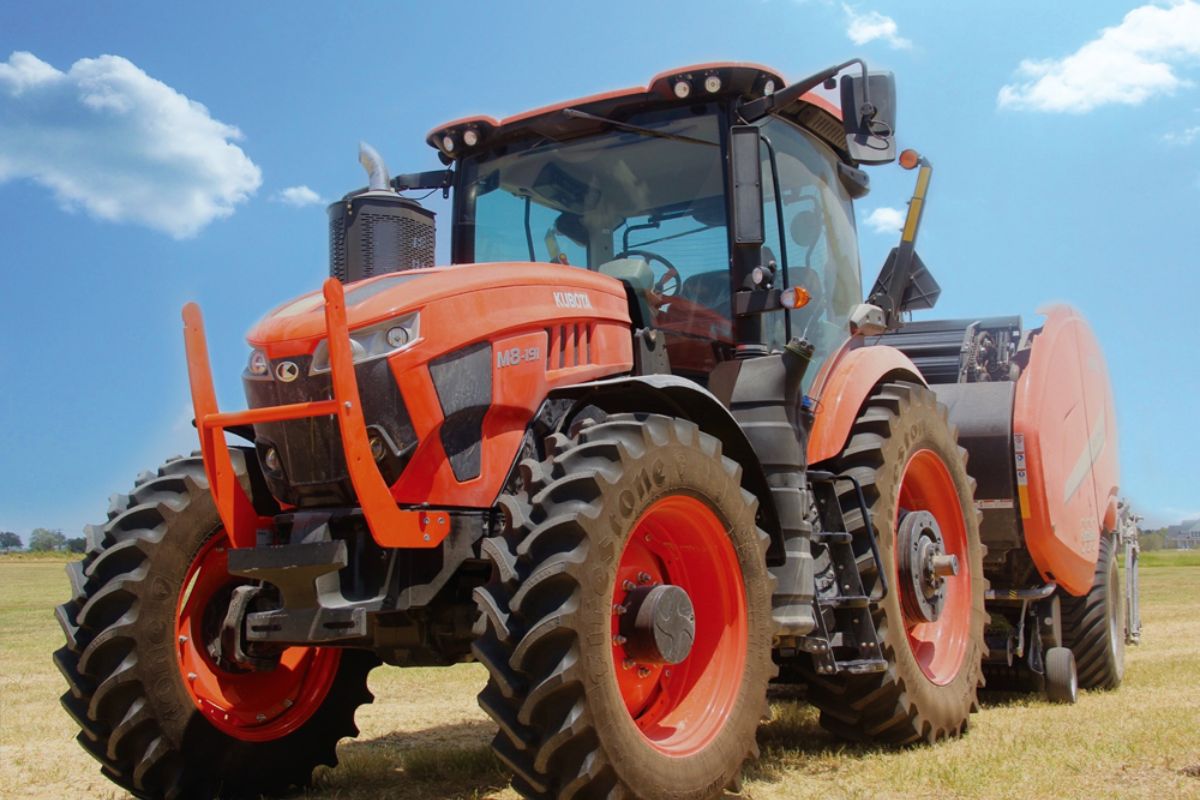

The Trajectory of Kubota, A Japanese Brand Synonymous With Durability. Get to Know Its History, The Legacy of Tobata Motocultivators in Brazil and How This Strong Japanese Tractor (In Terms of Cost-Benefit and Adequacy) Plans Its Space in the Country.
Japan is renowned for robust and durable machinery. Among them, Kubota stands out for its reliability in the field. Many may not know the name, but those who work the land recognize its strength. This article narrates the journey of Kubota’s strong tractor, from its visionary founder to its global expansion.
The story of Kubota begins in 1890. Japan was experiencing the fervor of the Industrial Revolution. Gonchiro Ode, a young man from a humble background, was fascinated by metallurgy. At 19, he founded the Ode Foundry in Osaka. His company manufactured iron pipes for water supply, essential at the time.
The initial success attracted Toshiro Kubota, a businessman who took him under his wing. In 1897, the foundry was renamed Kubota Iron Works. The quality of Kubota’s products soon gained recognition.
-
Alone, the producer applies 7,400 hectares with the T100 drone in an optimized structure, replaces the generator with a silent battery, and demonstrates how technology reduces costs, increases productivity, and even challenges the uniport in the field.

-
China banned the export of 22 tons of meat from Argentina.

-
JBS, founded by the Batista brothers, continues to conquer the world: entrepreneurs built a ‘factory in the desert’ creating 3,000 jobs.

-
With only 1% of Brazil’s territory, Santa Catarina has built one of the most competitive industrial parks in the country, with 64,000 companies, nearly 1 million jobs, and a growth rate of 5.3% while the national industry is practically stagnant.


Kubota Engines and the Agricultural Revolution

Kubota expanded its focus beyond sanitation. Gonchiro believed that technology should serve society. Thus, in 1922, the company began producing kerosene-powered internal combustion engines. These were small engines, with about three horsepower, ideal for agricultural equipment.
These engines helped in water pumping and rice processing. Simple, durable, and efficient, they solidified Kubota’s reputation in the Japanese countryside.
The Birth of Kubota Tractors and the International Conquest
After World War II, Kubota focused on rebuilding Japan. In 1947, it launched a redesigned motocultivator. It was perfect for Japan’s small rice fields, a true revolution.
The significant turning point came in 1960. Kubota introduced its first complete agricultural tractor, the T15. With 15 horsepower, this compact strong Japanese tractor was designed for small producers. Success came immediately. Other models followed, such as the L200, which had a diesel engine.
In the 1970s, Kubota began exporting to the United States. Despite the local preference for gasoline engines, the durability and economy of the Kubota diesel engine won over the market. Europe was the next destination, where compact tractors were also well received.
Tobata: The Japanese Tractor That Made History in Brazil
In Brazil, Kubota’s story gained a special chapter. In the 1950s, import restrictions encouraged local production. Kubota saw an opportunity, especially to serve colonies of Japanese immigrants.
In 1956, the company Mario C began importing Kubota motocultivators. The success was so great that, in 1960, production began in Diadema (SP). These machines were named “Tobata.” The name Tobata became synonymous with microtractor in the country. They were simple, durable, and versatile machines. Many examples of this strong Japanese tractor, in terms of accessibility and utility, are still in operation. Production ceased during the crises of the 1980s and 1990s.
Kubota Today: Constant Evolution and The Triumphant Return of The Strong Tractor to Brazil

While Tobata was making history in Brazil, Kubota continued evolving globally. It launched mini excavators in 1974, utility vehicles, and series of more modern tractors. In the 2000s, larger and more powerful tractors came, such as the M7 and M8 series, featuring advanced technology.
After years, Kubota returned to Brazil with strength. Tratores Mercul Importadora (TMI) brought the new models. The slogan is “The Evolution of Tobata,” betting on the trust already established. The brand focuses on regions of horticulture, floriculture, and coffee cultivation. The goal is to once again be the strong Japanese tractor ally of Brazilian producers, known for durability and easy maintenance.









Já assisti muito ele trabalhando nos vídeos do Japão
E cafeicultura
Lindo nome.o do trator…