





 Português
  Inglês
  Espanhol
  4 min de leitura
  0 comentários


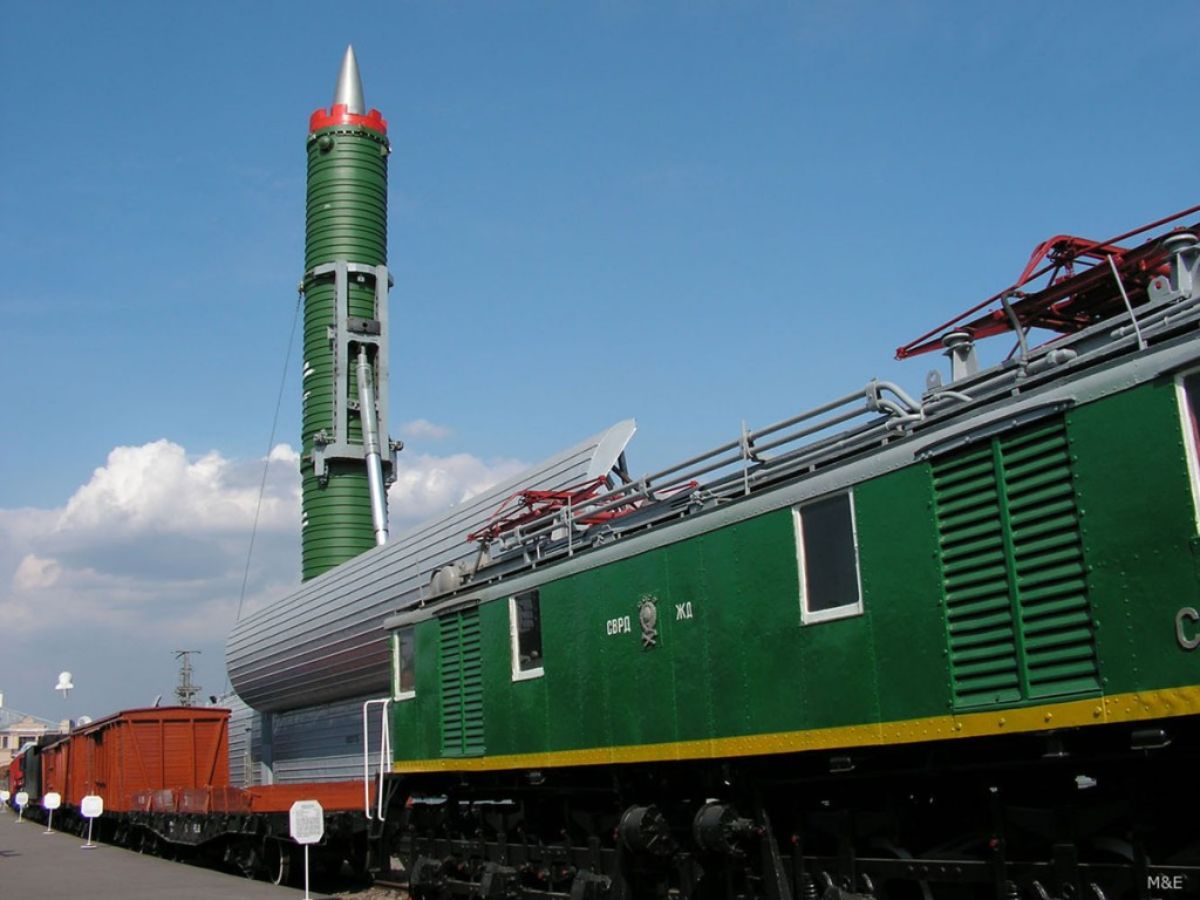
Designed To Be A “Ghost Train” Loaded With Nuclear Missiles, The Railroad Convoy Is The Modern Version Of A Cold War Weapon That Could Be Reactivated At Any Time
On the vast tracks that crisscross Russia, a ghost from the Cold War refuses to die. It is the “end of the world train,” a railroad convoy with an unremarkable appearance, but which hides intercontinental ballistic missiles ready for a nuclear strike in its cars. Known as BZhRK “Barguzin,” the project is the latest incarnation of a mobile and nearly undetectable weapon, designed to survive a first strike and ensure a devastating retaliation.
The development of the new train began in 2012, but was officially suspended in 2017, mainly for financial reasons. However, the concept of a nuclear railroad convoy was never fully abandoned. In a scenario of rising tensions, the threat of reactivating this weapon, which combines stealth and firepower, remains a potent card in Russia’s deterrence doctrine.
The Soviet Legacy, The First Nuclear Train And Its Failings
To understand the new project, we must go back to the Cold War. The first nuclear railroad convoy, with the RT-23 “Molodets” missile, was the Soviet response to the growing accuracy of American missiles, which threatened to destroy their fixed silos. The idea was to create a mobile target that could hide within the vast railway network of the country.
-
The world’s first octopus farm wants to open in the Canary Islands and is already provoking an international reaction: the plan aims to produce 3,000 tons per year.

-
Drought may be creating stronger superbugs in the soil and helping antibiotic resistance reach hospitals, warns a study highlighting a problem that could grow alongside extreme weather.

-
The biggest scam in history: Napoleon’s France deceived the United States by selling them a territory that was Spanish.

-
Why is the Danakil Desert so dangerous? It has unstable terrain and how extreme temperatures and toxic gases turn the region into one of the most hostile environments on Earth.


The system became operational in 1987 but had a fatal flaw: it was not truly secret. The “Molodets” missile was so heavy (over 100 tons) that the train required three locomotives to move and reinforced tracks to support its weight. These factors were an obvious “signature,” allowing Western intelligence to track it. The system was deactivated in 2005, but the lesson was learned.
The Barguzin Project, The Plan For A 21st Century Railroad Convoy
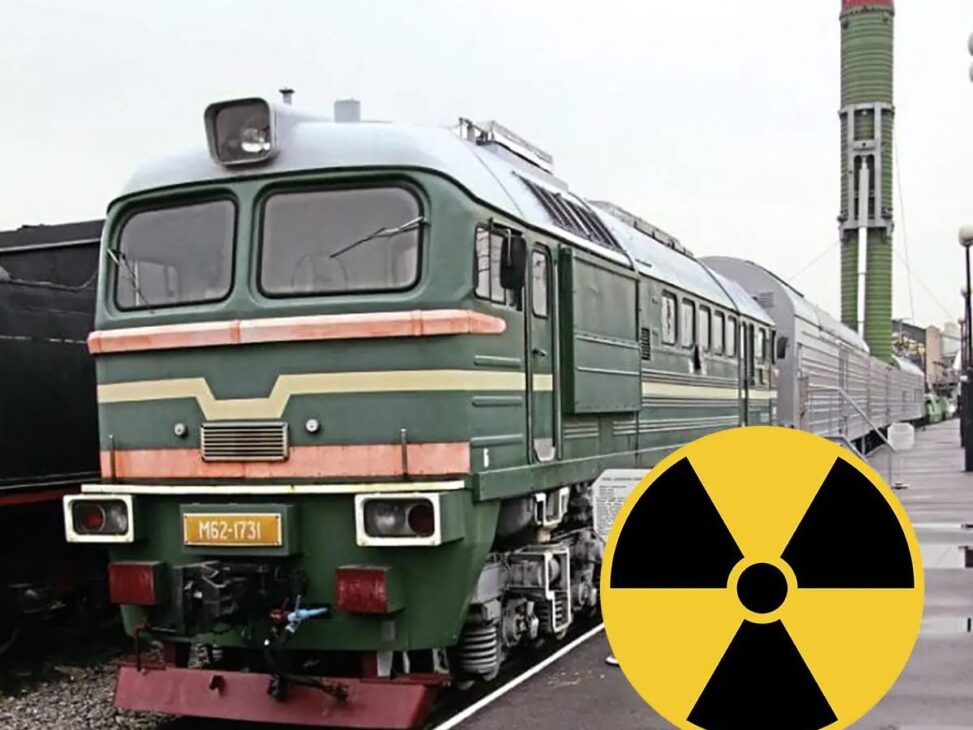
Around 2012, Russia decided to resurrect the concept, but in a much smarter way. The “Barguzin” project, developed by the Moscow Thermal Technology Institute, was designed to be a true “ghost train.”
The key to the magic of the ‘ghost train’ was the missile swap. The new RS-24 ‘Yars’ was so much lighter than its Soviet predecessor that the launch car, once a monstrous structure that gave away the train, could now be perfectly disguised as an ordinary refrigerated car. With this, the new nuclear railroad convoy would only require one locomotive and could travel on any track, becoming virtually indistinguishable from the thousands of freight trains that traverse Russia daily.
A Regiment On Tracks, How The Nuclear Convoy Would Operate
The operational doctrine of the Barguzin was impressive. A single train, or “regiment,” would be capable of carrying six Yars-type ICBMs. Each missile, in turn, can carry 3 to 6 nuclear warheads. This means that a single train, hidden in plain sight, would have the firepower to devastate multiple cities or military targets.
The idea was to have a complete “division,” made up of five of these trains, totaling 30 missiles. Hidden in the vastness of the Russian railway network, which spans eleven time zones, these trains would be a “nightmare” for surveillance systems, ensuring Russia’s nuclear retaliation capability even under the most intense attack.
The Cancellation In 2017, Why The “End Of The World Train” Was Put On Ice?
Despite the progress of the project, with successful launch tests in 2016, news of its suspension came on December 2, 2017. The official reason, announced by the Russian state media, was the <strong prohibitive cost. In a time of cost-cutting, the Kremlin decided that the project was “too expensive.”
But the cancellation was not only for lack of money, but rather due to an excess of success in other areas. With the Yars missiles already operating on trucks and the new Borei-class submarines patrolling the oceans, Russian leadership concluded that they already had a ‘sufficiently good’ retaliation capability. The costly railroad convoy became a redundant insurance policy.
The Train That Did Not Die, Why The ‘Nuclear’ Ghost Still Haunts The West?
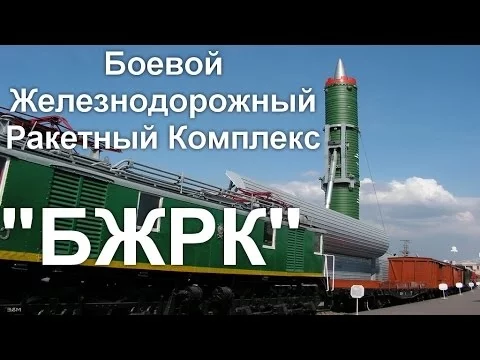

The door to the “end of the world train,” however, was never completely shut. Russian authorities have always referred to the project as “suspended” or “frozen,” not canceled. This keeps it as a latent threat, a card that can be put on the table at any moment.
In 2025, with the Russian economy focused on the war in Ukraine, the reactivation of the project seems unlikely. However, the concept of the nuclear railroad has not been discarded. It remains a frozen trump card, a ghost on wheels that Russia refuses to exorcise and continues to haunt Western defense calculations.








-

Uma pessoa reagiu a isso.