





 Portuguese
  English
  Spanish
  3 min of reading
  0 comments



A Historic Construction of 87 Km of a Tunnel That Would Connect Holyhead to Dublin, Promising to Revolutionize Transportation, Generate Sustainable Energy, and Move Billions, But Was Filed After Controversies and High Costs.
This was the plan for the Holyhead-Dublin tunnel, an idea that promised to revolutionize transportation between Ireland and England, but faced challenges that relegated it to the archives. Let’s dive into the details of this impressive project that divided opinions.
Great Britain and Ireland have a peculiar relationship. Despite being geographically close, they are separated by the Irish Sea. Northern Ireland already has political links with the United Kingdom, but physically, the connection is non-existent. To solve this, several projects have emerged over the years, including bridges and tunnels to connect Northern Ireland to Scotland and the Republic of Ireland to Wales.
Among these ideas, the Holyhead-Dublin corridor stood out, as it directly connects two important economic centers. The proposal offered the potential to transform the transportation of people and goods, bringing significant economic and logistical benefits.
-
New CCR concrete paving technology promises roads up to 3x more durable, less maintenance, and cost reduction in Brazil.

-
Made from recycled plastic, plastic wood is gaining space in the construction industry because it does not rot, resists moisture, and reduces maintenance costs over the years.

-
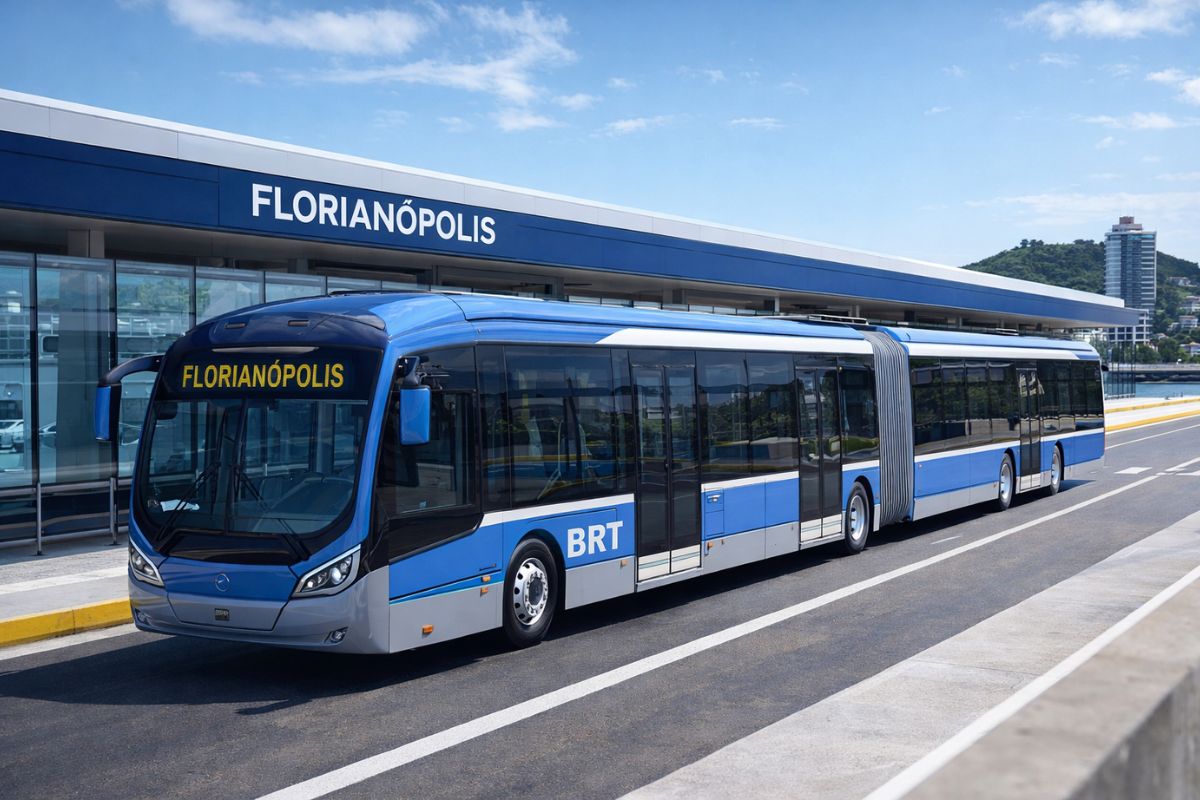
Florianópolis will receive a million-dollar BRT that will begin construction in 2026 with nearly 400 million in funding from the federal government and the Inter-American Development Bank, and the map already shows the routes for the exclusive bus corridors.
-
Without a blueprint, without an engineer, and using scrap from the dump, a father spends 15 years building an 18-room castle for his daughter, featuring tram tracks, 13 fireplaces, and over 700 m², which may now be demolished.


The Ambition to Connect Holyhead and Dublin by Tunnel
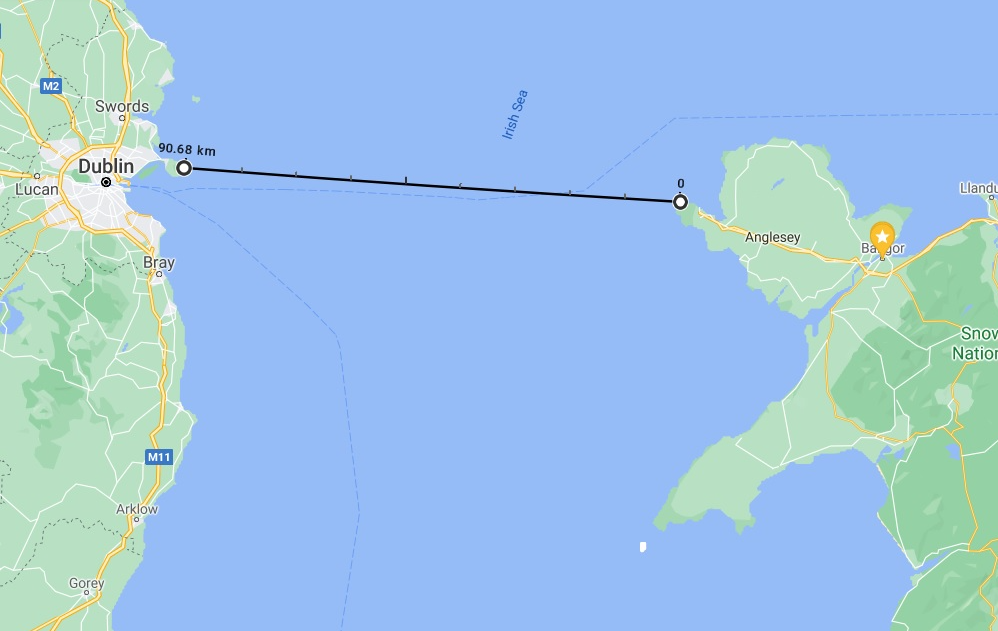
This connection would not be unprecedented. In the 19th century, a train nicknamed “The Irish Mail” already made the route between London and Holyhead, with goods continuing the journey by ferry to Dublin. The new proposal, however, involved a submerged tunnel of 87 km, a monumental work that would surpass the 64 km of the tunnel under the Alps.
The former president of the British Tunneling Society, Bill Grose, highlighted the viability of this route, stating that it is shorter and strategically positioned to connect Dublin to major British centers such as Manchester and Liverpool.
The Promised Benefits and the High Costs
The promises were impressive: 35,000 jobs during construction and a significant economic boost for the region. However, the estimated cost of £15 billion was a formidable barrier. Although the tunnel would be only 100 meters deep, facilitating engineering, the project faced resistance because of its astronomical figures.
Why Was the Project Filed?
Despite the advantages, the tunnel was deemed unfeasible. In 2021, the Financial Times declared the project “dead, at least for now.” Statements like that of Dominic Cummings, who referred to the project as “the stupidest tunnel in the world,” reflected skepticism surrounding the idea.
Compared to other European infrastructure projects, such as the tunnel between Germany and Denmark, Holyhead-Dublin seemed less urgent and appealing. There was a perception that Ireland had more to gain than England, making it difficult to justify the investment for the British.
An Idea Ahead of Its Time?
Despite the filing, some arguments suggest that the project may be revisited in the future. The idea of using the tunnel to generate sustainable energy, with wind, marine, and solar sources, brings a modern perspective aligned with current environmental demands.
Advances in automation and autonomous vehicles may make the tunnel more useful, efficiently transporting goods. Switzerland, for example, plans a 500 km underground network for autonomous vehicles by 2040, showing that the future may be more receptive to projects like Holyhead-Dublin.
The longest tunnel in the world is still a distant dream. While economic and political challenges weigh against the project, the potential for innovation and sustainability could revive it in a more advanced scenario. If built, Holyhead-Dublin would not just be a tunnel, but a landmark of how engineering and foresight can transform human connections.









-

-

8 pessoas reagiram a isso.