





 Portuguese
  English
  Spanish
  3 min of reading
  1 comment


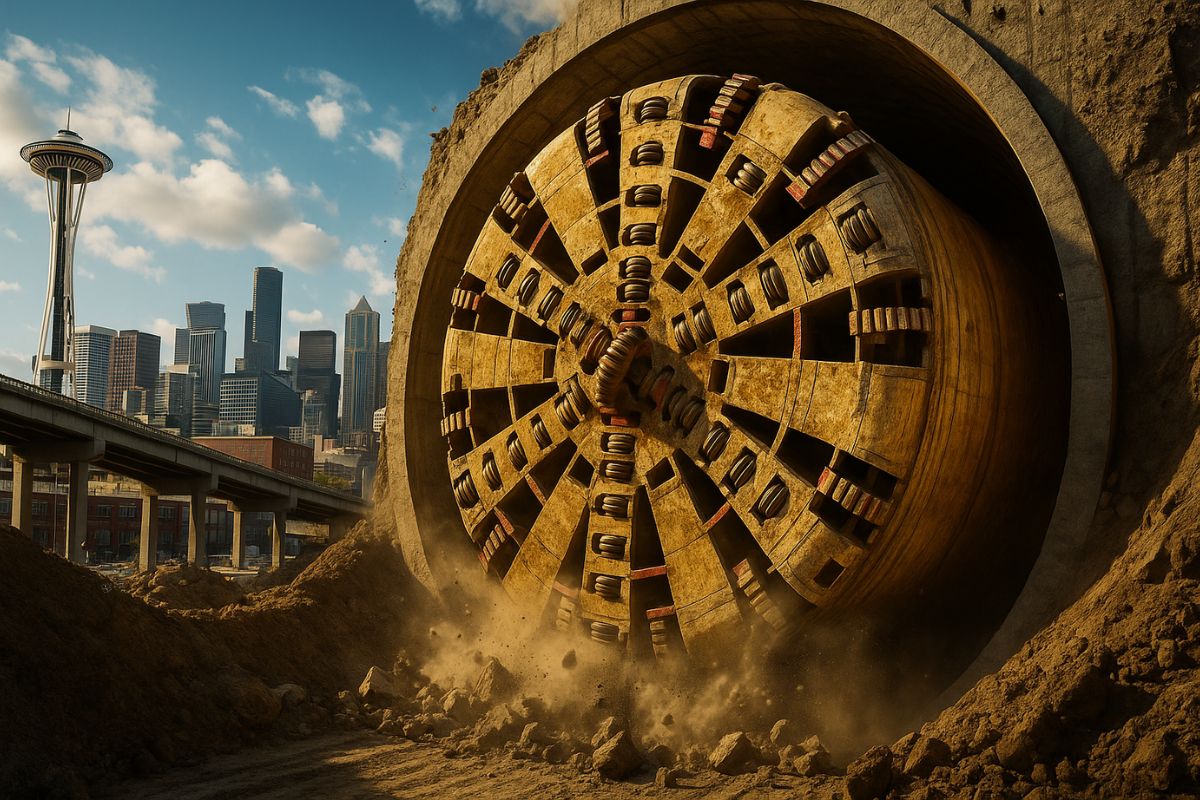


With Almost 3 Kilometers in Length, the Gigantic SR 99 Subsurface Tunnel in Seattle Was Excavated by the Largest Drilling Machine Ever Built, Called Bertha, a Colossus of 6,100 Tons and 17.5 Meters in Diameter That Replaced the Vulnerable Waterfront Viaduct and Redefined the Concept of Modern Urban Engineering
The SR 99 Subsurface Tunnel was born out of the need to replace the old Alaskan Way Viaduct, deemed unsafe and vulnerable to earthquakes. The new design allowed an entire highway to be buried beneath downtown Seattle, freeing up urban space and improving the waterfront landscape.
Opened in 2019, the tunnel has a length of 2.83 kilometers, accommodates two lanes on two levels, and reaches a maximum depth of 64 meters. The project was a milestone in innovation and urban planning, combining large-scale roadway infrastructure with technological solutions to reduce surface impacts in the city.
The Largest Tunnel Boring Machine on the Planet
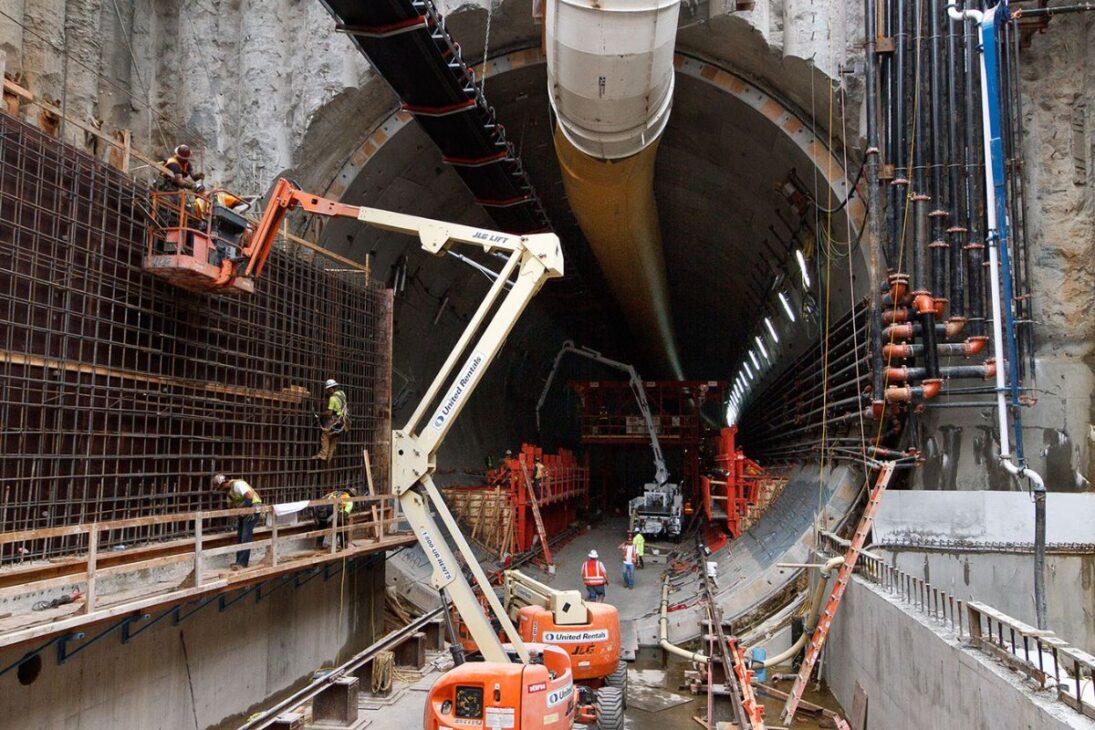
To excavate the subsurface tunnel, Seattle turned to the largest tunnel boring machine in the world: Bertha, manufactured by the Japanese Hitachi Zosen.
-
Archaeologists find a colossal 2,000-year-old vessel at the bottom of the sea near Alexandria linked to the elite of Egypt and reveal a pleasure barge from the last dynasty of the pharaohs that the sea has hidden for centuries.
-
United Kingdom clears 40 tons of shells and concrete into the sea in an innovative project that promises to restore a marine ecosystem lost for over 200 years and improve water quality.
-
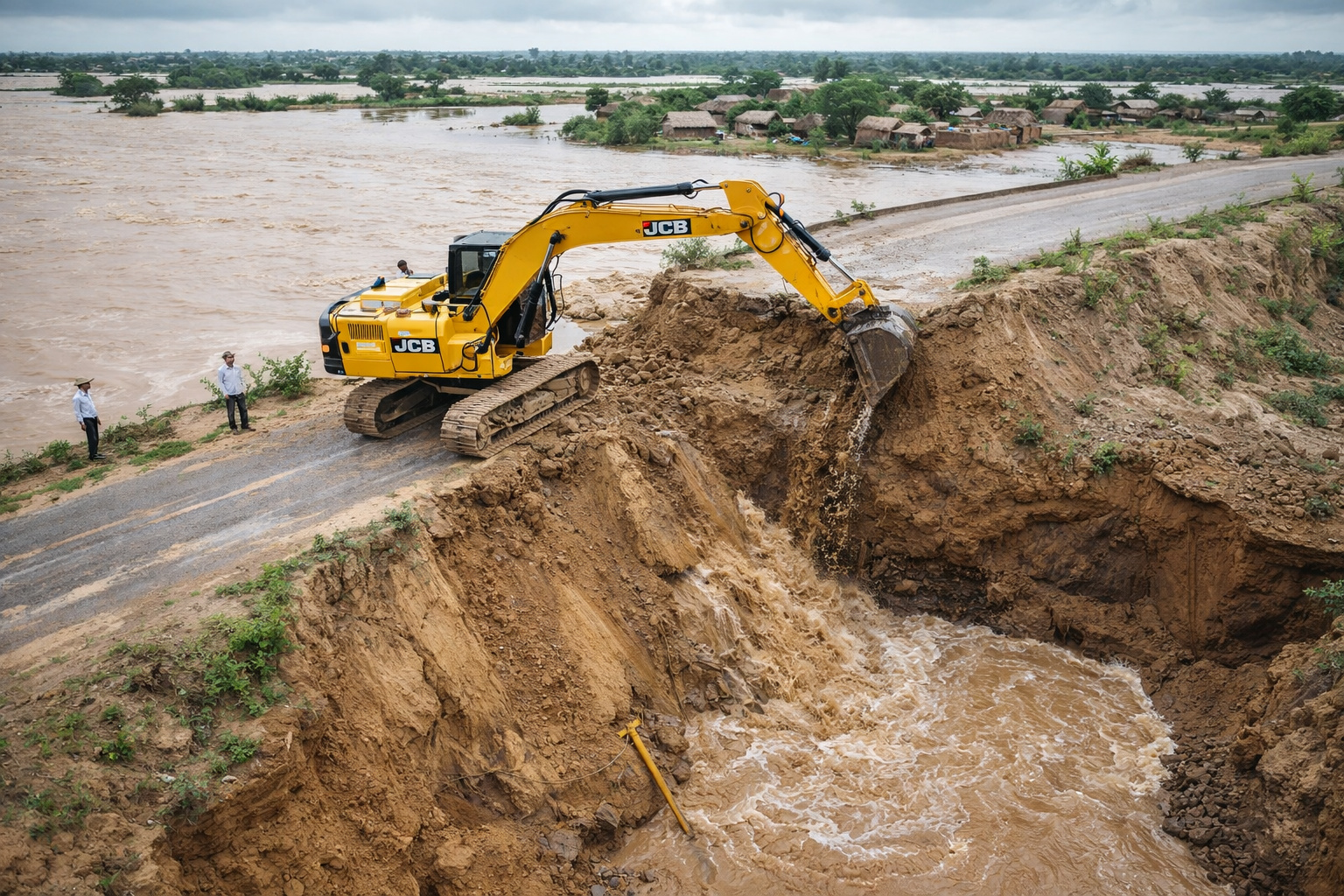
With emergency diversion to abandoned mining craters, engineers save villages from a devastating flood that was advancing through the desert and threatening to destroy entire communities in a matter of hours.
-
It seems simple, but it enriches: from R$ 500 to R$ 6,000 per piece and up to 10 days of handcrafted production, how is the couple from Praia Grande making a high income with hyper-realistic miniatures and turning a hobby into a money-making machine?


The equipment had a diameter of 17.5 meters, a length of 99 meters, and 16,500 horsepower, enough to bore through rock and compact soil while installing the concrete rings that form the tunnel’s inner walls.
With a weight of over 6,000 tons, Bertha operated at about 25 centimeters per minute, a seemingly slow pace, but extraordinary for an excavation of this magnitude.
Its name honors Bertha Landes, the first female mayor in Seattle’s history, a symbol of the city’s strength and innovation.
An Engineering and Patience Challenge
Bertha’s journey was not simple.
Just six months after the start of drilling, in December 2013, the machine hit a metal pipe and suffered significant damage to its cutter blades.
Progress was halted for nearly two years, while engineers constructed an access shaft for repairs.
Resumption occurred in December 2015, and Bertha completed its crossing in April 2017, emerging at the northern end of the route.
The excavation cost more and took longer than expected, but the project was successfully completed, consolidating itself as one of the greatest feats of modern engineering in the United States.
The Urban and Environmental Impact
With the SR 99 Subsurface Tunnel in operation, Seattle gained a new urban configuration.
The traffic that used to cross downtown now flows beneath the city, which reduced congestion, decreased noise levels, and allowed for reconnecting the central area with the waterfront.
The demolition of the old Alaskan Way Viaduct restored visual access to Elliott Bay for the public and opened space for parks, recreational areas, and real estate projects.
The tunnel also increased seismic safety, as the previous structure could collapse in a major earthquake.
Data and Numbers That Impress
The SR 99 Subsurface Tunnel was the first in the world to house a two-level highway within a single large-diameter tube, an unprecedented achievement in civil engineering.
Total Length: 2.83 km
Maximum Depth: 64 m below street level
Total Cost: 3.3 billion dollars
Cost of the Boring Machine: about 80 million dollars
Start Date: July 2013
Completion of Excavation: April 2017
Opening to Traffic: February 2019
Users pay a toll to travel through the tunnel, and the revenue contributes to part of the investment costs.
The system is automated and adjusted annually according to traffic flow and maintenance costs.
Comparison with Brazilian Engineering
In terms of size and technology, the SR 99 Subsurface Tunnel is on a higher level than major Brazilian tunnels, although the country has notable projects.
The Tamoios Highway in São Paulo has Brazil’s longest road tunnel, measuring 5.55 km, but it is in mountainous terrain, not beneath an urban center.
The Marcello Alencar Tunnel in Rio de Janeiro has 3.38 km and runs underground beneath Guanabara Bay.
In Brazil, the largest tunnel boring machines, known as “tatuzões,” have a diameter of about 10.6 meters and are mainly used in metro construction.
In Seattle, Bertha operated on a scale almost twice as large, demonstrating the technological advancement necessary to bore the underground of a metropolis without interrupting its daily life.





I must say this article is extremely well written, insightful, and packed with valuable knowledge that shows the author’s deep expertise on the subject, and I truly appreciate the time and effort that has gone into creating such high-quality content because it is not only helpful but also inspiring for readers like me who are always looking for trustworthy resources online. Keep up the good work and write more. i am a follower.