





 Portuguese
  English
  Spanish
  4 min of reading
  0 comments


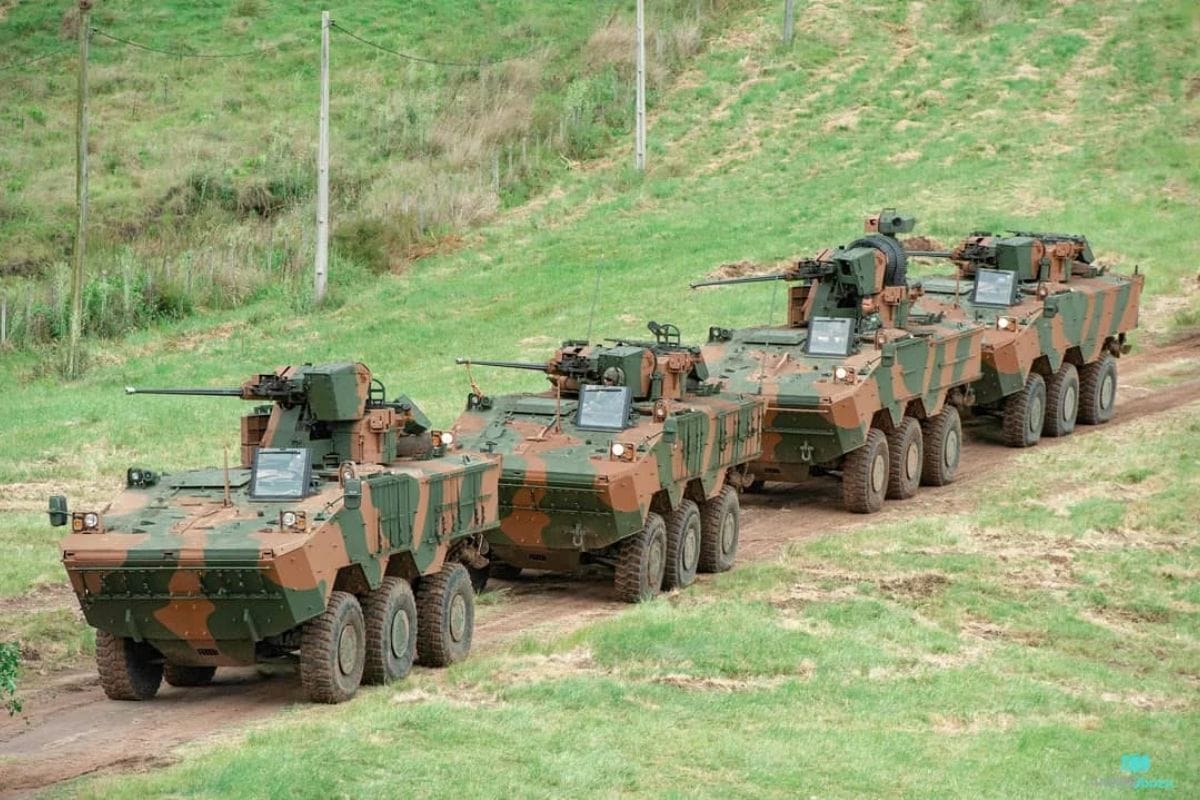
Meet the VBTP-MR Guarani Armored Vehicle, developed in Brazil, which transports 11 soldiers, reaches 100 km/h on land, navigates at 10 km/h, and is vital for mechanized infantry.
The VBTP-MR Guarani armored vehicle is a milestone in the modernization of the Brazilian Army and a step forward for the country’s Defense Industrial Base (DIB). This 6×6 amphibious armored vehicle, weighing about 18 tons, was developed in partnership between Iveco Defence Vehicles and the Army Technology Center (CTEx).
Designed to transport up to 11 soldiers, the Guarani reaches 100-110 km/h on land and navigates at 9-10 km/h. It replaces legacy platforms like the EE-11 Urutu, offering greater mobility, protection, firepower, and versatility through its modular design.
The Strategic Development of the VBTP-MR Guarani Armored Vehicle
The VBTP-MR Guarani armored vehicle program arose from the need to modernize Brazil’s land capabilities. The Brazilian Army sought to replace obsolete armored vehicles and transform its Motorized Infantry into Mechanized Infantry, increasing mobility and deterrent capability. The partnership with Iveco Defence Vehicles, initiated in the 2000s, ensured technology transfer and the establishment of a factory in Sete Lagoas (MG), the first Iveco Defence Vehicles facility outside of Europe.
-
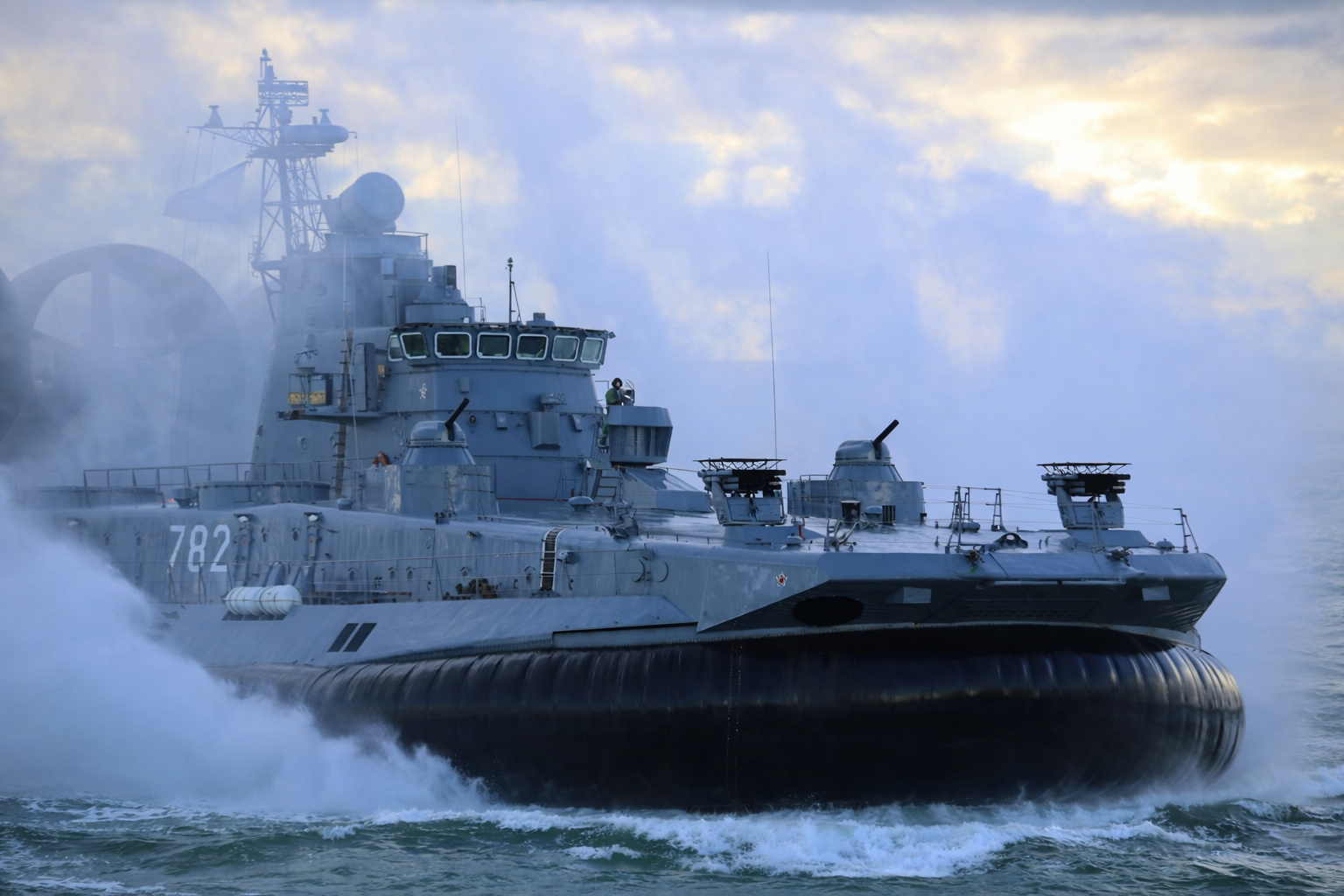
Classified as a “amphibious monster” weighing 555 tons, 57 meters long, and featuring three propellers with a diameter of 5.5 meters, the Zubr is the largest military hovercraft ever built, capable of transporting 3 tanks or 500 soldiers at speeds exceeding 100 km/h over water, ice, and sand, and China has resumed production of it to project power in the South China Sea.
-
The U.S. Army receives the first Black Hawk helicopter that can fly without pilots, be controlled by a tablet, and even land on its own during high-risk missions.

-
With 11,000 tons and sensors capable of hunting submarines at long distances, the Type 055 has become one of the most feared floating arsenals of the Chinese navy.

-
With over 15,000 tons, radars capable of tracking hundreds of targets simultaneously, and more than 120 missiles ready for launch in seconds, modern destroyers cease to be escorts and begin to dominate the naval battlefield.


The first Guarani prototype was presented in 2009, followed by rigorous testing. Serial production began in 2012, with over 700 units delivered by the end of 2023. The project aims for a localization index of over 60%, fostering the national defense industry. The current contract, under the Strategic Project for Armored Forces, foresees a total of 2,096 vehicles.
Inside the Guarani
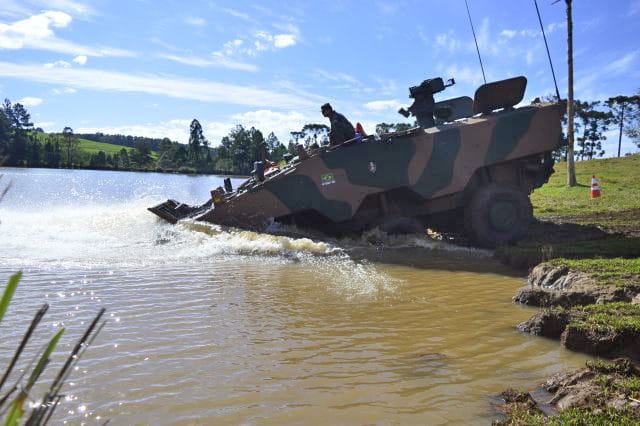
The VBTP-MR Guarani armored vehicle features 6×6 traction and a combat weight of approximately 18 tons, varying with armor. Its dimensions are 6.91m in length, 2.7m in width, and 2.34m in height. It is powered by an IVECO FPT Cursor 9 or 10ENT-C engine with 383 hp, coupled to a 6-speed automatic ZF transmission with a retarder, reaching 100-110 km/h on land and having a range of 600 km.
Its amphibious capability allows navigation at 9-10 km/h, with two rear propellers. The basic ballistic protection is STANAG 4569 Level 2, expandable, and the “V” hull protects against mines of up to 6kg of TNT (with additional armor). The Guarani can be equipped with remotely controlled weapon stations (SARC) such as the REMAX (7.62mm, 12.7mm machine guns, or 40mm grenade launchers) or the UT30BR turret with a 30mm gun.
In the Field
The VBTP-MR Guarani armored vehicle is crucial in transforming infantry, providing greater tactical mobility, protection, and firepower. It replaces the EE-11 Urutu, offering a qualitative leap in capabilities and allowing the application of new combined arms tactics.
Designed to operate in various Brazilian terrains, the Guarani has been deployed in Operation Ágata (borders), Operation São Francisco (Complexo da Maré, RJ), and in the security of major events. Its quality has been internationally recognized, with exports to Lebanon, the Philippines, and Ghana, and interest from Argentina, strengthening Brazil’s position in the defense market.
Variants and Continuous Modernization of the VBTP-MR Guarani Armored Vehicle
The modularity of the VBTP-MR Guarani armored vehicle allows for a family of variants for various functions. The main ones include VBTP (Personnel Transport), VBCI (Infantry Combat with 30mm turret), VBE PC (Command Post), VBTE Amb (Ambulance), VBC Mrt (81mm or 120mm Mortar Carrier), and VBE Soc (Rescue). Other variants such as engineering, communications, fire control, and anti-aircraft (with SAAB RBS 70 NG missiles) are under development or in service.
A “Guarani 2.0” initiative is under discussion with IDV to integrate 26 enhancements based on operator feedback. Modernizations in subsystems, such as the UT30BR turrets (anti-drone kits) and the development of simulators (SENAI) and Platform Management System (Project Proteus), ensure the continuous evolution of the platform, designed for a lifespan of 25 to 30 years or more.
The VBTP-MR Guarani Armored Vehicle in National Defense and Industry


The VBTP-MR Guarani armored vehicle program has catalyzed the Brazilian Defense Industrial Base (DIB). National production in Sete Lagoas (MG) has created jobs and developed a local supply chain, contributing to technological autonomy. The intellectual property of the project by the Brazilian Army allows for export royalties.
The total investment in the Armored Forces Project, which includes the Guarani, is estimated at R$ 30.585 billion. The Guarani is more than an armored vehicle; it is a symbol of Brazilian innovation capability and a pillar of national defense. Its continuous evolution and consistent funding are crucial to maintaining its relevance and operability in the coming decades.







-

Uma pessoa reagiu a isso.