





 English
  Francês
  Alemão
  Italiano
  Japonês
  Norueguês
  Portuguese
  Spanish
  7 min of reading
  0 comments


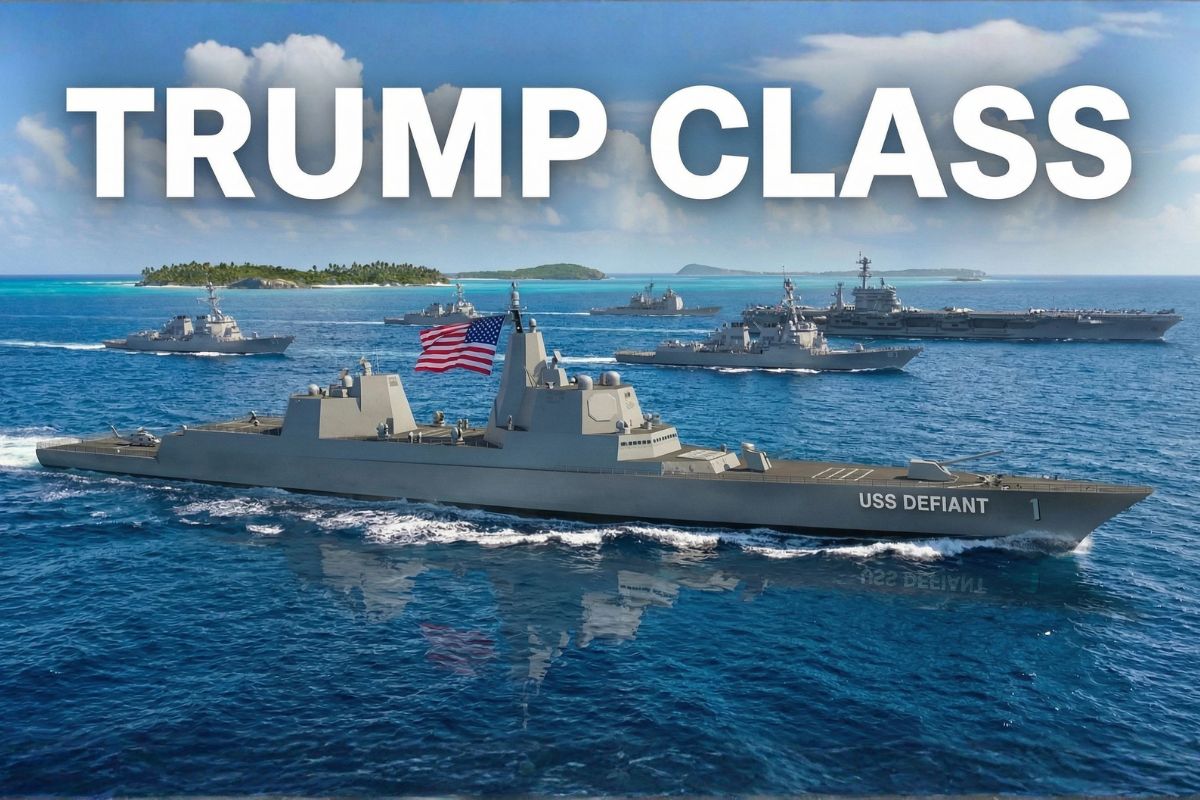
After The Political Announcement And Nostalgic Speeches, The Trump-Class Battleship Faces The Reality Of The U.S. Navy: Warships Today Face Salvos Of Missiles, Costing Around 10 Billion And Offering Fewer Vertical Launch Cells Than An Arley Burke, With Less Flexibility In Modern Combat.
The Trump-class battleship entered the debate after statements from President Trump in front of three and four-star admirals, advocating a return to warships with solid steel and guns, while criticizing the use of aluminum. The nostalgic push cited old images, Victory at Sea, and a fascination with ships of the past.
In the technical assessment discussed by Trent Hone, a Marine and President of the Foundation University Corps Studies Strategic at the Marine Corps University in Quantico, Virginia, the central problem is not nostalgia but the incompatibility between warships and the current engagement environment, marked by aircraft, modern submarines, and salvos of missiles.
The Political Announcement And The Promise Of The Trump-Class Battleship

The idea of the Trump-class battleship was initially treated as a typical speech moment, but gained more concrete outlines when an announcement of a battleship associated with Mar-a-Lago appeared.
-
Neither the USA nor China: a small European nation has become one of the largest maritime powers on the planet, controlling one of the largest merchant fleets in the world with thousands of ships and dominating the global transportation of oil and strategic cargo.
-
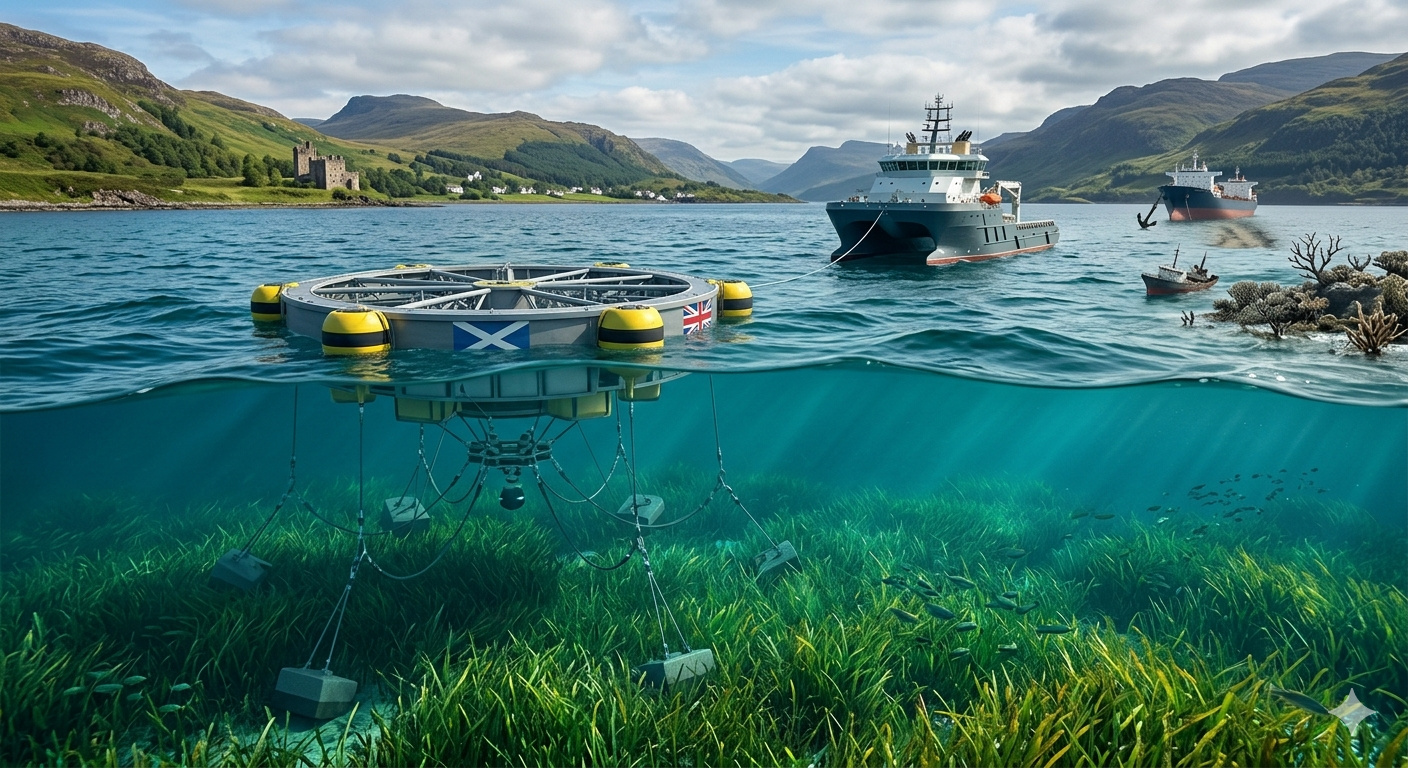
Scotland and the United Kingdom have created a new anchoring system that floats in the water without touching the seabed, after discovering that the current from a conventional anchor destroys up to 50 m² of seagrass meadow per event and that ship-damaged reefs showed no signs of recovery even ten years later.
-
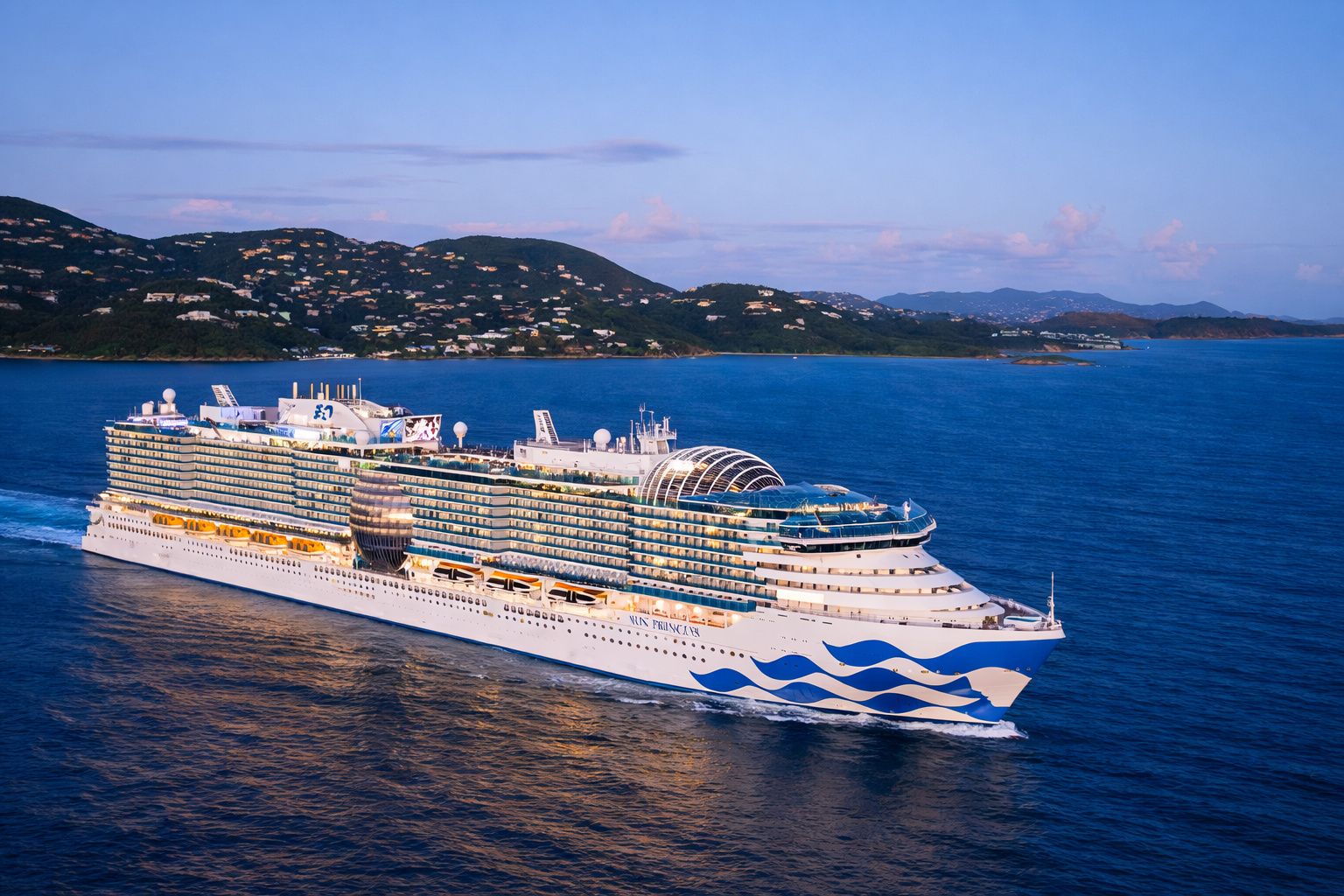
Weighing 175,500 Tons, Measuring 345 Meters Long, and With Capacity for Over 4,300 Passengers, the Sun Princess Becomes the Largest Ship Ever Built by Princess Cruises and Attracts Global Attention for Its Huge Glass Dome Inspired by Santorini’s Architecture Installed on Top of the Vessel
-
TX-10, The Colossus of The Sea: Largest Lifter Ship in The U.S., With Two Giant Barges, 73-Meter Tall Structure, and Strength to Raise 7,500 Tons of Sunken Oil Rigs

The proposal revived the image of warships as a symbol of national and naval power.
This symbolism is part of the appeal.
Trent Hone relates the tradition to the imagery of Theodore Roosevelt and the Great White Fleet, when the U.S. Navy sought to assert interests while training and experimenting with modern fleet tactics using warships integrated with other means.
What Warships Represented At Their Peak And Why The Scenario Changed

At their peak, warships were not isolated pieces.
They functioned within a balanced fleet, with battlecruisers, reconnaissance cruisers, destroyers, and smaller units, all aimed at locating the enemy, protecting the formation, denying enemy reconnaissance, and creating conditions for engagement.
The foundation of this system was coherence between reconnaissance, screening, detection, and engagement range.
This coherence was eroded with the introduction of more sophisticated electronics, more advanced communication systems, satellites, aircraft, and more capable submarine armaments, including modern nuclear submarines and attack submarines.
Yamato As A Milestone And The Turn To The Range Of Aviation

Trent Hone uses the Japanese warship Yamato as a historical marker.
The Yamato, described as the largest and most powerful well-built warship, was sent on a high-risk mission linked to the attempt to interrupt the amphibious invasion of Okinawa, intending to run aground and act as a coastal battery.
It was sighted and attacked by U.S. Navy aircraft from the fast carrier task force, Task Force 58, and sank after concentrated torpedo strikes on one side within hours.
The tactic incorporated lessons from the sinking of the sister ship Musashi in October 1944 during the Battle of Leyte Gulf.
The technical point is range. Trent Hone points out that the maximum range of a naval engagement is 13 nautical miles.
Additionally, Trent Hone cites classic examples of warships in direct confrontation, such as the Battle of Jutland and the HMS Hood, considered invulnerable by the Royal Navy until it was destroyed, highlighting how technical certainties change over time.
When aircraft began to operate with the potential to destroy or degrade a ship and operate at much greater distances, the logic of the fleet changed, and the axis shifted away from the gun.
From The 1930s To Carrier Battles, The Loss Of The Gun’s Relevance

The transition was not a clean break, and Trent Hone describes the process as confusing.
From the 1920s and more clearly in the 1930s, aircraft performance grew and pushed navies like the Royal Navy, the U.S. Navy, and the Imperial Japanese Navy towards the potential of aviation.
The envelope comparison is direct: not 13 miles, but 130 miles. This alters tactics.
The U.S. Navy began to think about striking the enemy with everything at once, combining naval gunfire, carrier-based air strikes, and destroyer torpedoes to maximize cumulative effect and put the adversary in disarray.
The result appears in battles such as Coral Sea, Midway, and Philippine Sea, where the battle between carriers dominates, and one side can refuse surface combat if the mission has already been accomplished or if the strike power has been degraded.
The Post-War Use: Political Visibility And Ground Fire Support
Warships did not disappear immediately.
The U.S. Navy tried to keep warships in service after World War II, but faced an operational fact: warships require a lot of maintenance and a lot of people to operate, with intense manual effort to keep guns and steam engineering plants operational.
In the 1980s and 90s, the return of Iowa-class battleships appeared associated with political visibility.
Trent Hone describes that a warship at sea is a piece of the United States, expressing commitment, especially in the context of the Cold War.
From a mission point of view, warships became mainly platforms for ground fire support. The cited standard includes Korea, Vietnam, and Gulf War, using 16-inch guns to hit land targets.
Even with crew expenses, a 16-inch projectile is described as much cheaper than a Tomahawk.
The Calculation That Topples The Trump-Class Battleship: Missiles And Vertical Launch Cells
The modern argument revolves around missile salvos and launch volume. Trent Hone proposes a simple metric: how many vertical launch cells a ship carries.
In this regard, the Trump-class battleship would be a warship of about 35,000 tons, but the Arley Burke destroyers, at about 10,000 tons, offer more offensive firepower in terms of vertical launch cells.
The operational comparison is even tougher. Three Arley Burke destroyers can be distributed in different formations, in different parts of the world, or dispersed in the same theater, increasing distribution, resilience, and the ability to concentrate firepower in space and time.
A single Trump-class battleship, even with the steel and gun rhetoric, is confined to one point and exposes greater risk of concentration.
The cost reinforces the barrier. The cited number for the Trump-class battleship is 10 billion, approaching the cost of a Ford-class aircraft carrier.
At this level, the U.S. Navy would need to justify why to invest in a warship with fewer vertical launch cells than alternatives already in the inventory.
Why The U.S. Navy Will Not Build The Trump-Class Battleship
The real reason is not only political, it is structural.
In a peer conflict, the cited discussion points to distributed lethality and the need for more smaller platforms, within certain limits, to gain flexibility and resilience.
The proposal for the Trump-class battleship is large, not as large as an aircraft carrier, but with less flexibility and, numerically, less offensive power than existing options.
The risk reasoning also weighs in. If someone hits an aircraft carrier, the impact is enormous due to thousands of people and the small number in inventory.
If someone hits smaller ships like destroyers, there is more flexibility for political and operational response, as recalled in references to Cole and Stark. A single warship adds political and military vulnerability by concentrating capabilities in a single platform.
The Useful Collateral Effect: The Discussion About Shipbuilding And Workforce
Despite being unlikely, the Trump-class battleship is described as a trigger for debate.
Trent Hone believes that if the proposal serves to gain enthusiasm among representatives of the people and increase investment in the U.S. Navy, the outcome can be positive, as long as the money goes towards ships better aligned with the way to combat and apply national policy in the modern era.
The cited conversation includes a direct data point of industrial need: 250,000 shipyard workers in the next five years.
In this framing, the Trump-class battleship functions as a paper proposal that draws attention, while the practical delivery would be to build more ships, more sailors, and a force structure more connected to the current missile scenario.
The Trump-class battleship was announced with an appeal to memory, Victory at Sea, and the image of invulnerable warships. The analysis discussed by Trent Hone points to the opposite: limited gun range, transformation of combat by aviation, and a present defined by missile salvos, detection, and submarines, where vertical launch cells and distribution are worth more than mass and steel.
In the capacity spreadsheet, the Arley Burke wins by number, dispersion, and resilience, and the U.S. Navy tends to prioritize more platforms and more vertical launch cells, rather than concentrate resources on a single, costly, and politically sensitive warship. If the debate helps unlock investment and labor in shipyards, the topic will have served a purpose even without leaving the discourse.
What Weighs More Against The Trump-Class Battleship: The Cost Of 10 Billion, Vulnerability To Missile Salvos, Or Fewer Vertical Launch Cells Than The Arley Burke?










-

Uma pessoa reagiu a isso.