





 Portuguese
  English
  Spanish
  4 min of reading
  0 comments


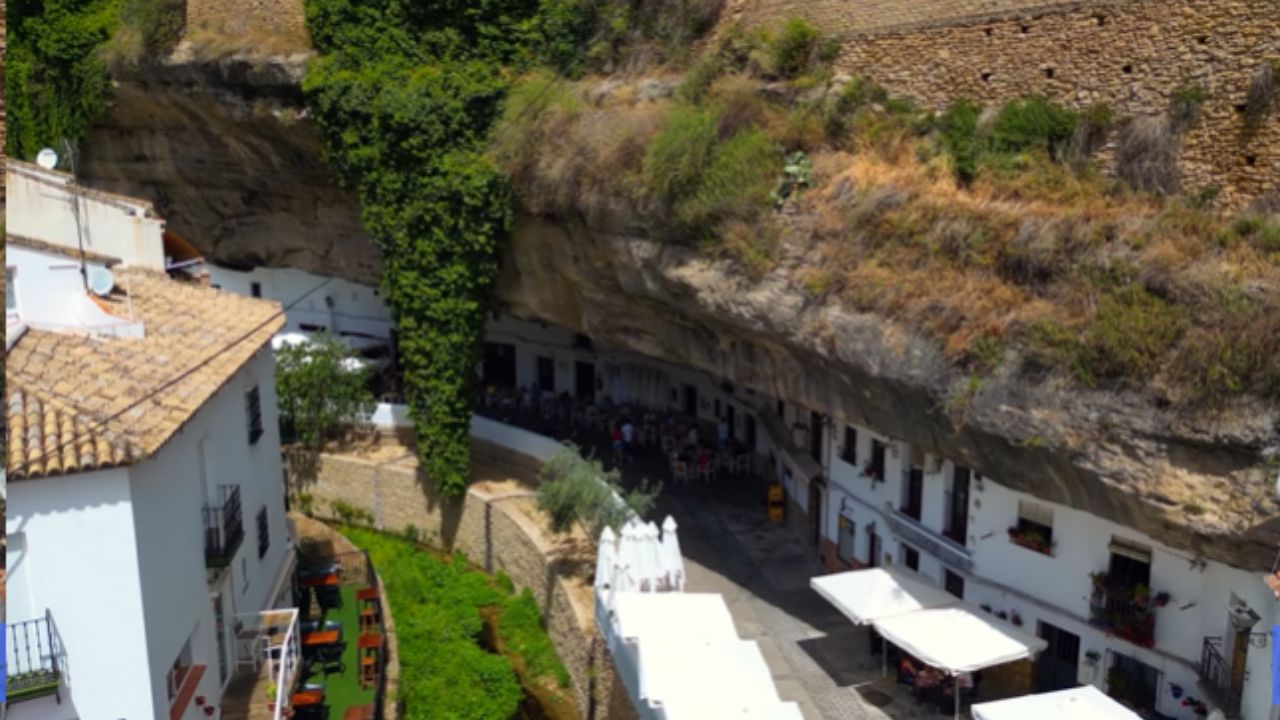
In Andalusia, Houses and Entire Streets Take Advantage of Natural Cracks in a Cliff; Understand the Geology and History of This Village Built Under a Single Giant Rock.
When visiting the famous “Pueblos Blancos” of Spain, the expectation is to find whitewashed houses atop hills. However, Setenil de las Bodegas, in the province of Cádiz, dramatically inverts this logic. It is a village built under a single giant rock, where the roofs of the houses and the coverings of the streets are, in fact, the mountain itself. This configuration is not merely aesthetic, but the result of an ingenious human adaptation to an unyielding geology.
Unlike cities that dig tunnels, Setenil uses the technique of “rock-shelter”. The urban structure is defined by the course of the river and millennial erosion, creating a scenario where architecture fills the voids left by nature. This village built under a single giant rock offers a lesson in history, geology, and survival, revealing how ancient populations transformed a natural fortress into a functional and climatically efficient home.
The Geological Matrix: A Prehistoric Seabed
The impressive structure looming over the heads of residents and tourists is not a common stone. According to technical information from the source Setenil Historia y Numismática, the rock that makes up this scenery is, in fact, calcarenite (a bioclastic limestone sandstone). This formation dates back to the Tortonian period in the Miocene, about nine million years ago.
-
These are the drivers who may stop paying tolls on highways in a project that promises to reduce costs for those who live from transportation in Brazil.

-
(Video): Italian pilot lands plane on moving train at 120 km/h and achieves unprecedented feat in aviation, even with a narrow runway and without direct visual contact.

-
It seems to have come out of a science fiction movie: A Brazilian city where it rains almost every day, recording over 4,000 mm per year, driven by climatic factors — a direct result of its strategic location in the Amazon.
-
The water crisis that could change everything this year has already begun; it’s not just about the climate, it affects technology, raises product prices, and can halt entire companies without warning.


At that time, the region was not a mountain range but rather a marine bay connected to the Guadalquivir valley. The rock is composed of bioclastic fragments, skeletons, and debris from marine organisms that were compacted. It is even possible to observe traces of fossilized biological activity on the roofs of the streets, evidencing that the village built under a single giant rock occupies what was once a seabed.
The force sculpting this landscape was the Guadalporcún River. The source Setenil Historia y Numismática details that, in the exact section that crosses the urban core, the river is locally known as Rio Trejo. It was the force of its waters, combined with the high porosity of the calcarenite, that eroded the base of the canyon, creating the natural shelters that today host the houses.
Architecture of Light and Shadow
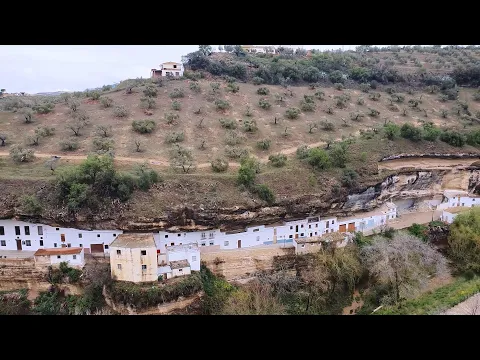

The urban layout of Setenil is rigidly dictated by the canyon carved by the river, generating two opposing environments that define life in the town. According to the source Rural Sierra Sol, this duality is best represented by the two main streets: Calle Cuevas del Sol and Calle Cuevas de la Sombra.
The Calle Cuevas del Sol (Street of the Caves of the Sun) takes advantage of solar orientation to receive direct light for most of the day. It is the social and commercial heart, where bars and terraces align under the rock but are open to the river.
On the other hand, the Calle Cuevas de la Sombra offers a claustrophobic and fascinating experience. The source Rural Sierra Sol explains that, on this street, the rock covers the entire road like a tunnel, creating an environment of perpetual shadow where the sun “never shines”. There, the rock is not just a ceiling for the houses, but a complete covering for public space, generating a naturally cool yet humid microclimate.
From Impenetrable Fortress to Natural Wine Cellar
The history of the city’s name reflects its functional evolution. The source Sur in English clarifies the etymology of “Setenil”, deriving from the Latin legend septem nihil (“seven times nothing”). This refers to the city’s resistance during the Christian Reconquest: it took seven sieges for the Moorish fortress, protected by the canyon, to finally fall in 1484.
After the conquest, the function of the caves changed. The suffix “de las Bodegas” was added by the new Christian colonizers. As pointed out by Sur in English, they introduced vineyards to the region and realized that the rocky caves maintained a stable and cool temperature, ideal for wine storage and aging. What once served as a military shield became an economic incubator for wine production.
The Challenges of Living Under the Stone
Though picturesque, life in this village built under a single giant rock imposes daily challenges. The same porosity of the calcarenite that allowed erosion by the river also causes modern problems. The source Setenil Historia y Numismática highlights that the rock absorbs rainwater and releases it slowly, creating leaks and a sensation of constant humidity days after storms.
Moreover, the Rio Trejo, creator of the town, poses a latent risk of flooding. Logistics are also complex: moving furniture or making deliveries on the narrow, covered streets requires Herculean effort, transforming routine activities into household engineering challenges.
Setenil de las Bodegas proves that architecture can adapt to the most extreme conditions of nature, but living under tons of limestone rock brings risks of humidity and isolation.
Could you live in a house where the ceiling is a 9-million-year-old rock, or would the feeling of “tunnel” be suffocating for you? Share your thoughts in the comments below.





-

-

-

-

-

-

16 pessoas reagiram a isso.