





 Portuguese
  English
  Spanish
  5 min of reading
  0 comments


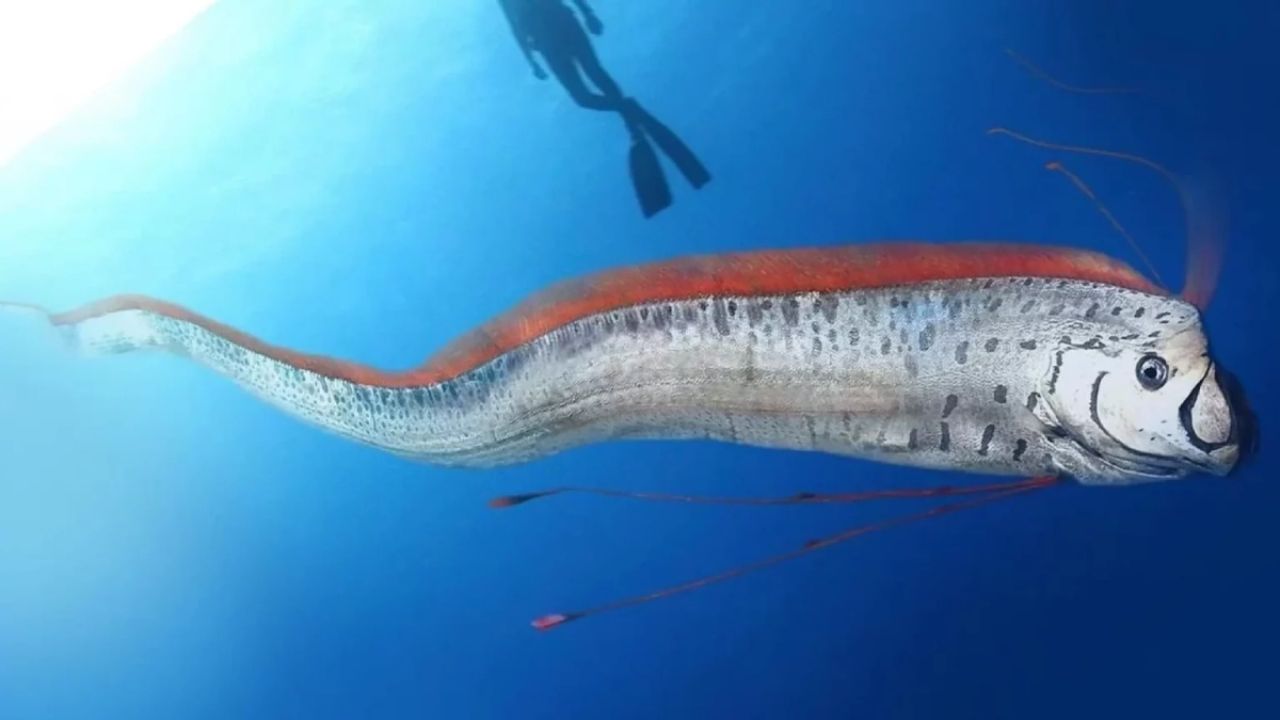
The Legend Of The King Of Sardines Crosses Centuries And Associates The Rare Appearance Of The Animal With Natural Disasters, According To Traditional Beliefs.
The legend of the king of sardines originated from popular beliefs that associate the appearance of this rare animal with natural tragedies, such as earthquakes and tsunamis.
The story mainly involves Asian cultures, where the king of sardines has come to be seen as a warning sign from the deep sea.
This interpretation gained strength because the king of sardines lives at great depths and is rarely found near the surface.
-
He started running at 66 years old, broke records at 82, and is now a subject of study for having a metabolic age comparable to that of a 20-year-old, in a case that is intriguing scientists and inspiring the world.

-
Oldest tree on the planet reappears after 130 years of searches: Wattieza, 385 million years old, was 10 meters tall and had no leaves or seeds; Gilboa fossils in New York solved the mystery in 2007.

-
A 48-square-meter house assembled in hours with 4,000 bricks made of recycled plastic that does not absorb moisture, has natural thermal insulation, and costs less than 90,000 reais in a complete kit.

-
Luciano Hang revealed that Havan’s air fleet has already accumulated more than 20,000 landings, 10,000 flight hours, and 6 million kilometers traveled, and he says that without the planes, the company would never have grown so quickly.


Therefore, when it appears, it tends to cause shock and generate symbolic explanations to justify the event.
Morphology And Appearance Of The King Of Sardines
The king of sardines is one of the most unique species in the oceans, drawing attention mainly for its unusual body shape.
Its body is extremely long, laterally flattened, and resembles a ribbon or snake, which contributes to its mysterious appearance.
The silvery and shiny coloring reflects light even at great depths, while the dorsal fin, which runs almost the entire length of the body, has an intense and striking reddish tone.
Unlike many fish, it does not have scales and displays a well-defined lateral line.


Although most recorded specimens are about two meters long, there are reports and studies indicating the possibility of much larger individuals, reinforcing its status as a marine giant.
Behavior, Habitat And Unique Characteristics
Accustomed to living in deep waters, the king of sardines occupies regions that range from the epipelagic zone to the mesopelagic, being found in both tropical and temperate oceans around the world.
Its mode of locomotion is elegant and unusual, based on vertical undulating movements of the body, propelled mainly by the dorsal fin.
Among its most curious characteristics is the ability to survive even after losing parts of its body, something rare among bony fish.
Due to its sporadic presence near the surface and in coastal areas, the king of sardines has historically been associated with maritime legends and even popular interpretations linking it to seismic events, further increasing the fascination surrounding this enigmatic species.
King Of Sardines: A Real Animal Surrounded By Mystery
Despite the mystical aura, the king of sardines is a real animal, existing and known by science.
Still, its behavior, which is not easily visible to humans, has contributed to it being surrounded by legendary narratives over time.
As it lives far from the coast and in deep ocean areas, its presence outside its natural habitat has come to be interpreted as something out of the ordinary, fueling stories passed down through generations.
According to traditional beliefs, the king of sardines became known as a “messenger of the sea.”
The central idea of the legend is that the animal would surface to warn of imminent natural disasters.
This association was built based on empirical observation and collective fear in the face of natural phenomena that for a long time lacked scientific explanation.

Historical Coincidences Helped To Strengthen The Legends
Over time, some appearances of the king of sardines occurred close to major natural events.
One of the most well-known cases occurred before the earthquake and tsunami that hit the Tohoku region of Japan in 2011, a disaster that also affected the Fukushima nuclear reactor.
These coincidences ended up reinforcing the idea that the fish would appear as a warning sign for catastrophes.
However, subsequent scientific analyses found no direct relationship between the species’ presence and the occurrence of earthquakes or tsunamis.
The Japanese Interpretation Of The King Of Sardines
In Japanese popular imagination, the explanation for this supposed “warning” is linked to the behavior of animals in response to environmental changes.
Since the king of sardines lives in very deep waters, it is believed that it is capable of sensing alterations on the ocean floor, such as seismic tremors, before humans do.
This view is connected to the folkloric tradition known as Namazu-e, which associates fish with extreme natural events.
Even without scientific evidence, this belief remains alive, causing each new sighting of the king of sardines to evoke unrest and attention in the country.
Other Cultures Have Also Attributed Meanings To The King Of Sardines
In the northern seas, the king of sardines gained a different but equally symbolic role.
In these regions, it became known as the king of herring, as fishermen believed that its appearance indicated the arrival of large schools.
In ancient Norway, there was also a belief that injuring a king of sardines could harm local fishing.
These narratives show how the species was integrated into the traditions and beliefs of peoples who depended directly on the sea for survival.
A Recent Case That Rekindled The Debate
On February 9, 2025, a king of sardines was found on El Quemado beach in Baja California Sur, Mexico.
The episode generated concern and comments on social media, precisely due to the species’ reputation as a harbinger of natural disasters.

Despite the initial alarm, experts emphasize that the emergence of the king of sardines at the surface may have biological explanations.
Health problems, injuries, or physical debilitation may prevent the animal from remaining at great depths, leading it to move disoriented.
The difficulty of studying the king of sardines in its natural habitat leaves many questions unanswered.
This lack of detailed information has helped perpetuate the fascination surrounding the species over the centuries.
Nevertheless, science is categorical: the fish does not announce the end of the world nor predict catastrophes.
Its appearance, although rare and impressive, is part of natural processes that are still being understood.









-

2 pessoas reagiram a isso.