





 Portuguese
  English
  Spanish
  5 min of reading
  0 comments


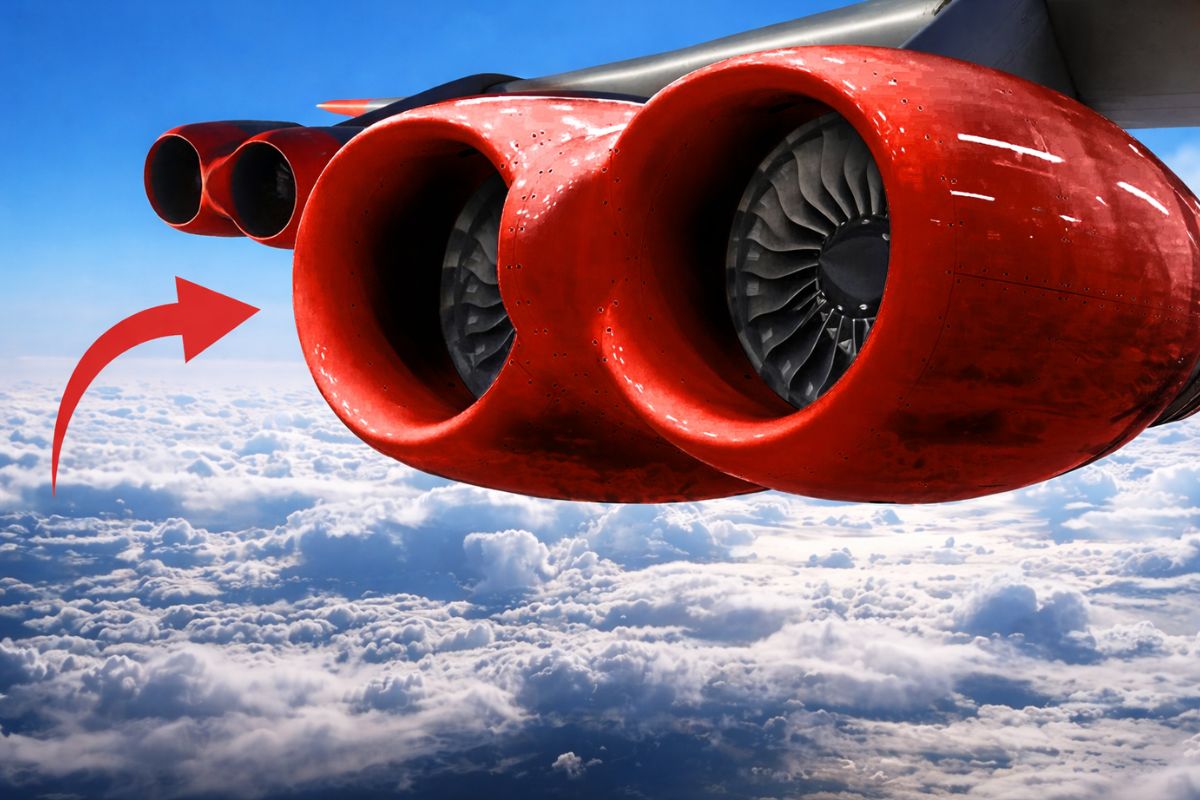
The Modernization of the B-52 Reveals Why the Air Force Keeps a 1950s Bomber Flying Until 2050, Replacing Obsolete Engines Without Changing the Structure, Facing Technical Limits, Billion-Dollar Costs, Nuclear Risks, Strategic Reach, Industrial Logistics, and Decisions Inherited from the Current, Complex, Tough, Deep, Persistent American Cold War
The B-52 has returned to the center of strategic decisions in the United States because it represents something rare in the modern military world: a platform designed in the 1950s that remains operational, relevant, and indispensable to the Air Force. Instead of retirement, the chosen path has been a deep modernization, primarily focused on engine replacement, revealing very specific technical, industrial, and geopolitical priorities.
The timing of this change is not coincidental. The B-52 continues to fly in virtually all major American conflicts, adapting from a Cold War nuclear bomber to a launch platform for guided missiles hundreds of miles away. The decision to keep it active for more decades shows how old structures can survive when the cost and risk of complete replacement become too high.
What the B-52 Represents for the Air Force Today

The B-52 first flew in the early 1950s when jet aviation was still a radical concept, and long-distance navigation relied on paper, manual calculations, and a huge margin of error. Nevertheless, this bomber has crossed technological generations, regional conflicts, and strategic transformations without disappearing from the scene.
-
This small town in Germany created its own currency 24 years ago, today it circulates millions per year, is accepted in over 300 stores, and the German government allowed all of this to happen under one condition.

-
Curitiba is shrinking and is expected to lose 97,000 residents by 2050, while inland cities in Paraná such as Sarandi, Araucária, and Toledo are experiencing accelerated growth that is changing the entire state’s map.

-
Tourists were poisoned on Everest in a million-dollar fraud scheme involving helicopters that diverted over $19 million and shocked international authorities.

-
Hidden beneath the dense forest of the Sierra Nevada, Betoma emerges in a neighbor of Brazil as the greatest archaeological discovery of the century, revealing a colossal ancestral city covering over 18 km², with 8,334 stone structures and the potential to rewrite the history of South American civilizations.


It has been employed in Southeast Asia, the Middle East, and global nuclear deterrence operations. Over time, it has evolved from being merely a vector for unguided bombs to carrying precision munitions launched at great distances, remaining useful even in highly defended scenarios.
Why the B-52 Has Never Been Truly Replaced

The Air Force has tried repeatedly to replace the B-52. Programs like the B-58 and B-70 emerged with this mission, as did more modern aircraft like the B-1 and B-2. Yet, all ended up coexisting or being retired before it.
The reason is not solely due to the end of the Cold War. The B-52’s structure has shown a longevity that exceeded expectations, while newer programs faced high costs, extreme complexity, and operational challenges. The result is an old bomber that has survived several generations of successors.
The Old Engines and the Limit of Industrial Survival

All B-52s currently in operation are of the B-52H version, delivered in the early 1960s. Each aircraft uses eight Pratt & Whitney TF33 turbofans, a design that dates back to the 1950s, with initial tests conducted in 1958.
These engines also had civilian versions, such as the JT3D, used in the Boeing 707 and Douglas DC-8. For decades, this facilitated maintenance since workshops, parts, and suppliers were abundant. This ecosystem has simply ceased to exist. Civilian aircraft have been retired, suppliers have disappeared, and the Air Force has begun to cannibalize old stocks to keep the fleet active.
Why Engine Replacement Became Inevitable
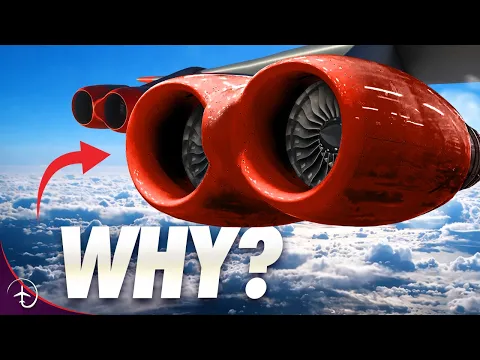

According to internal assessments, the TF33s would become completely unsustainable by around 2030. Not only in terms of efficiency, but because the industrial base needed to keep them alive is disappearing. Without parts and suppliers, there would be no safe way to prolong their lifespan.
Additionally, these engines require much more maintenance per flight hour, consume more fuel, and generate less electrical power. With a bypass ratio of about 1.5:1, they are several generations behind modern turbofans, which operate at much higher ratios.
Why the B-52 Will Continue with Eight Engines
At first glance, replacing eight old engines with four modern turbofans seems logical. In terms of thrust, this would be feasible. A single modern engine could replace two TF33s with surplus power and even less weight.
The problem is structural. The B-52 was designed around eight engines distributed along the wing, which influence not only thrust but also aerodynamics, stability, vibration control, and failure behavior. Reducing to four engines would require redesigning wings, structural boxes, tail, control surfaces, landing gear, and internal systems.
The Hidden Cost of Transforming the B-52 into Another Airplane
Studies conducted since the 1970s, resumed in the 1990s, have always reached the same conclusion. Replacing eight engines with four would equate to certifying a completely new aircraft. This would mean billions of additional dollars, extra years of testing, and unacceptable operational risks for a nuclear-capable bomber.
In light of this, the Air Force opted for the less risky path: keep eight engines but replace them with modern models that have thrust and weight similar to the originals, avoiding major structural changes.
The Choice of the New Engine and the Transformation into B-52J
After proposals from General Electric, Pratt & Whitney, and Rolls-Royce, the Air Force chose, in September 2021, the Rolls-Royce F130, the military version of the BR700 used in the Gulfstream G550 and G650. The engine offers greater efficiency, consuming 30 to 40% less fuel and generating much more electrical power.
608 engines will be procured, along with replacement parts, for the entire fleet. The modernization is so deep that the B-52H will officially be renamed B-52J, something that hasn’t happened since the 1960s.
Why Modernizing the B-52 Is More Difficult Than It Seemed
Installing 21st century engines on a 1950s airframe has revealed unexpected challenges. Air intakes needed to be redesigned due to distortions in the airflow, analog systems had to be replaced with digital architecture, and all electrical integration had to be redone.
Each step requires extensive testing, rigorous validations, and careful sequencing, as the fleet cannot be taken out of service all at once. The result is a schedule that pushes the B-52J’s entry into operation to around 2033, with full completion only in the mid-2030s.
What the B-52 Says About the Moment in the United States
When the B-52 is finally ready to fly into the 2050s, some aircraft will be over 100 years old since leaving the factory. This reveals a profound shift in the aerospace industry: structures last longer than the technology onboard, and design decisions echo across generations.
Keeping the B-52 is not nostalgia. It’s a pragmatic choice amid costs, risks, and industrial limits. Instead of reinventing everything, the United States preferred to adapt what already works, even if it means carrying decisions made 70 years ago.
In your opinion, insisting on the B-52 is a sign of strategic intelligence or a warning about the difficulty of creating something truly new today?








-

2 pessoas reagiram a isso.