





 Portuguese
  English
  Spanish
  5 min of reading
  0 comments


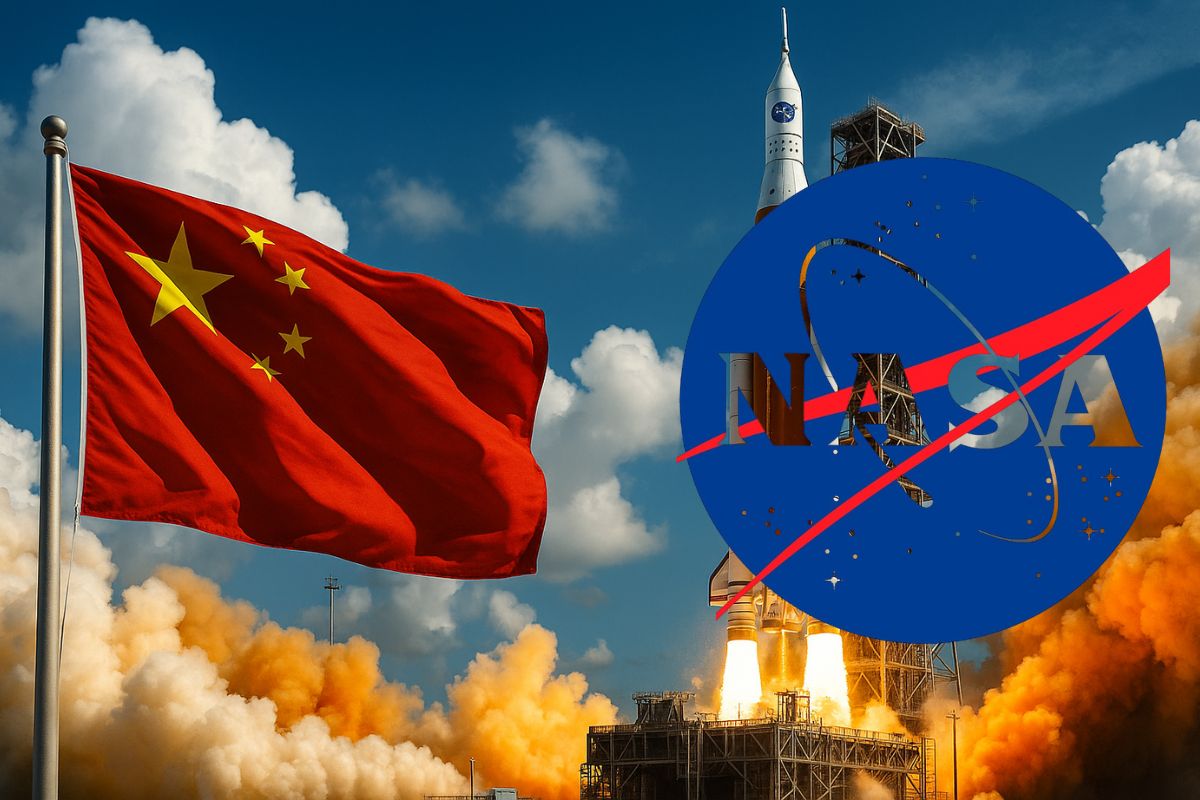
NASA, Pressured by Competition with China, Announced That the Crewed Mission Artemis II Was Advanced to February 2026, with Plans to Send Astronauts to Lunar Orbit and Show Technological and Geopolitical Strength Before Its Asian Rival; According to Xataka, the Agency Adjusted Orion’s Return and Corrected Flaws to Avoid Repeating the Problems Encountered in Artemis I, Reinforcing Confidence in NASA’s Timeline for the Next Lunar Decade
The NASA decided to reduce the margin for delays and open the launch window for Artemis II on February 5, 2026 — two months earlier than planned. The move, as highlighted by Xataka, is less about scheduling adjustments and more about political signaling, in the context of a “second space race” with China and pressure in Washington for the U.S. to reclaim leadership in crewed deep space exploration.
On the technical side, NASA has redesigned the re-entry trajectory of the Orion capsule, a solution that, according to the report, addresses the material loss of the thermal shield observed in Artemis I. Hydrogen leaks and other non-conformities have also been addressed. The message is clear: the agency learned from the previous mission and wants to accelerate the validation of SLS + Orion, the foundation for human return to the Moon.
What Changes with the Advancement: Timeline, Policy, and Message
By bringing Artemis II forward, NASA sends a message to its rival: the U.S. is still setting the pace.
-
China has accumulated up to 1.4 billion barrels of oil in strategic reserves, invested 25 years in renewable energy, and purchased 80% of cheap Iranian oil: how Beijing has prepared for decades for the crisis that is now shaking the world.

-
A single lake holds 20% of the planet’s non-frozen freshwater and is also the deepest and oldest on Earth.

-
How 5,000 Indian dabbawalas manage to deliver around 200,000 lunchboxes a day in Mumbai for over 130 years using bicycles, crowded trains, and a manual system that continues to operate with impressive accuracy.

-
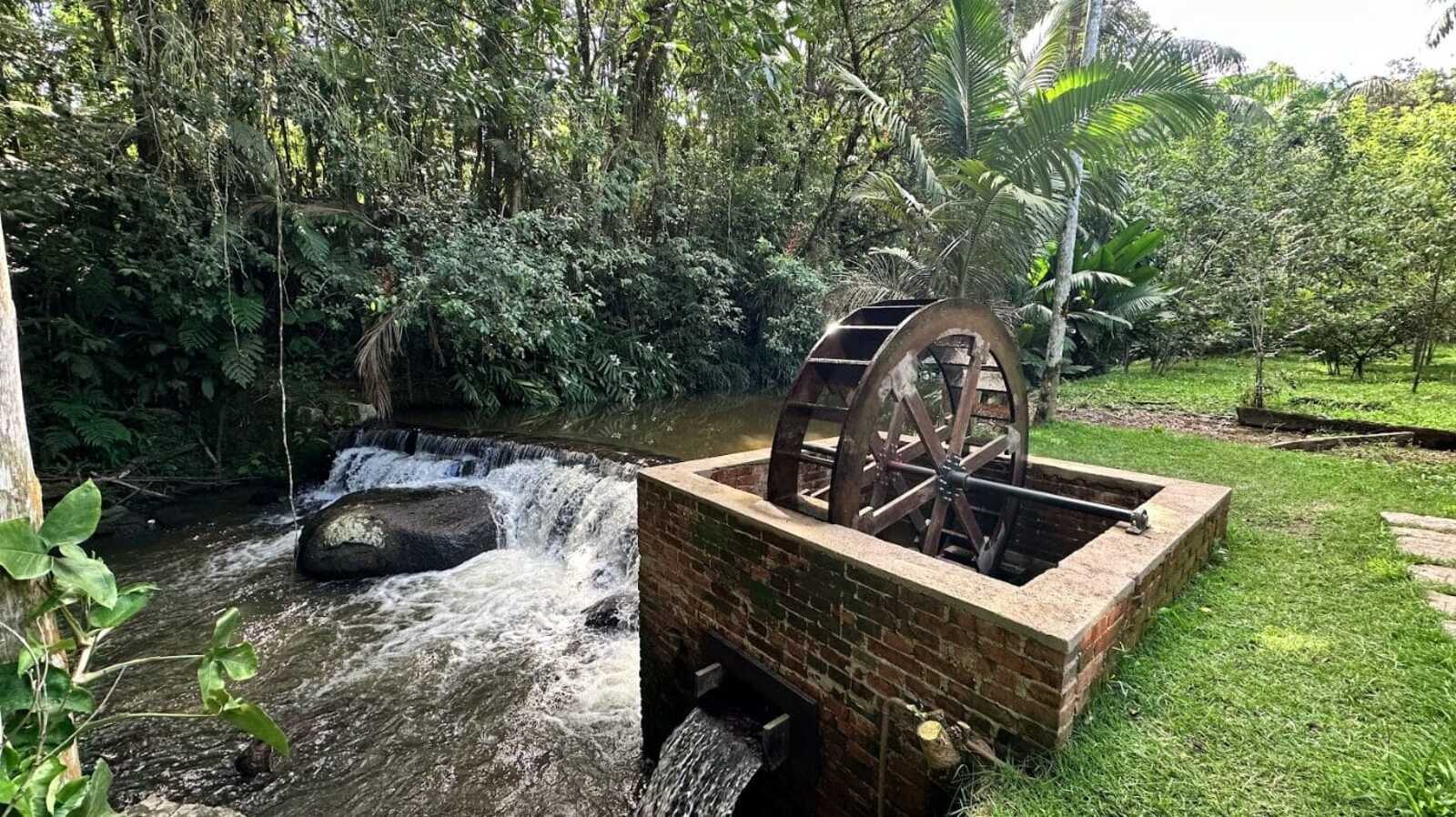
While restoring a historic mansion from 1910, a brick structure with an old turbine that generated energy from the Rio do Testo emerged, along with a hidden door and a rare floor concealed under layers of wax.

Xataka summarizes this move as a “statement of intentions,” linking the window adjustment to the ambition of reaching the surface before the Chinese lunar program.
Even without landing, orbiting the Moon with a crew puts the Americans back in the game after more than 50 years, paves the way for Artemis III, and recalibrates the expectations of Congress and the market.
Another interpretation is budgetary: a mission in the air is a funded mission.
With Orion validated in crewed flight, NASA gains political traction to sustain critical contracts while pressuring partners and suppliers. In the space race, scheduling is strategy.
The Engineering Behind the Decision: How NASA Exorcised the “Ghosts” of Artemis I
The thermal shield was the pivot point for delays. In Artemis I, re-entry gases behaved unpredictably, pulling fragments from the ablative.
The solution described by Xataka does not involve reworking the entire shield, but rather modifying the return trajectory, reducing thermal stress during critical moments.
It’s a pragmatic response: it alters the flight profile, not the “soul” of the vehicle.
Additionally, adjustments to the SLS and fueling operations address incidents of hydrogen leaks that hindered previous windows.
NASA’s goal is to remove risks from the path to crew certification: fly safely, collect data, and unlock the next stage.
The Artemis II Mission: Who’s Going, What They’ll Do, and Why It Matters
NASA confirmed to Xataka the flight profile: 10 days, lunar orbit without landing, and a free return. The crew includes Reid Wiseman, Victor Glover, and Christina Koch, from NASA, and Jeremy Hansen, from the Canadian agency.
They will be the first humans in five decades to leave low Earth orbit, with a wide pass around the far side of the Moon.
Beyond the symbolism, there is data collection on geology and navigation from a unique perspective, including records of craters and lava flows.
These measurements inform the preparation for Artemis III, with maps, windows, and operational margins that reduce uncertainties of a landing. Successful orbital missions lower systemic risk.
The Race with China: Strategy, Timelines, and the “Starship Factor”
Xataka contextualizes: NASA acknowledges the pressure of a “second space race”.
While the Artemis program has faced delays, the Chinese program has advanced systematically. Bringing Artemis II forward to February displays muscle — but does not resolve everything.
Artemis III relies on the lunar version of Starship, from SpaceX, and the agency’s safety panel sees a risk of delays of “years” on this key piece.
The result: Artemis II becomes a showcase and a stopgap.
If SpaceX stumbles, NASA needs intermediate victories to maintain funding, focus, and strategic narrative. The race remains open, and each validated milestone buys time for landing.
What to Watch Until the Launch: Milestones, Risks, and Success Metrics
Before February, NASA needs to complete integrated test campaigns, finalize cryogenic fueling procedures, and conclude flight reviews.
The key metric is the maturity of the re-entry solution: simulations, testing, and thermodynamic analyses must demonstrate thermal clearance.
Another gauge is the readiness of life support systems, which will be used for the first time in a lunar profile.
In the ecosystem plan, it’s worth monitoring Starship’s progress in orbital tests, as any acceleration or setback impacts confidence in the Artemis III timeline. The gears are interdependent.
Why This Matters Beyond Space: Industry, Supply Chains, and Influence
Each advance by NASA in Artemis feeds industrial supply chains (ablative materials, cryogenics, propulsion) and spurs innovation in civil sectors.
There is also a diplomatic effect: leadership in crewed missions weighs in coalitions and in standards for lunar resource use. Exploration is also industrial politics.
For the public, Artemis II reopens the window of fascination and shapes human capital: the demand for engineers, technicians, and researchers grows, driven by tangible goals.
Science and industry go hand in hand when the rocket is on the pad.
NASA accelerated where it could: corrected the return trajectory, closed outstanding issues, and moved Artemis II up to February 2026, as reported by Xataka.
It remains to transform this step into a bridge for a landing that still depends on external parts. If the orbital flight is clean, the agency buys time, confidence, and political goodwill.
And you: does it make sense for NASA to prioritize orbital flight while the landing remains uncertain? In your view, does geopolitical pressure with China help or hinder engineering? If you had to choose a single risk to monitor until February, what would it be — Orion’s re-entry, cryogenic fueling, or life support system integration? Share your thoughts in the comments — we want to hear from those following this race closely.








-

-

-

5 pessoas reagiram a isso.