





 Portuguese
  English
  Spanish
 6 min of reading
  0 comments



In The R$ 314 Million Construction of The New Joinville Bridge, 90 Percent of The Effort Is Buried in The Marsh, With Deep Root Piles, Capping Blocks, and Temporary Structures That Prepare The Ground for The Bridge to Grow in Successive Overhangs and Safely Cross The River for Drivers and Residents.
The R$ 314 million project is presented to the public as a nearly 1 km long bridge that will unlock traffic between the south and east zones of Joinville, but what really defines the success of the project is hidden beneath the surface. Long before any deck appears over the Cachoeira River, teams work quietly to ensure that each pile, each pillar, and each foundation block supports thousands of tons with total stability.
While the landscape still shows more cranes, mud, and metallic structures than the classic image of a completed bridge, the construction site is in the most delicate phase of the schedule. Engineering focuses efforts on an extremely unstable marsh soil, where it is impossible to build anything without first creating an artificial system of “feet” buried in solid rock, tens of meters deep.
The R$ 314 Million Project That Almost Goes Unnoticed

On the surface, the R$ 314 million project appears to be little advanced: there are no completed spans over the river, and what is visible are work fronts focused on drilling, rebar installation, and concreting.
-
New CCR concrete paving technology promises roads up to 3x more durable, less maintenance, and cost reduction in Brazil.

-
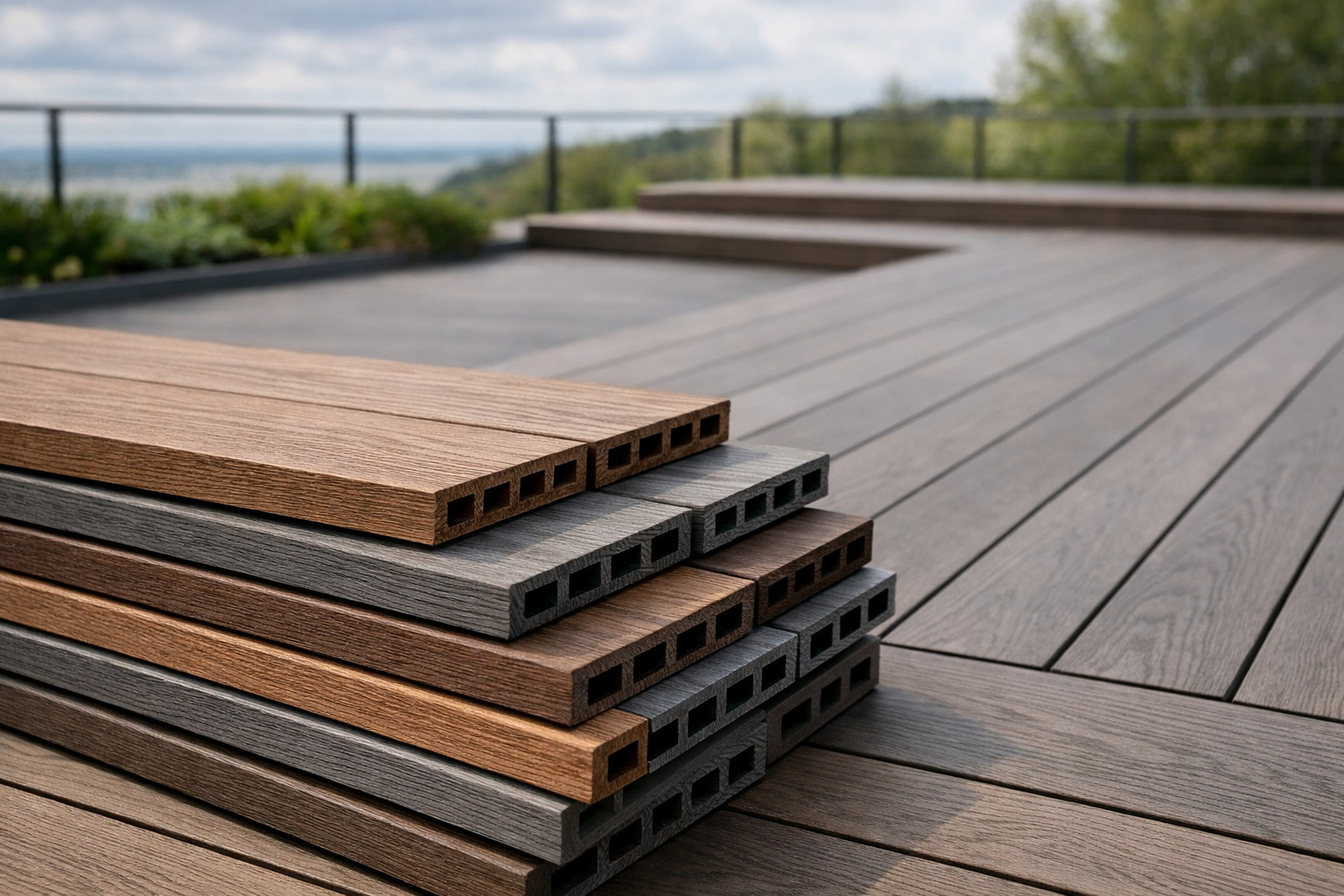
Made from recycled plastic, plastic wood is gaining space in the construction industry because it does not rot, resists moisture, and reduces maintenance costs over the years.
-
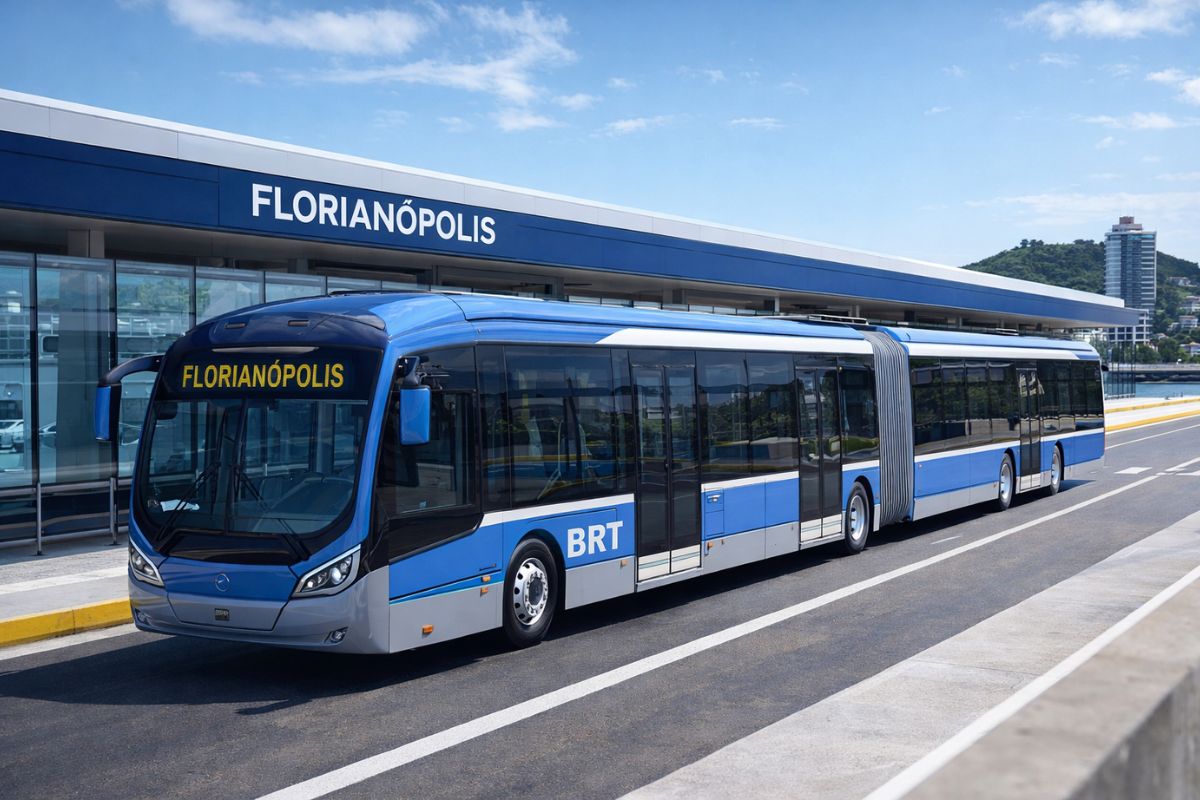
Florianópolis will receive a million-dollar BRT that will begin construction in 2026 with nearly 400 million in funding from the federal government and the Inter-American Development Bank, and the map already shows the routes for the exclusive bus corridors.
-
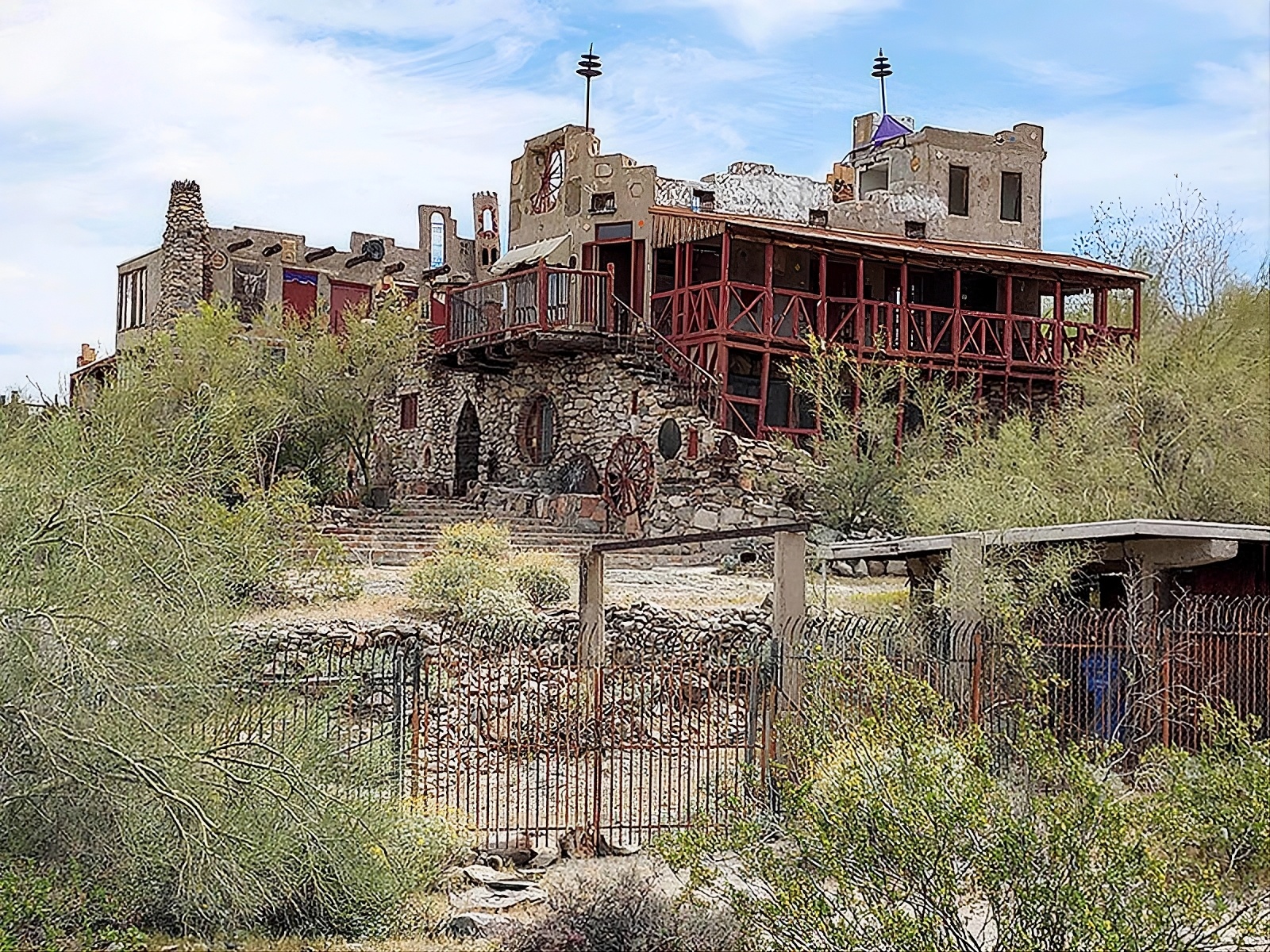
Without a blueprint, without an engineer, and using scrap from the dump, a father spends 15 years building an 18-room castle for his daughter, featuring tram tracks, 13 fireplaces, and over 700 m², which may now be demolished.

However, about 90 percent of the new Joinville Bridge is born beneath the ground, in a phase that combines geotechnical engineering, structures, and heavy logistics.
The goal is simple to understand and complex to execute: transfer the weight of the bridge to layers of soil that are truly competent, ignoring the soft marsh mud.
To achieve this, the adopted solution is the use of root piles, true “subterranean skyscrapers” that serve as invisible columns, driven down until a material with high load-bearing capacity is found.
Battle in The Marsh: How to Take Heavy Machines to The Right Point

The first challenge is purely logistical. A crawler crane, weighing hundreds of tons, would sink immediately if placed directly on the marsh.
The engineering response is to create temporary infrastructure: a service bridge made of metal truss that advances over the mud and serves as an elevated track for machines and trucks.
This service bridge, installed in sections, allows the drilling equipment to accurately reach each point where the root piles will be executed.
Without directly touching the soft ground, the machines work supported on a rigid structure that behaves like a temporary deck, ensuring safety and stability across the entire work front.
Root Piles: The Subterranean Skyscrapers of The Foundation
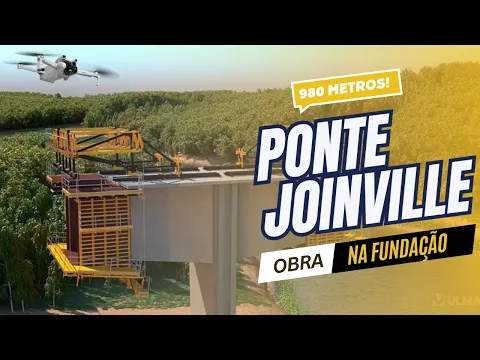

With access ensured, the stage that truly supports the R$ 314 million project begins: the execution of the root piles.
Each metal tube is driven deep, subsequently filled with concrete and steel, forming structural elements capable of withstanding both vertical and horizontal forces.
These piles are installed in groups, distributed according to the foundation design of each support of the bridge.
It’s as if the future Joinville Bridge is supported by a forest of invisible columns, connected to solid ground far below the marsh’s superficial layer.
The precision in position and the quality of the concrete define the safety of the pillars that will still appear in the landscape.
From The Set of Piles to The Capping Block
Once the set of root piles is executed, the next phase is to “tie” all of them into a single structural element: the capping block.
On top of the piles, a massive reinforced concrete slab is formed, a true structural “dice” that concentrates and redistributes the loads.
This capping block is the link between what is not seen and what will become visible.
It is on this block that the main pillar of the bridge will be erected, transferring all the load of the superstructure to the piles.
Without this block, the underground foundation would work in isolation; with it, it starts functioning as a single rigid system, prepared to withstand controlled deformations during the successive overhang construction.
Beam Courtyard: The Assembly Line of The Bridge on Solid Ground
As the foundation progresses in the marsh, another front of the R$ 314 million project is already preparing the structure that will be visible to the user: the beam courtyard.
In a flat area, like an industrial assembly line, the beams of the access viaducts are produced in series, with standardized forms, rebar installations, and concreting.
On the tracks already laid on the ground, cranes will move around the courtyard to lift these beams weighing dozens of tons, positioning each piece on its final support.
This parallel work reduces the total time of construction, as foundation, pillars, and superstructure are developed at coordinated paces, avoiding unnecessary waits between stages.
Voided Arches and Launching Truss: The Successive Overhang Over The River
In the main span over the Cachoeira River, the chosen solution is the method of successive overhangs.
Instead of launching entire beams over the waterway, the bridge is built in smaller segments, the so-called voided arches, produced on-site in high precision molds.
Each arch is a hollow concrete piece, in the shape of a box beam, which ensures low self-weight and high structural resistance.
When the main pillar is completed, the launching truss comes into play, a machine mounted on top of the pillar that acts as a mobile crane and assembly platform at the same time.
The logic of successive overhangs demands perfect balance.
To prevent the pillar from tipping, the truss installs one arch on one side, and then another arch on the opposite side, keeping the system always in symmetrical balance, like a controlled seesaw.
Thus, the bridge grows simultaneously on both sides, extending over the void until it meets the section coming from the other bank.
Steel Cables and Internal Compression: Joining Segments Into A Single Beam
The arches are not merely juxtaposed.
High-strength steel cables are passed through internal ducts along the structure, being tensioned by hydraulic jacks with forces of hundreds of tons.
This prestressing process “squeezes” the pieces against each other, eliminating gaps and transforming the set of segments into a single continuous beam.
With each new pair of arches assembled, the launching truss advances a few meters and repeats the process: positions, aligns, concretes local connections, inserts cables, and applies prestressing.
This entire sequence is only possible because the foundation down below was sized to support not only the final weight of the bridge but also the transient forces of the asymmetric overhang during construction.
How This Foundation Redefines Traffic and The Landscape of Joinville
The R$ 314 million project is not just a sophisticated engineering design; it is a direct intervention in the mobility of the municipality.
By creating a new ring road linking the south and east zones, the Joinville Bridge is expected to relieve overloaded routes, reduce travel time, and reorganize heavy vehicle flows that currently traverse already saturated areas.
At the same time, the option for a deep foundation and construction methods that minimize direct interference with the riverbed and the marsh seeks to reduce structural and environmental impacts, maintaining the performance of the bridge over decades.
The combination of root piles, capping blocks, launching trusses, and successive overhangs shows how heavy engineering operates far beyond what is visible to the driver crossing the span.
In the end, when the superstructure is ready and traffic is released, almost no one will remember that most of this investment is buried beneath the ground, quietly sustaining the daily flow of thousands of vehicles.
And that is exactly the sign that the project fulfilled its role: to function with safety, discretion, and high durability.
For you, what is most impressive about this project: the invisible foundation in the marsh or the idea of seeing a bridge growing in successive overhangs over the Cachoeira River?









-

-

7 pessoas reagiram a isso.