





 Portuguese
  English
  Spanish
  3 min of reading
  0 comments


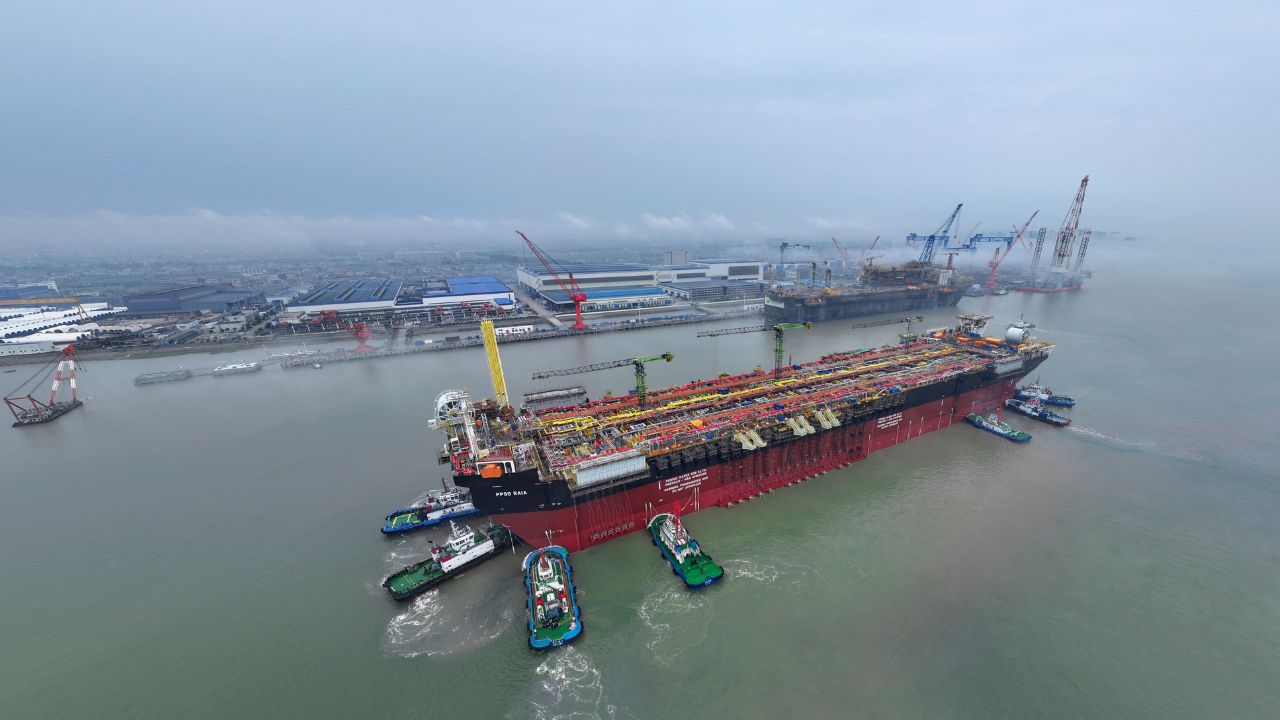
Project Raia Advances With FPSO Removed From Dry Dock Ahead of Schedule. Platform Will Produce Gas in the Campos Basin Starting in 2028.
The FPSO (floating production storage and offloading unit) that will be part of the Raia Project, one of the most ambitious ventures in the Brazilian energy industry, has taken a step forward in its schedule. The structure was removed from dry dock 24 days ahead of schedule, according to a recent statement from Repsol Sinopec, the company that is part of the consortium for the project alongside Equinor (operator with 35%) and Petrobras (30%).
200 Km Pipeline Will Link FPSO to Brazilian Coast
Production is expected to start in 2028, with a direct impact on the national supply of natural gas.
In addition to the anticipation, the venture has received the Maritime Installation License from Ibama, which authorizes the start of offshore pipeline installation activities.
-
Offshore industrial demand in Macaé skyrockets with the recovery of oil and gas and could grow by up to 396% by 2026 in the Campos Basin.
-
Offshore industrial demand in Macaé surges with the recovery of oil and gas and could grow by up to 396% by 2026 in the Campos Basin.
-
Brazilian giant expands borders in the Southeast: Petrobras confirms new oil discovery in ultra-deep waters in the pre-salt of the Campos Basin.

-
Alert in the global energy market: Severe tropical cyclone hits the coast and disrupts gas production at major plants in Australia, threatening global supply.


The expectation is that the Raia Project will account for up to 15% of the country’s gas demand by the end of the decade.
The production model of the Raia Project combines advanced technology with robust infrastructure.
Natural gas will be processed directly on board the FPSO and transported via a pipeline of 200 kilometers in length to Cabiúnas, in Macaé (RJ).
The estimated export capacity is 16 million cubic meters per day, which represents a significant boost in energy supply for Brazil.
Three Pre-Salt Fields Comprise the Raia Project
Located in the Campos Basin, the Raia Project encompasses three significant discoveries in the pre-salt: Pão de Açúcar, Gávea, and Seat.
Together, these areas total more than 1 billion barrels of oil equivalent (boe) in natural gas and oil/condensate reserves.
This represents a relevant milestone for national energy security and reducing dependence on external sources.
International Manufacturing of FPSO Modules Is Already Underway
The modules of the topside, the upper part of the FPSO where processing equipment is located, are being manufactured in three industrial hubs: Rio de Janeiro, China, and Singapore.
Once completed, the components will be transferred to the Cosco Qidong shipyard in China, where final integration with the hull of the unit will take place.
Repsol Sinopec Celebrates Progress with Focus on Energy Transition
According to Alejandro Ponce, CEO of Repsol Sinopec Brasil, the project goes beyond gas production. It also represents a commitment to sustainable practices and modernization of the energy sector:
“Raia is a strategic project for Brazil, focused on providing safe, efficient, and sustainable energy. We celebrate each advancement in line with Repsol’s commitment to contribute to the energy transition,” said the executive.
Investment of US$ 9 Billion and Creation of Thousands of Jobs
The grandeur of the Raia Project is also reflected in the numbers: there are US$ 9 billion in planned investments and an estimated generation of 50,000 jobs, both direct and indirect, throughout the project’s lifetime.
This means a significant injection of resources into the national economy and the strengthening of the oil and gas industry in Brazil.
Environmental Licensing Advances with Support from Ibama
In addition to the Maritime Installation License obtained in July, the Raia Project also received, in June, the Preliminary License from Ibama, which approved the location and design of the project.
This license certifies the environmental viability of the operation and imposes technical requirements and conditions for the next phases, such as obtaining the Operating License.







Seja o primeiro a reagir!