





 Portuguese
  English
  Spanish
  4 min of reading
  1 comment


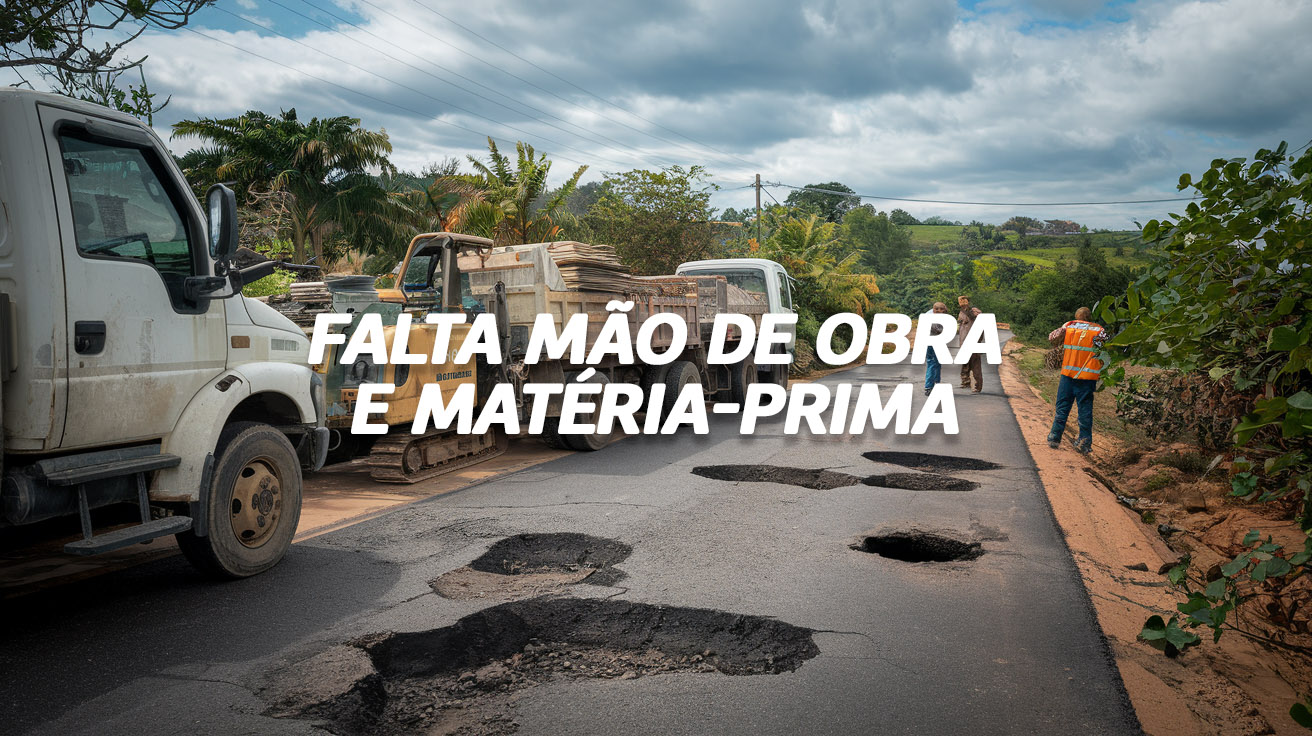

Highways Stopped, Frustrated Drivers! The Infrastructure of the Valley of the Pardo River Faces a True Chaos: Lack of Essential Materials, Labor Shortages, and Deadlines That Seem Endless. Can Brazil Overcome These Challenges and Ensure Quality Roads? Check Out the Details and Expert Projections.
Throughout the Valley of the Pardo River, driver frustration increases every day. Despite promises of improvements in highways such as the RSC-153 and the RSC-471, the progress of the works remains slow.
So, why aren’t things advancing? The answer, according to experts, involves a concerning combination of lack of raw materials, labor shortages, and logistical challenges.
The Challenges in Road Infrastructure
According to Rafael Sacchi, CEO of RGS Engenharia S/A, a company that manages 493 kilometers of the regional road network, the problems go far beyond financial issues.
-
China alone accounts for 70% of trade within the BRICS, while Brazil establishes itself as an essential supplier of food and minerals: understand how the group, which already represents nearly 40% of the world’s GDP, is changing the game.

-
Starting in May, those who do not have registered biometrics will not be able to apply for Bolsa Família, sickness benefits, or unemployment insurance: understand the new rule that changes access to benefits for millions of Brazilians.

-
A new law being voted on in Brazil proposes a minimum fare of R$ 10 per trip and R$ 2.50 per kilometer for Uber and 99 drivers, and promises to ensure they earn as well as taxi drivers did during the golden age of taxis in the country.

-
Bauer Group collapses after failed judicial recovery: 25 years, 800 vehicles, and a network of gas stations leave a debt of R$ 50 million and 100 layoffs, exposing costs, tight margins, and expensive credit in Brazil.

In an interview with the program Estúdio Interativo, from Rádio Gazeta FM 107.9, he revealed that the lack of aggregates, such as stones and other essential materials, is hindering the progress of the works.
Sacchi highlighted that commercial quarries have been unable to meet the growing demand, compromising asphalt production.
“If today we have 400 tons of aggregate, we cannot split this into two work fronts, as the cost would be too high and the progress, insignificant“, he explains.
Moreover, the lack of skilled workers is another significant obstacle. “Our biggest competitor is social assistance benefits.
It is essential to lift people out of poverty, but it also drives labor away from the construction sector, a heavy and demanding field”, argues the specialist.
Another point raised by Sacchi is the lack of long-term planning in the sector.
“Brazilian infrastructure often depends on political decisions and annual budgets that do not always consider the actual needs of the highways”, he adds. This context contributes to the feeling of abandonment on several roads in the state.
Condition of the Highways
RSC-471
The RSC-471, an important export corridor, has received priority attention. In the 27 kilometers between Cerro dos Macacos and Encruzilhada do Sul, 11 have already been refurbished in December 2024.
These works include resurfacing and patching holes to ensure a minimum level of trafficability.
However, the director warns that the complete recovery of the stretch would require the R$ 55 million allocated for the entire region.
“Complete recovery is a distant goal without additional resources, but we are doing our best to address the priorities“, emphasizes Sacchi.
RSC-153
Between Vera Cruz and Soledade, the RSC-153 faces degrading conditions.
Services such as brush clearing, ditch cleaning, and pothole patching started recently, while asphalt resurfacing is scheduled for March 2025.
The stretch is considered vital for agricultural flow, and the deterioration of the roadway has generated criticism from drivers and carriers.
VRS-858
In Candelária, the VRS-858 suffered severe damage during floods.
Emergency work was carried out to recover the roadway bed, focusing on stabilizing slopes and the road platform.
More in-depth studies should guide future interventions, but the complexity of the terrain requires robust technical solutions and considerable investments.
ERS-410
The ERS-410 has been awaiting paving for decades. The current project, outdated since 1993, is being revised to meet heavy vehicle traffic.
Meanwhile, temporary improvements, such as drainage and earthworks, are underway.
Sacchi stresses that the definitive paving of the highway could take up to 24 months, depending on the approval of new projects and the release of funds.
“We are doing our best to ensure that improvements are sustainable in the long term“, he stated.
Shared Responsibility
Although logistical challenges are evident, experts also point out the shared responsibility among government, companies, and society.
The lack of continuous investment in training skilled labor reflects insufficient public policies to meet the growing demand in the construction sector.
Furthermore, quarries and material suppliers need to expand their production capacity to keep pace with the construction rhythm across the country.
Without this adjustment, bottlenecks like the one observed in the Valley of the Pardo River can repeat in other states.
Future Projections
According to Sacchi, the recovery of the highways will be gradual, but a “substantial injection of resources” has already been guaranteed.
The estimate is that more robust works could take up to 24 months to be completed, depending on the availability of supplies and workers.
However, he warns that emergency measures, such as temporary interventions, are merely a stopgap.
“We need an integrated plan that encompasses everything from workforce training to the modernization of quarries and suppliers”, he concludes.
The situation in the Valley of the Pardo River reflects a larger problem in Brazilian infrastructure: how to advance in essential projects amidst so many challenges? What do you think can be done to accelerate these works? Share your opinion below!








Paga um salário digno aos trabalhadores,que não irá falar não de obra