





 Portuguese
  English
  Spanish
  5 min of reading
  0 comments


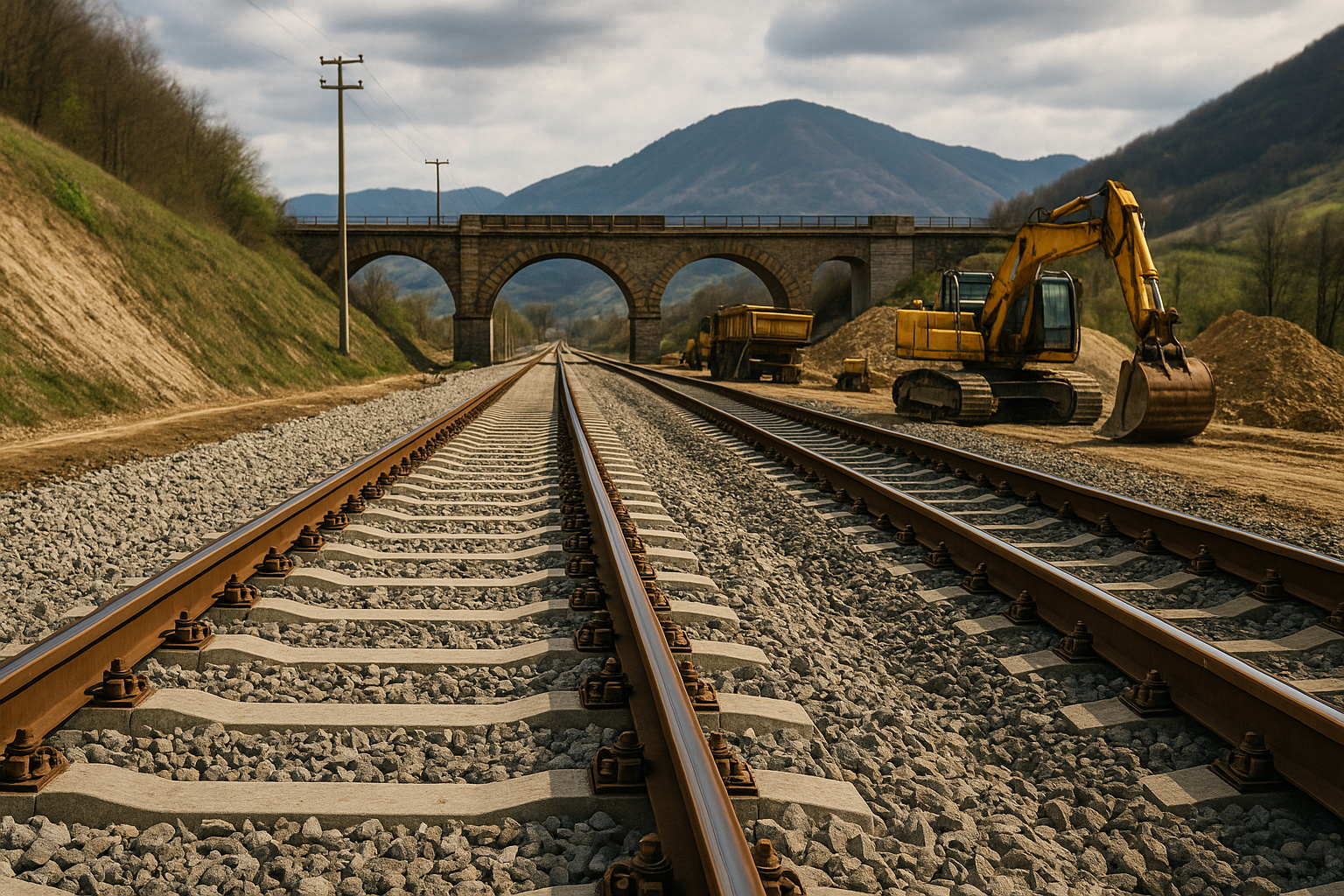
Discover How Railway Works Shaped Transportation, Impact Development, and Why They Are Vital for the Future of Mobility and the Brazilian Economy.
Railway projects play a fundamental role in the development of a country.
From the first tracks laid in the 19th century to today’s large mobility projects, railways have transformed not only the urban and rural landscape but also the way people and goods move.
Therefore, in this article, we will explore what railway works are, how they emerged, their strategic importance, and the challenges of building them.
-
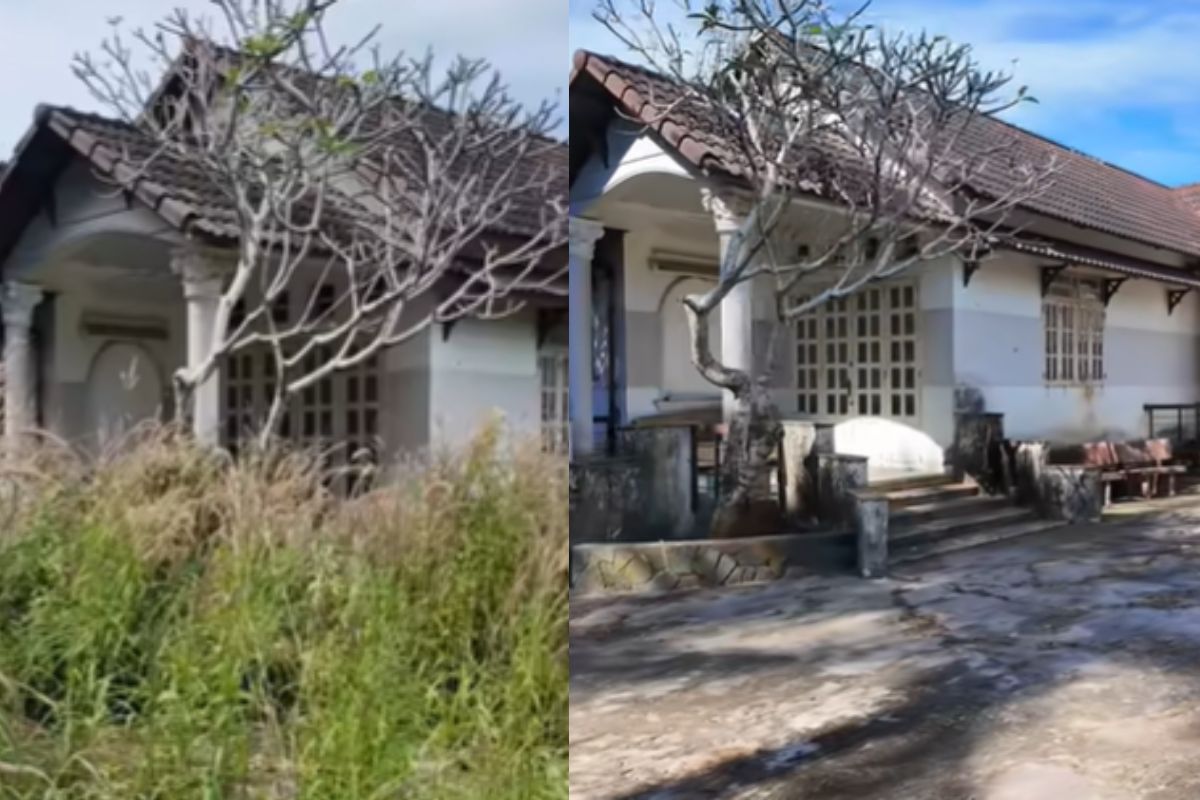
Abandoned house for 15 years disappears in the woods, shocks owner with unrecognizable scenery and is reborn in an intense transformation after almost 90 hours of work in just 10 days.
-
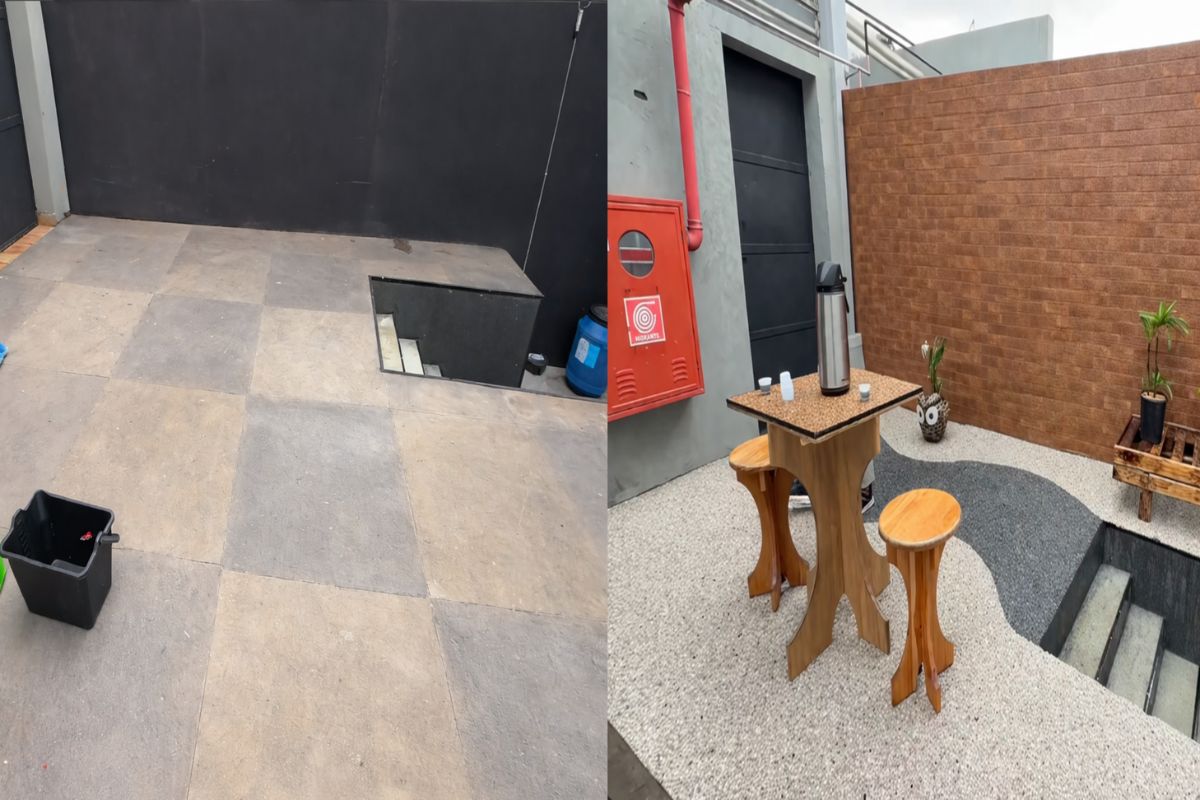
In just three hours, a natural stone floor transforms the entrance of the house with an organic effect, immediate drainage, and a sophisticated non-slip finish that doesn’t puddle water, dries quickly, and impresses with the final result.
-
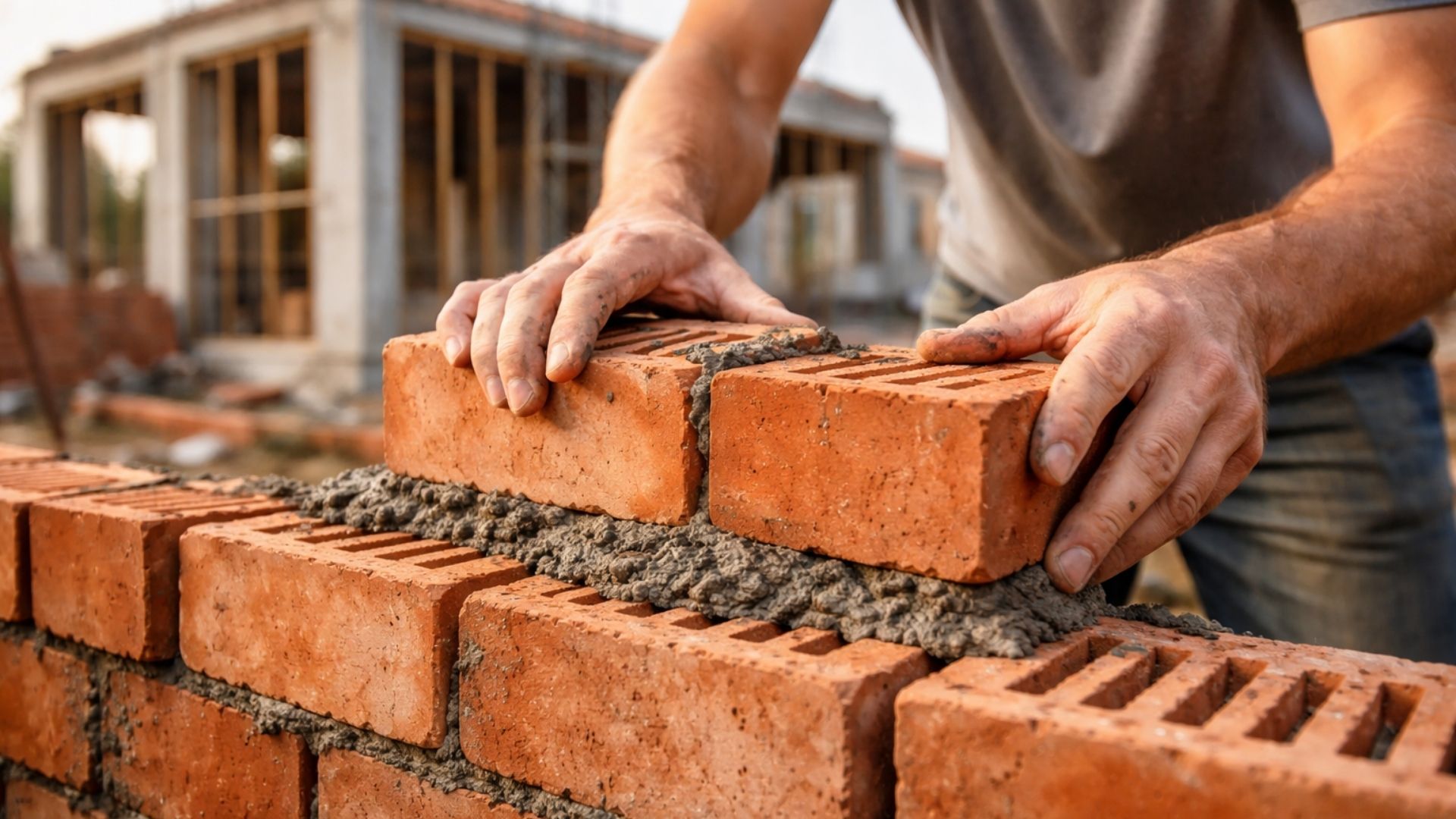
‘Interlocking brick’ made of earth arrives in the construction industry with cost reductions of up to 40% on the project.
-
Espírito Santo will receive the largest engineering project in its history with the duplication of BR 262, which will have 50 viaducts, 28 bridges, and 2-kilometer tunnels cutting through the most challenging mountainous region of the entire state.
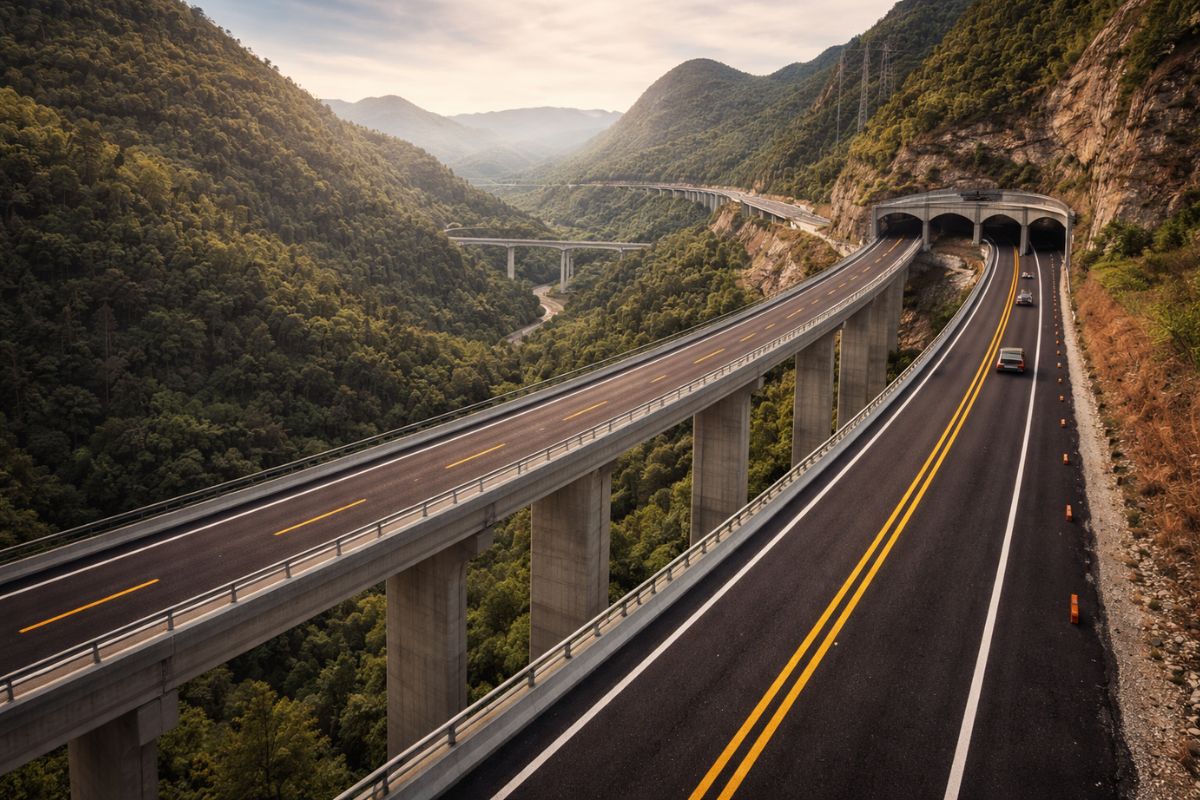

The history of railway works is closely linked to the Industrial Revolution, which occurred mainly between the 18th and 19th centuries.
England was a pioneer in railway construction, creating a network that soon inspired other countries to follow the model.
In Brazil, the introduction of railways took place in the mid-19th century.
According to records from the Brazilian Institute of Geography and Statistics (IBGE), the first Brazilian railway was inaugurated in 1854, connecting the Port of Mauá to the city of Fragoso, in Rio de Janeiro.
This milestone was crucial for the country as it facilitated the flow of agricultural and mineral production from the interior to the ports for export.
Over the following decades, Brazil invested in the expansion of the railway network, particularly to meet the economic needs of the Midwest and South regions.
Railways played a vital role in economic growth, especially since previous transportation, done by carts or vessels, took days or weeks.
The arrival of the tracks significantly reduced travel time, positively impacting trade and regional integration.
However, building railways has always required precise engineering, in-depth technical studies, and high investments, as highlighted by the Ministry of Infrastructure.
In addition to transporting goods, railways enabled large-scale mobility, connecting cities and facilitating territorial expansion.
Thus, urban and rural development gained new momentum, generating local and regional economic growth, as shown by the study from the Center for Transport and Logistics Studies at the Getulio Vargas Foundation (FGV).
Components and Technical Challenges of Railway Works
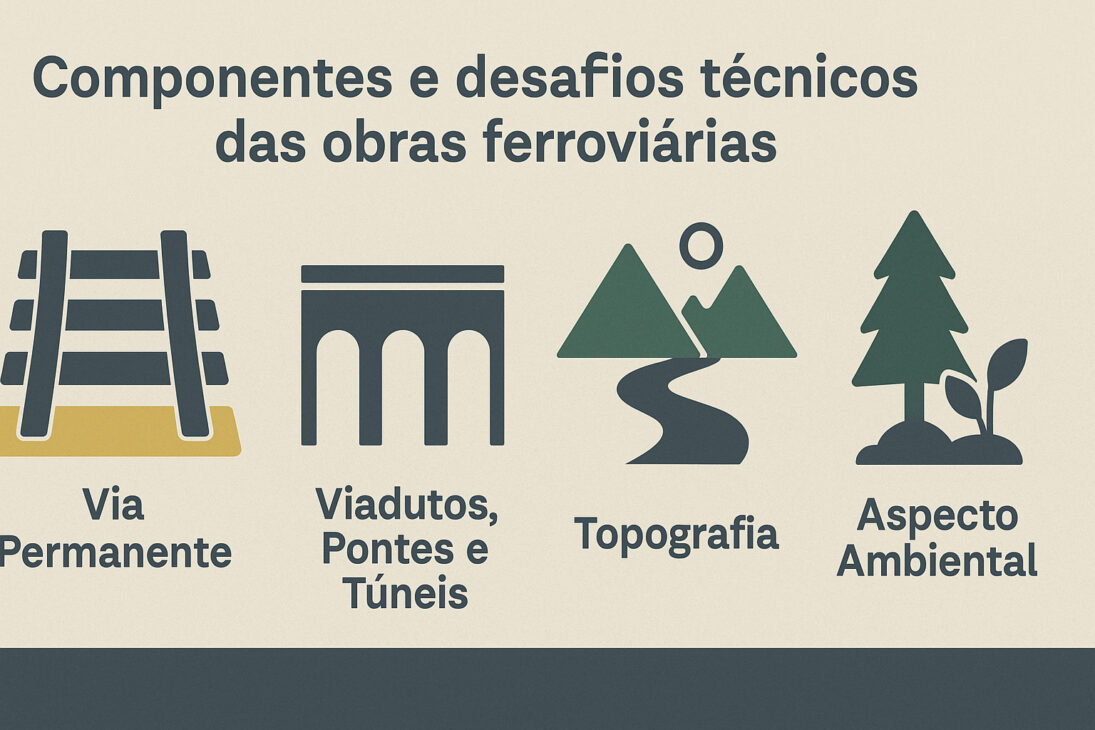
The main components of railway works include the construction of the permanent way — which involves tracks, sleepers, and ballast (stones that stabilize the tracks).
According to the National Land Transportation Agency (ANTT), these elements must withstand the weight of trains and harsh climate variations.
Furthermore, viaducts, bridges, and tunnels are part of the route, especially in areas with rugged terrain.
Topography represents a significant technical challenge. In mountainous areas, engineers adapt the layout to ensure safety and efficiency, as pointed out in the National Railway Logistics Plan (PNLF) by ANTT.
Another essential factor is the environmental aspect. According to the Ministry of the Environment, all railway projects must undergo rigorous environmental impact studies, licensing, and mitigation measures, as the advancement of tracks can affect preservation areas, fauna, and flora.
Brazilian legislation establishes procedures that ensure a balance between development and conservation.
In addition to natural challenges, railway works face logistical difficulties. Transporting tracks and metal structures to remote areas requires careful planning.
The technical training of the workforce is crucial to ensure quality and safety from surveying to project completion, as emphasized by the National Institute of Science and Technology in Transport Engineering (INCTET).
In recent decades, interest in railways has grown again.
According to data from the Ministry of Infrastructure, in 2020 Brazil had about 30,000 km of railway network, but only 10% was operational for cargo transport.
Given the challenges of road transport, such as congestion and high fuel costs, railways are increasingly seen as an efficient, economical, and sustainable solution.
Freight trains transport large volumes with lower energy consumption. Passenger trains represent a safe and practical alternative for densely populated metropolitan areas.
The Current Situation of Railway Works in Brazil
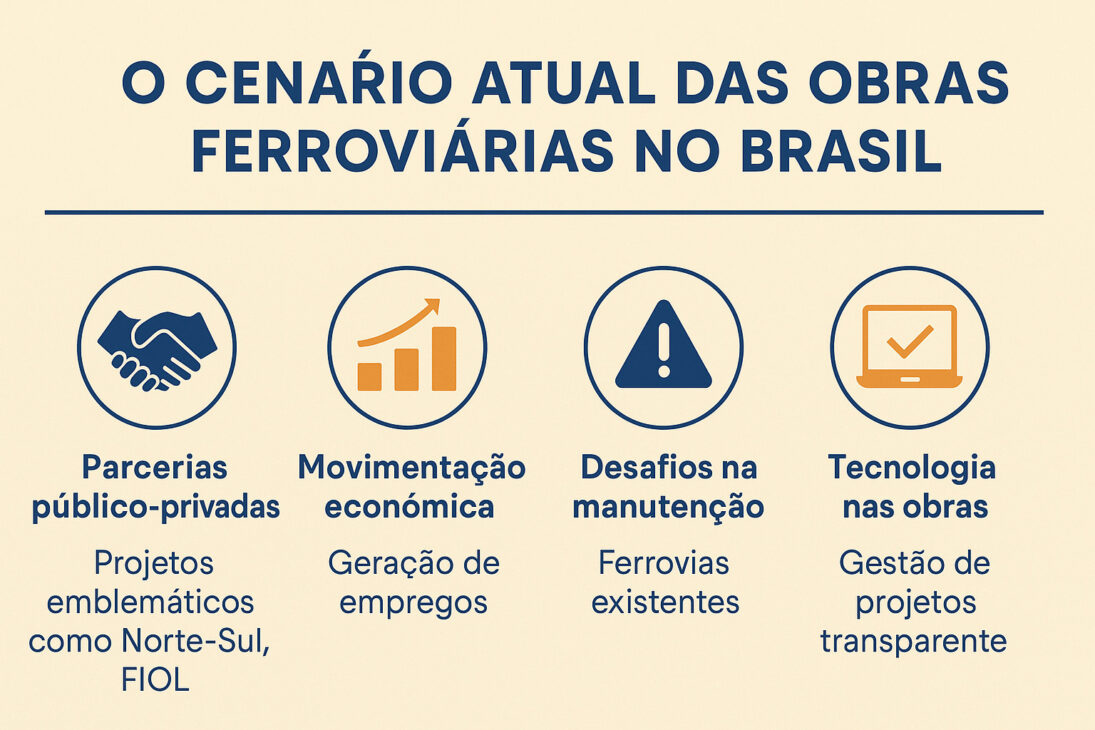
In the current scenario, the advancement of railway works in Brazil is occurring mainly through public-private partnerships.
Emblematic projects such as the North-South Railway, the West-East Integration Railway, and the New Transnordestina have driven the expansion of the national network, according to the National Railway Logistics Plan (PNLF) by ANTT, launched in 2021.
These projects connect different regions, generate jobs, stimulate the economy, and integrate production chains essential for the country’s development.
In addition to these major projects, smaller and regional initiatives have sought to revitalize existing lines by modernizing infrastructure.
This includes the electrification of stretches, installation of advanced signaling systems, and recovery of stations, as reported by the Ministry of Infrastructure.
However, relevant challenges remain. Maintaining existing railways requires constant investments, as many lines are abandoned or degraded, reducing operational capacity.
Another crucial challenge is the integration between modalities — ideally, railways should efficiently connect to ports, airports, and highways to ensure smooth movement of goods and passengers.
Technology has played an increasing role in railway works.
Today, teams use drones, sensors, artificial intelligence, and 3D modeling to plan and monitor works accurately, enhancing safety and efficiency.
Modern signaling systems also enhance operational safety, as indicated by INCTET studies.
Moreover, the use of project management software allows real-time tracking of schedules, costs, and risks. This practice brings transparency and helps teams meet stringent deadlines.
Sustainability and Social Benefits of Railways
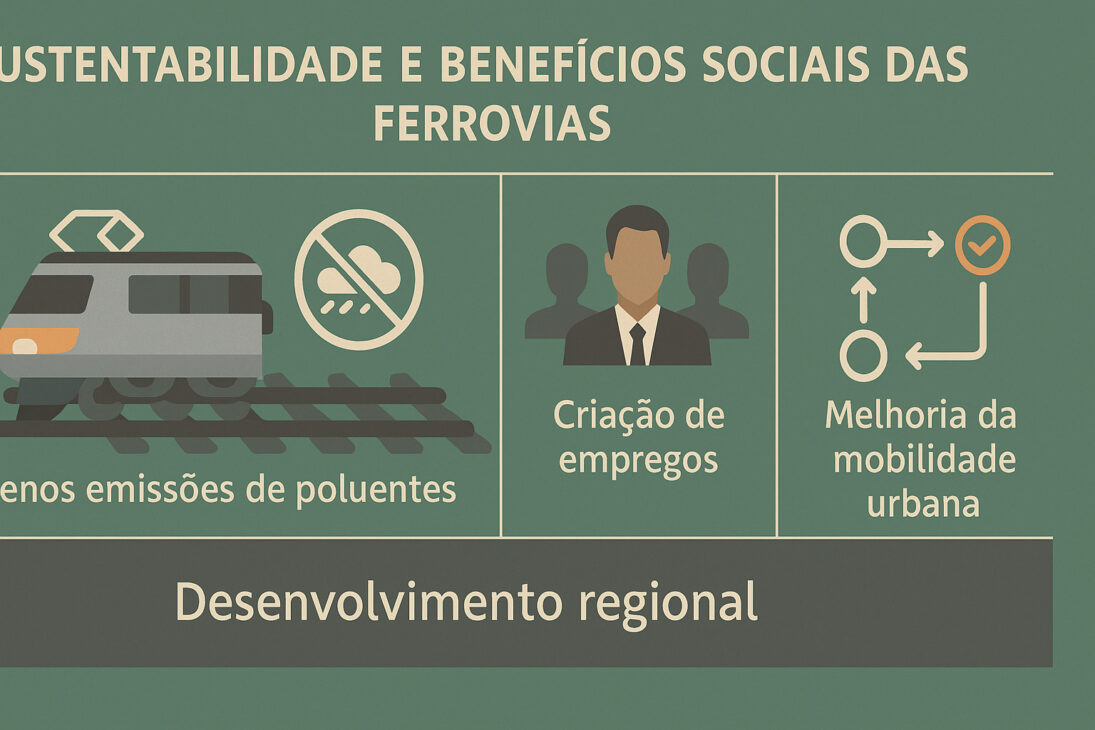
Rail transport is aligned with global sustainability goals.
Electric trains emit fewer polluting gases than trucks and cars, a fact noted by the International Energy Agency (IEA).
This has led countries around the world to expand their railway networks.
In Brazil, although the growth potential is significant, the sector still needs to overcome various obstacles to consolidate itself fully.
When considering railway works, social benefits stand out.
Well-structured railways promote regional development, facilitate access to goods and services, encourage tourism, and improve urban mobility.
Therefore, cities with efficient railway transportation often offer better quality of life and lower logistical costs for companies, according to studies by the Getulio Vargas Foundation (FGV).
Another relevant point is job creation, both direct and indirect.
From planning to construction and operation, various professional areas are mobilized, fostering the local economy and improving social conditions in communities near railway lines.
Finally, each railway built results from a long and complex process.
Everything starts with a detailed project, goes through bureaucratic stages, faces technical challenges, and ultimately transforms landscapes and lives.
Investing in railway works is investing in the future of mobility, the economy, and the connection between people.
As the world seeks more sustainable, efficient, and integrated solutions for transportation, railway works remain an essential pillar of infrastructure.
They represent not only the legacy of the past but a solid path to a more connected and balanced future.











-

Uma pessoa reagiu a isso.