





 Portuguese
  English
  Spanish
  4 min of reading
  0 comments


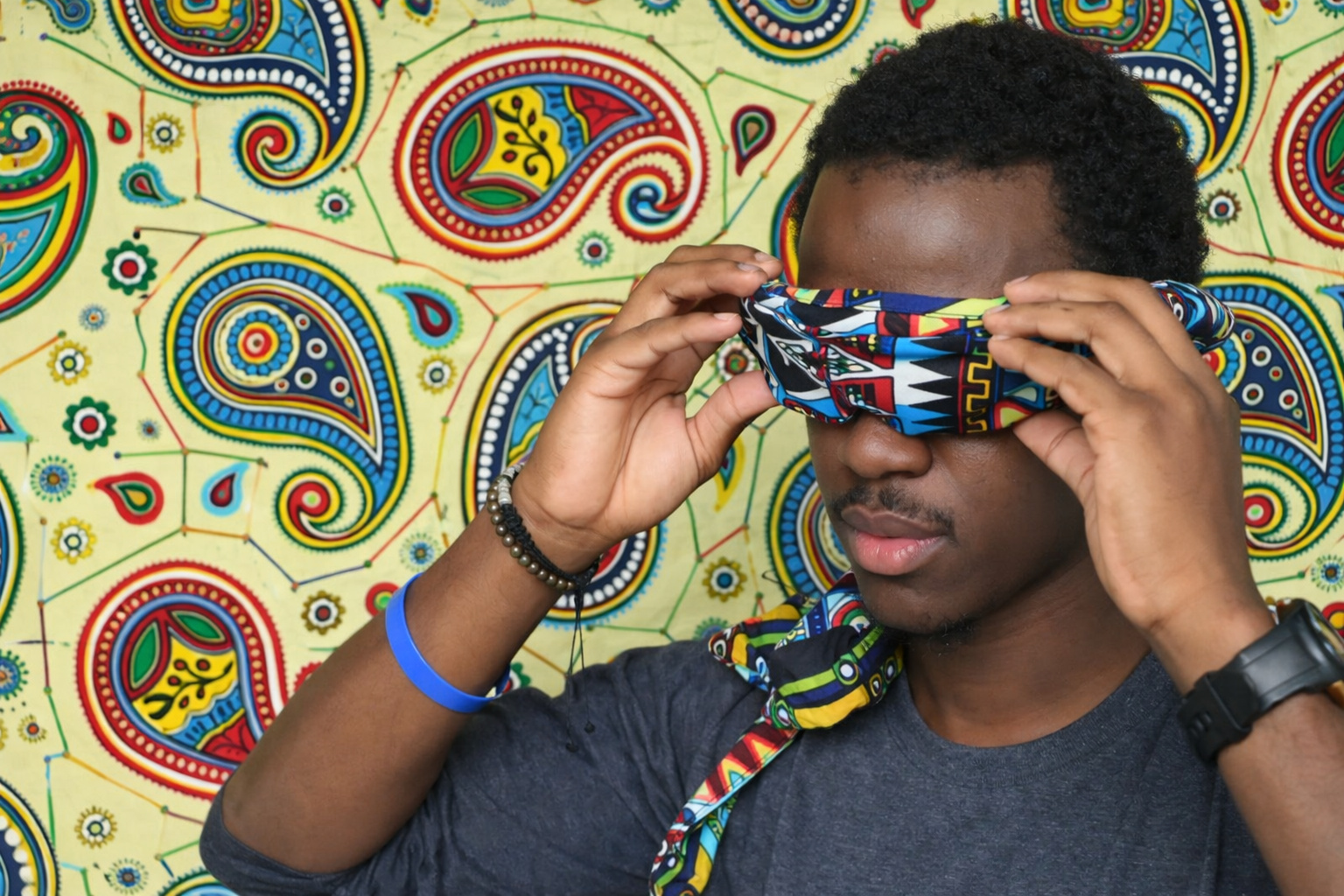
24-Year-Old Electronic Engineer Develops Technology With Location System, Vibration, and 120-Degree Coverage to Extend Independence of Blind People in Mozambique
In a backyard in the Bunhiça neighborhood, about 20 kilometers from downtown Maputo, a young electronic engineer works surrounded by open circuits, wires, and sensor boards. However, what seems like just another improvised lab hides an innovation that could transform the lives of thousands of people. João Rego, just 24 years old, has been developing since 2022 a prototype of smart glasses capable of returning independence to blind people in Mozambique.
The information was released by the “Lusa” agency, which detailed how the young Mozambican decided to tackle one of the country’s biggest urban challenges: the safe mobility of around 700,000 citizens facing severe visual impairments.
How The Idea of Smart Glasses For Blind People Was Born
It all started in 2022. That year, João watched a report showing the daily challenges faced by a blind woman in Maputo. At one point, she stepped into a hole she couldn’t perceive ahead. The scene deeply moved the young engineer.
-
Chinese scientists have created plants that glow in the dark using luminescent fungi, and they now say that this technology could illuminate entire cities without spending a dime on electricity.

-
Motorola launched the Signature with a gold seal from DxOMark, tying with the iPhone 17 Pro in camera performance, Snapdragon 8 Gen 5 that surpassed 3 million in benchmarks, and a zoom that impresses even at night.

-
Satellites reveal beneath the Sahara a giant river buried for thousands of kilometers: study shows that the largest hot desert on the planet was once traversed by a river system comparable to the largest on Earth.

-
Scientists have captured something never seen in space: newly born stars are creating gigantic rings of light a thousand times larger than the distance between the Earth and the Sun, and this changes everything we knew about stellar birth.


“I saw a report about a blind lady who was walking in the city of Maputo and came across a hole in front of her, and she stepped in it. That day I saw the report and was touched by this situation,” says João Rego.
As he was already working with robotics and designing a robot for an academic activity, he decided to apply his knowledge to solve a real problem. Thus, the project for the first smart glasses developed with a specific focus on the Mozambican urban reality was born.
Technology With 10 Sensors and Range of Up to 8 Meters
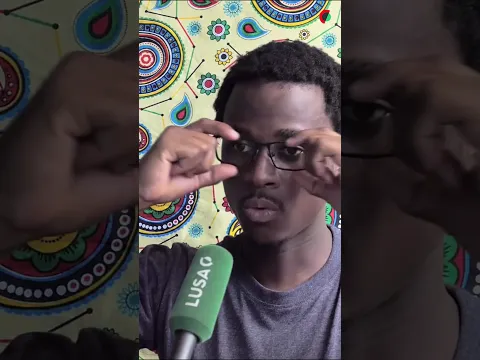

The current prototype integrates various technologies. Among them, there is a location system, real-time battery control, and smart vibrations that interact with the user. In addition, the patented model has 10 strategic sensors.
These 10 sensors “look” at 10 different points, covering an approximate angle of 120 degrees. Within this area, the glasses can detect obstacles up to eight meters away. However, the system has been optimized for four meters, ensuring greater accuracy in daily use.
The operation is simple and intuitive. The user puts on the glasses like any other conventional model. From there, the sensors continuously analyze the environment. Whenever an obstacle appears in the path, the system sends specific vibrations, alerting the user about potential risks.
This way, instead of relying solely on canes or external support, the person gains a more natural, detailed, and safe mobility.
Three Versions Developed With Local and Foreign Resources

Since 2022, the project has undergone several updates. In total, João has developed three highly refined versions of the device. During this process, he mainly used local resources. However, as not all technological components were available in Mozambique, he also had to turn to the foreign market.
The current prototype is in the pre-final phase. For this year, the main objective is to launch the final version in pilot format. This stage will allow users to adapt to daily use of the technology before larger-scale expansion.
In addition to the technical functionality, the project carries strong cultural symbolism. Today, the glasses are carefully wrapped in a capulana — a traditional Mozambican fabric with vibrant colors — that protects the technological system. Thus, the innovation combines modernity and local identity.
Social Impact On Education, Employability, and Independence

According to João Rego, the smart glasses can significantly enhance employability and access to education. This is because independence increases urban mobility and reduces risks in daily commutes.
Moreover, the engineer argues that national technological development strengthens Mozambique’s scientific independence. When knowledge is produced locally, it becomes easier to reproduce solutions even in times of crisis.
Although he has already received national and international awards, the young man claims that his biggest dream goes beyond accolades. He wants to see the glasses used in all provinces of the country and at the lowest possible price.
“For Mozambique specifically, the dream is to have them used in different parts of the provinces we have and by different people with visual impairments who transform their lives,” he states.
For João, engineering is not just science. On the contrary, it is a tool for social rescue.
Do you believe that locally developed technologies can accelerate inclusion and transform realities in African countries?






-

-

-

6 pessoas reagiram a isso.