






 Portuguese


Rejected due to lack of required education, residents of Gujarat sought training outside the official course, overcame local skepticism, expanded their work from 41 to over 1,500 water pumps, and reduced repair times from six weeks to just two days in communities that depended on these systems for drinking water.
A broken water pump could leave families in Gujarat villages, India, waiting up to six months for their complaints to be addressed. In many communities, the equipment was the only source of drinking water. Residents volunteered to handle repairs but were barred from official training due to lacking the necessary educational qualifications.
The solution came through a different path. An NGO trained the first group of women, who had to face the resistance of engineers and the distrust of local residents. Their practical work changed perceptions and led the community mechanics to maintain over 1,500 hand pumps.
The United Nations Development Programme (UNDP), a UN agency that published a guideline, recorded this case in a 2006 edition.
-
After Nearly 140 Years at the Bottom of the Atlantic, USS Monitor’s Gun Turret Rescued from 73 Meters, Now in a 340,000-Liter Tank and Undergoing a Long-Term Conservation Process

-
With a Length of 58 km, a 2.4 Billion-Ton Spaceship Would Carry 2,400 People for 39 Trillion Kilometers on a 400-Year Journey to Proxima Centauri b
-
After Attending 12 Schools and Overcoming Homelessness, Young Man Graduates Top of His Class and Gains Admission to Prestigious Universities
-
At 94, Dan Santos Continues Working at New York Life 70 Years After Joining the Company


When education became a barrier
The hand pumps had been installed by the agency responsible for water supply and sewage in Gujarat. As the official structure struggled to maintain the equipment, some complaints took up to six months to receive service.
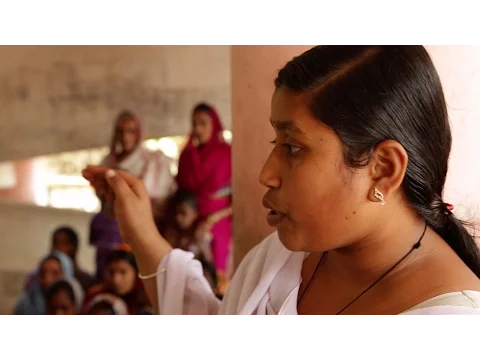

The SEWA members believed they could perform the service more quickly. The acronym stands for the Self-Employed Women’s Association. The organization proposed to take over the maintenance of 41 hand pumps.
The first obstacle arose before any repairs could take place. The women could not participate in the official training program as they did not meet the required education level. Thus, a rule restricted their ability to demonstrate within the public course whether they were capable of learning the work.
The alternative course opened the way
SEWA sought a solution and brought in an NGO to train the first group of mechanics. This alternative training allowed the women to learn how to maintain the pumps even after being rejected from the official program.
Completing the course did not end the challenges. Residents still showed less trust in the new professionals than the engineers from the water authority. Therefore, the mechanics needed to address the technical issues while proving they could offer reliable service.
Active support from SEWA bolstered the group in this early stage. Trust was earned through performance: the pumps were restored to working order, and the necessary repair time decreased significantly.
From the first batch to over 1,500 pumps
The initial proposal covered only 41 units, but the work expanded significantly. At the time noted in the historical study, the mechanics associated with the Self-Employed Women’s Association had already maintained over 1,500 hand pumps in communities across Gujarat.
The United Nations Development Programme (UNDP), the UN body dedicated to development initiatives, gathered key numbers: defective pumps went from taking six weeks for repairs to being serviced in as little as two days.
The differing timelines need to be understood carefully. In some instances, a complaint could go unattended for up to six months. A direct comparison of repair times shows a reduction from six weeks to as little as two days. These figures are related, but they do not represent exactly the same service stage.
Performance Overcame Distrust
The progress did not stem solely from women’s involvement in an activity previously closed to them. The decisive factor was the operational improvement. The professionals earned the trust of the agency and the villages by demonstrating results in the functioning of the pumps.

This effect had a direct impact on families’ daily lives. In many of the cited communities, the hand pump was the only source of accessible drinking water. Therefore, a malfunction did not merely mean a stalled piece of equipment but rather the disruption of an essential service.
The experience also showed that low formal education does not equate to a lack of ability to learn technical functions. With targeted training and practical experience, the women in the communities performed the job, expanded the service area, and reduced response times.
A Case from 2002 Reproduced in 2006
The data does not describe a recently launched initiative. This account was identified as an experience of Verhagen and SEWA from 2002, which appeared in the 2006 guide on women’s participation in water management.
This context prevents a misreading of the numbers. The figure of over 1,500 pumps and the repair time of up to two days belong to the documented stage during that period. The case remains relevant as a record of a community solution but does not allow for an assertion of how many units the entity currently maintains.
The historical value lies in the sequence proven by the results: there was initial refusal based on education levels, an alternative training approach, resistance within communities, and finally, recognition obtained through the work done.
What Brazil Can Learn for Rural Sanitation
For Brazilian rural sanitation, this experience offers a practical lesson, not a ready-made formula to copy. Training residents can bridge technical knowledge with communities and create local capacity to deal with essential equipment.
The case also suggests that entry criteria for courses should have a real connection to the activity being taught. When educational requirements serve merely as barriers, individuals with potential to learn and serve their communities may be left out.
Another lesson lies in evaluating results. Response time, the number of maintained pieces of equipment, and service restoration help demonstrate whether an initiative is effective. In Gujarat, it was performance that transformed skepticism into recognition.
From Exclusion in the Course to Recognition through Work
The journey began with 41 pumps and grew to over 1,500 pieces of equipment during the documented period. More crucial than the increase in scale was the reduction of repair time from six weeks to as little as two days in areas where the pump could be the only source of drinking water.
This episode illustrates how a poorly adjusted educational requirement can obscure existing capabilities within the community. When women were provided accessible training and the opportunity to work, they demonstrated competence with easily measurable results.
If those women had not found another course, how many communities would still be waiting for their pumps to be repaired? Comment on whether Brazil should invest in local technical training for rural sanitation.


