





 Portuguese
  English
  Spanish
  6 min of reading
  0 comments


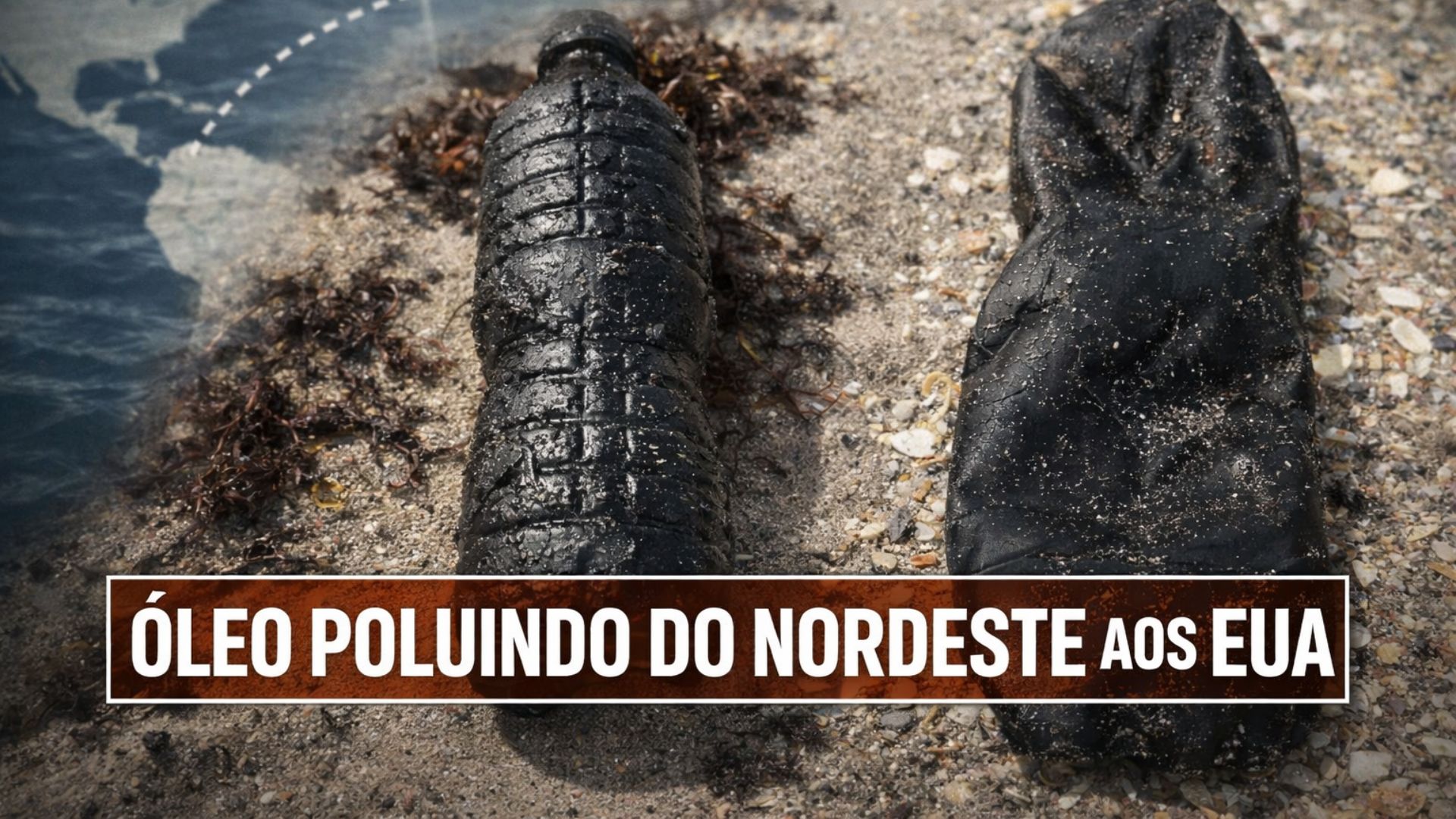
Study Found That Residues Contaminated by Oil from the Brazilian Coast Crossed the Atlantic, Remained Months in the Ocean, and Reappeared on the Coast of the United States Adhered to Floating Trash, Revealing the Transport Capacity of Pollutants by Ocean Currents and the International Dimension of Environmental Impacts.
The oil that hit the Northeast coast of Brazil in 2019 did not remain restricted to the country’s beaches.
According to a study conducted by researchers from the Marine Science Institute of the Federal University of Ceará, the material traveled about 8,500 kilometers across the ocean and was identified, months later, on the coast of Florida, in the United States, adhered to solid waste such as plastic and glass bottles.
According to the authors, the crossing took approximately 240 days, considering the interval between the first records in Brazil and the findings on the American coast.
-
Friends have been building a small “town” for 30 years to grow old together, with compact houses, a common area, nature surrounding it, and a collective life project designed for friendship, coexistence, and simplicity.

-
This small town in Germany created its own currency 24 years ago, today it circulates millions per year, is accepted in over 300 stores, and the German government allowed all of this to happen under one condition.

-
Curitiba is shrinking and is expected to lose 97,000 residents by 2050, while inland cities in Paraná such as Sarandi, Araucária, and Toledo are experiencing accelerated growth that is changing the entire state’s map.

-
Tourists were poisoned on Everest in a million-dollar fraud scheme involving helicopters that diverted over $19 million and shocked international authorities.


This data draws attention because, under normal conditions, oil spills tend to disperse or degrade before covering such extensive distances in open sea.
Traces of the Spill Reappeared in the United States
The first occurrences of the oil in Brazil were recorded in August 2019, initially on beaches in the Northeast.
In the following months, the material was identified at over 700 points along the northeastern coast and also in parts of the Southeast, with sporadic records until early 2020, according to environmental monitoring data.
In Florida, the situation observed was different.
Instead of large continuous spills in the sea, volunteers found trash stranded on the beaches, mainly containers with lids, partially or totally covered by a dark substance.

The findings were concentrated mainly in Palm Beach, in the southeastern part of the state, between May and September 2020.
The association between the episodes began to be investigated after the environmental organization Friends of Palm Beach, responsible for regular coastal cleaning actions, reported the recurrence of this type of contaminated waste.
As the group maintained contact with Brazilian researchers, the information was shared and initiated a joint analysis.
Chemical Analysis Confirmed the Origin of the Oil
To verify whether the material found in the United States corresponded to the oil that hit Brazil, researchers compared samples collected in Florida with chemical records cataloged since 2019 on the Ceará coast.
The procedure involved analyzing the molecular profile of the oil.
According to Professor Rivelino Cavalcante from Labomar-UFC, who was responsible for part of the research, the comparison indicated a match between the samples.
“We have the chemical profile of all the oils that arrived from 2019 to 2025 on the Ceará coast.
Therefore, the oil [from Ceará] matched, it had the same chemical profile, the same fingerprint, the correct term is this, the fingerprint of the oil with the oil that was in the bottles [in Florida],” he stated.
Based on this result, the study points out that the oil not only remained in the marine environment for a prolonged period but was also transported over long distances before reappearing in another country.
Floating Trash Increased the Transport Capacity
Researchers emphasize that the behavior observed is related to the interaction between the oil and floating trash.
Under normal conditions, factors such as sunlight, wave action, microorganisms, and physical processes accelerate oil degradation in the sea.
In this case, as described in the scientific article, the oil adhered to materials such as plastic and glass, which have a high buoyancy capacity.

This association would have contributed to reducing the direct exposure of the oil to certain degradation agents, allowing it to be transported by surface currents for a longer period.
The objects found in Florida were mostly plastic and glass bottles with lids, covered by varying layers of oil.
Many of these items had labels in Portuguese, which, according to the researchers, reinforced the hypothesis that they were not waste discarded locally.
Ocean Currents Explain the Route to Florida
To reconstruct the path taken by the material, the study used mathematical models of ocean circulation.
The simulations indicate that the contaminated trash may have traveled along the northern coast of South America, passed through the Guianas and Venezuela region, crossed the Caribbean Sea, and later reached the Gulf of Mexico before arriving in Florida.
According to the authors, this trajectory is compatible with known patterns of maritime currents that move from south to north across the American continent.
In this context, the floating trash acts as a passive transport means, carrying adhered substances for thousands of kilometers.
Investigation into the Spill Is Ongoing
The 2019 spill is considered one of the largest oil contamination episodes ever recorded on the Brazilian coast.
Despite the extent of the impacts, accountability for the spill remains without judicial definition.
In 2021, the Federal Police reported that a Greek-flagged vessel, which allegedly transported Venezuelan crude oil, was the main suspect in causing the contamination.
The company responsible for the vessel denied involvement and filed a contestation.
The case continues to be processed in Brazilian courts, with no convictions to date.

As the investigation continues, the study about the arrival of the oil in Florida adds an international element to the episode, indicating that the effects of the spill have crossed national borders.
Solid Waste Amplify Environmental Impacts in the Ocean
In addition to the bottles covered in oil, American volunteers also found bales of rubber on the Florida coast.
According to researchers, the material is similar to the bales identified on beaches in the Brazilian Northeast in 2018, associated with a cargo from a World War II ship that was exposed after looting at sea.
For the scientists involved, the coincidence of the two cases reinforces the discussion about the management of solid waste and its effects on an oceanic scale.
Rivelino Cavalcante explains that, during rainy periods, large volumes of urban waste are carried by rivers to the sea, where they can disperse over long distances.
According to him, this type of dynamic helps to understand how the spilled oil ended up encountering floating materials and being transported by currents to the United States.
Foreign Trash Also Reaches the Ceará Coast
The circulation of waste in the Atlantic was observed in another UFC study, released in 2024, which analyzed plastic waste found on beaches in Ceará.
The study from the Plastic Detective project identified that 78.5% of the items originated from African countries, with additional records of materials associated with Europe and Asia.
Researchers related these findings to the dumping of waste in major African rivers, especially the Congo, and the action of ocean currents.
According to the survey, the journey of plastic to the Brazilian Northeast can take between six and 11 months.
Both studies indicate that waste and pollutants circulate on a transoceanic scale and that initially localized events can have repercussions in other countries.









-

-

-

4 pessoas reagiram a isso.