





 Portuguese
  English
  Spanish
  6 min of reading
  0 comments


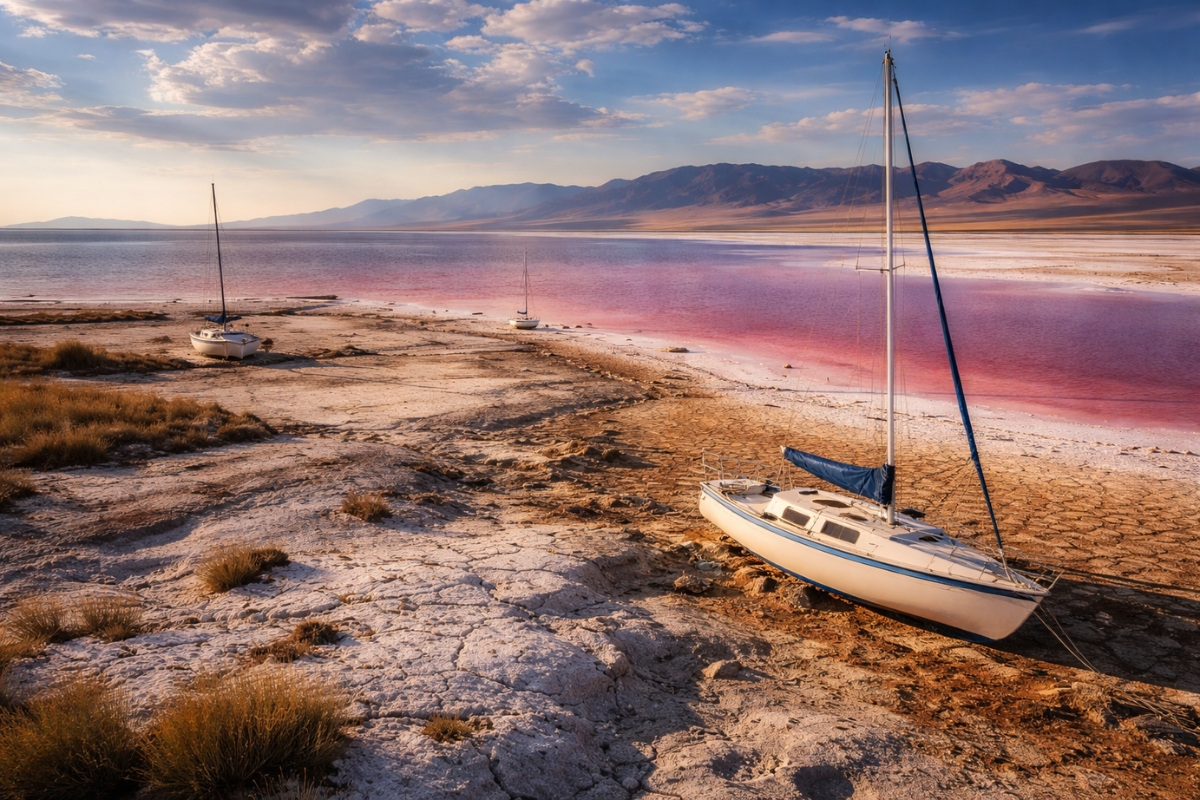
The Great Salt Lake falls far below the level considered healthy, leaving much of the bed exposed, pressuring brine flies, brine shrimp, and millions of migratory birds, and highlights why drought alone does not explain the crisis without considering the intensive water use in the basin
The Great Salt Lake in Utah, USA, has become a dramatic symbol of how water scarcity can transform an entire landscape. What once looked like a gigantic saline mirror now displays stranded boats, cracked shores, surreal pink hues, and an increasingly exposed bed to the wind.
The situation has gained international attention because it is not just a one-time drought. The retreat of the Great Salt Lake reveals the combined effects of prolonged drought, high temperatures, intense evaporation, and excessive water diversion throughout the basin, reshaping the ecosystem at an alarming rate.
Why the Great Salt Lake is so vulnerable
The Great Salt Lake is a terminal lake, meaning it receives water from rivers and streams but has no natural outlet to the sea. In practice, water only leaves the system through evaporation, making the water balance extremely delicate and dependent on the volume that enters each season.
-
It’s not Cristiano Ronaldo or Messi: the richest football player in the world is only 27 years old, has a fortune of 100 billion reais, and is the nephew of a sultan from an Asian country that few people know about.

-
At 77, the king of one of the most famous and powerful crowns on the planet is said to be under pressure to leave the throne, while behind the scenes there are already talks of a new coronation that could cost R$ 260 million.

-
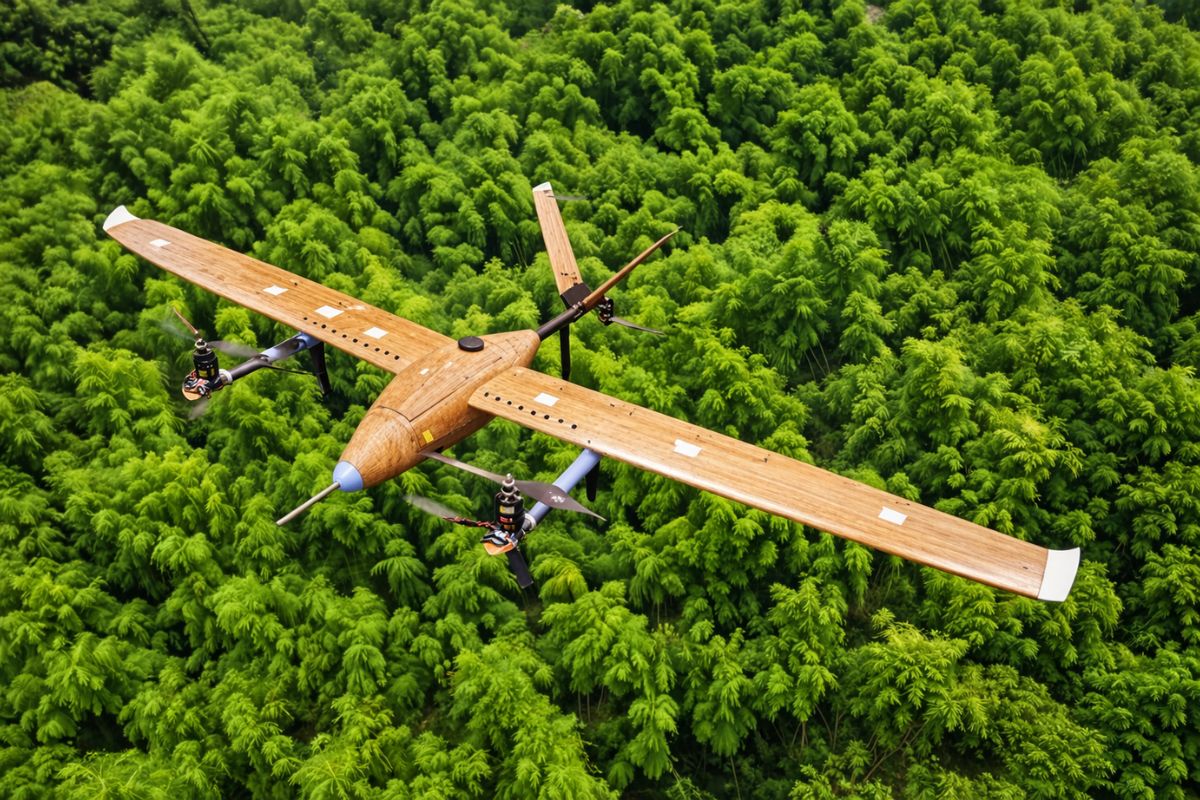
Chinese researchers have created bamboo drones that fly with the same precision as conventional models and have released the flight control software for free to the entire world in a technology that could revolutionize sustainable aviation.
-
Russia reveals that it is already conducting 95% of all its business with China without using a single dollar; dedollarization has ceased to be a promise and has become a reality in record time, and the West watches helplessly.


This technical detail helps explain why any reduction in water inflow has such a rapid impact. When less water reaches the lake due to drought, heat, or upstream human consumption, the level drops, the salt concentration changes, and the biological functioning of the entire system begins to go off-kilter.

The visual shock: stranded boats, exposed salt, and unrecognizable landscape
One of the most emblematic signs of the crisis has been the stranding of boats in areas that previously had sufficient depth for navigation. Marinas and ramps have become too shallow, interrupting recreational activities, affecting local businesses, and revealing how much the lake has retreated in a relatively short period.
This type of image has gained strength because it visually translates a complex problem. When the lake drops to historic levels, dry mud appears, salt emerges, the horizon retracts, and the geography changes before our eyes. What was water turns into crust, dust, and unstable ground, as if the map is being redrawn live.
The pink water that seems fiction, but is pure science
Among the most impressive aspects is the pink coloration observed in parts of the lake. This effect is not paint, nor an artificial phenomenon: it is linked to the presence of halophilic microorganisms, organisms adapted to extreme salinity environments and capable of altering the water’s hue.
The difference between the northern and southern arms of the lake helps explain the phenomenon. The southern arm receives almost all the inflow of fresh water, while the northern arm tends to be much saltier. This division creates striking chemical and biological contrasts, favoring the proliferation of microorganisms in certain areas that give the lake its pinkish-red appearance.
The invisible risk: dust, sediments, and health concerns
If the pink water is impressive, the exposed bed is even more concerning. As the lake recedes, vast areas that were previously submerged become uncovered, forming surfaces vulnerable to wind erosion. This opens the door to dust storms that lift fine particles and amplify the debate about environmental and health risks.
There is ongoing concern about the presence of compounds like arsenic in the sediments. At the same time, environmental authorities highlight that more than a decade of monitoring has not indicated a direct increase in heavy metals in the air solely due to the lake’s decline. Still, the advance of dust remains a serious warning, as more exposed soil means a greater potential for atmospheric emission.
An entire ecosystem depends on this balance

The Great Salt Lake is not just an iconic landscape: it is a sophisticated ecological gear. Its food chain depends on the interaction between salinity, temperature, biological productivity, and water volume. When this balance changes too much, the effects ripple through all levels of the system.
In the less salty southern arm, organisms like brine shrimp and brine flies thrive better. These small creatures sustain millions of migratory birds that use the lake as a vital resting and feeding point. If salinity rises beyond the ideal or the habitat shrinks too much, the food base weakens, and the impact propagates throughout the migratory route.
What the latest numbers show
The current situation does not indicate a definitive collapse, but it is also far from representing a safe recovery. Recent data shows the southern arm at about 4,192.3 feet and the northern arm at approximately 4,191.3 feet, values still below the 4,198 feet considered the minimum healthy reference for the lake.
This means that even after some partial recovery, the system remains in a fragile condition. Recent indicators also point out that the lake remains several feet below the desirable level, with more than half of the historically natural bed still exposed and with only a fraction of the volume considered full within the ecological reference used in independent monitoring.

The improvement after 2023 did not solve the problem
After the record low observed in 2022, the heavy snow and runoff of 2023 brought temporary relief. The lake rose significantly, some recreational activities were resumed, and part of the public narrative shifted from imminent disaster to cautious hope, which fueled discussions about recovery.
But the improvement did not solidify permanently. Hot summers, continued pressure on water resources, and below-ideal inflows pulled the system down again. In other words, the lake responded positively when it received water, but it also showed how it remains vulnerable whenever the water balance tightens again.
The crisis is not just due to drought: human water use plays a significant role
One of the most important points to understand about the Great Salt Lake is that the crisis cannot be attributed solely to a lack of rain or snow. The problem is exacerbated by intensive water use in the basin, especially before that water can reach the lake. Agriculture, urban expansion, and regional demands directly interfere with this flow.
This factor is decisive because it transforms a climatic event into a structural crisis. Even in better years, if a large portion of the water continues to be captured upstream, the lake will keep receiving less than it needs to stabilize its levels, salinity, and long-term ecological function.
What is being done — and why it is still not enough
In recent years, Utah has expanded legislative measures, reinforced studies on dust, deepened long-term projections, and started treating the Great Salt Lake as an environmental and economic priority. There have been significant institutional advances, as well as increased data production to guide future decisions based on technical grounds.
Still, the main conclusion remains harsh and objective: better governance helps, but it does not replace water in the lake. Without a real increase in the water that reaches the system, the risk continues. The Great Salt Lake has become a powerful portrait of the 21st century: an entire ecosystem being reshaped by the combination of extreme climate and human pressure on a finite resource.





Seja o primeiro a reagir!