





 Portuguese
  English
  Spanish
  4 min of reading
  0 comments



One Vanderbilt Skyscraper, 423 Meters Tall, Uses Giant Water Tanks to “Breathe” with the Wind and Has Become an Icon of Modern Engineering in New York.
Few people imagine that the tallest skyscrapers in the world literally move. One Vanderbilt, in New York — one of the most modern and tallest buildings on the planet, standing at 423 meters with 93 floors — is a living example of engineering that allows a steel and glass structure to “breathe” without compromising its safety. According to data from the Council on Tall Buildings and Urban Habitat (CTBUH) and the Steel Institute of New York, the building can sway up to 2 meters at the top during strong winds, but its occupants hardly notice it.
The explanation lies in a sophisticated system called Tuned Mass Damper (TMD) — a huge collection of water tanks and counterweights that stabilize the building when the wind pushes it. One Vanderbilt has a tuned mass damper weighing around 520 tons, developed to reduce vibrations by up to 80% and eliminate discomfort caused by gusts hitting New York City, where winds can reach over 100 km/h on the most intense days.
The Engineering Behind a “Breathing” Giant
Built between 2016 and 2020, One Vanderbilt is located next to Grand Central Station in Manhattan and has become a landmark of the revitalization of the island’s eastern zone. With a metal structure and cutting-edge laminated glass façade, the building was designed by Kohn Pedersen Fox Associates (KPF), one of the largest architecture firms in the world.
-
After nearly 50 years of neglect, BR-319 receives R$ 678 million to pave 340 km, gain a 320-meter bridge, and try to lift Amazonas out of the mud, the quagmire, and road isolation.

-
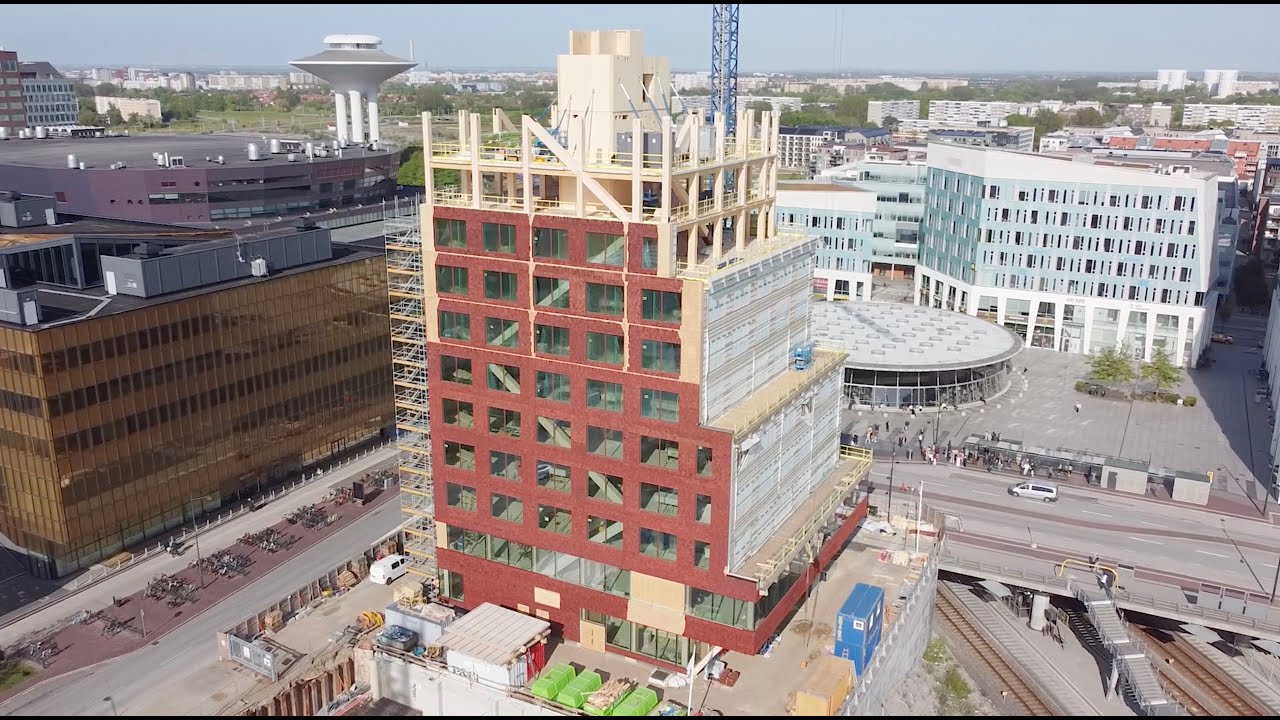
In Sweden, a 51-meter tower was built almost entirely of wood, without a concrete structural core and with solar panels integrated into the facade, using CLT and laminated beams to challenge the dominance of steel and concrete in modern buildings.
-
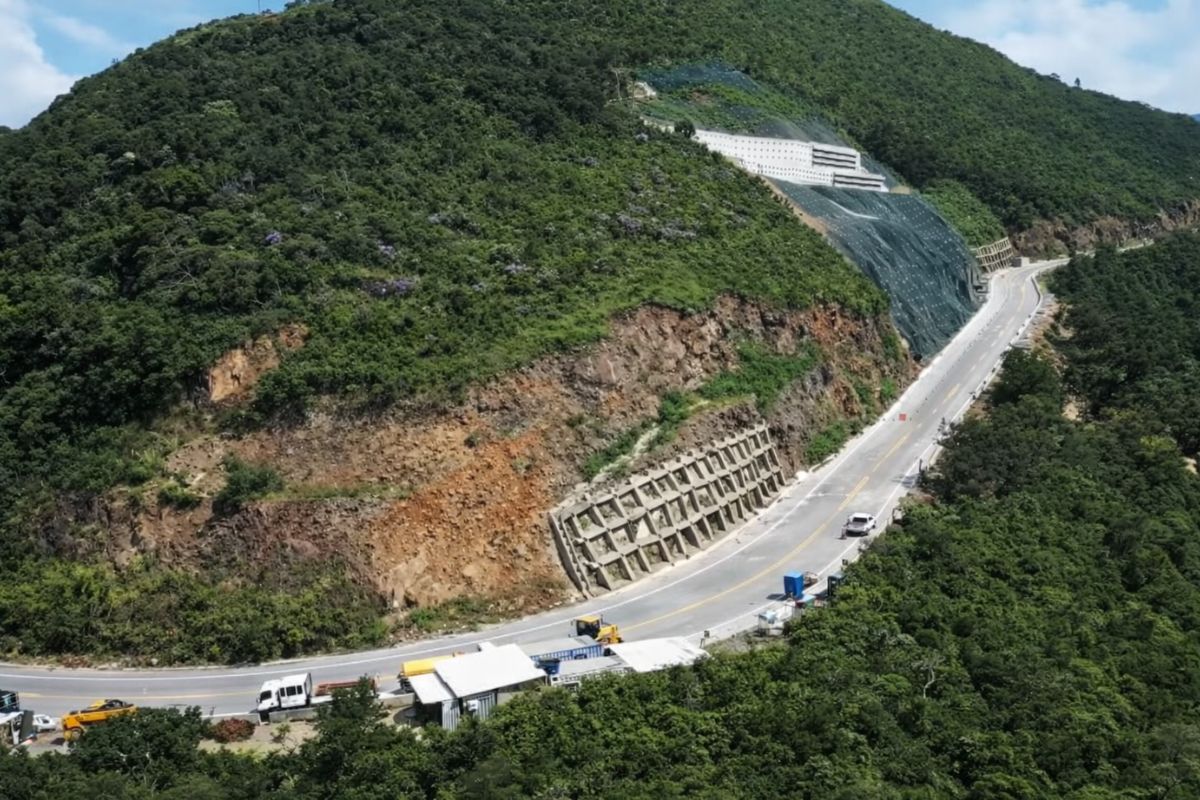
The section of Serra da Rocinha on BR-285 is now open in Timbé do Sul: 50 m tensioned curtains and top-down technique stabilize the slope, with a stairway duct controlling the water.
-
Scientists use sawdust mixed with clay to create a lighter brick, promising efficient thermal insulation and impressing by transforming waste into a solution for construction.




To withstand winds blowing from over 400 meters high, engineers had to adopt unprecedented solutions. The Tuned Mass Damper — a system already used in towers like Taipei 101 (Taiwan) and Shanghai Tower (China) — was precisely adapted to New York’s climate.
It consists of tanks filled with water and hydraulic dampers suspended by steel cables. When the building tilts to one side, the liquid mass moves in the opposite direction, compensating for the movement and stabilizing the tower’s center of gravity. The result is a slight oscillation imperceptible to the naked eye, keeping the building stable even during storms.
The Challenge of Raising a Moving Building
According to structural engineer Ken Lewis from Severud Associates — the company responsible for the structure of One Vanderbilt — the biggest challenge was developing a system that worked automatically and independently, without interfering with the building’s operations. “The TMD acts like a silent heart of the tower. It reacts in fractions of a second and ensures that nothing happening outside is felt inside the offices,” he explained in an interview with the New York Times.
Structural tests were conducted in a wind tunnel at RWDI (Research Wind Design Institute</em) in Canada, where scale models reduced risks before final installation.
A Sustainable Colossus
In addition to being an engineering feat, One Vanderbilt was also designed with sustainability in mind. The building is LEED Platinum certified, with intelligent ventilation systems, high thermal efficiency glass, and rainwater reuse. The hydraulic damper itself is part of this concept: its water can be reused for maintenance, preventing waste.
In energy terms, the building operates with 30% less consumption than similarly sized buildings and houses over 1.5 million square meters of usable space, where offices for large financial and tech companies are located.
The Feeling of Being Inside a Living Giant
Those visiting the Summit One Vanderbilt observatory at the top of the building likely do not realize that the glass floor beneath their feet is literally moving a few centimeters with the wind. This slight oscillation is a natural result of structural flexibility — and what makes the building safer.

The tower was designed to move and not resist completely to the wind, a modern philosophy that ensures durability and comfort. If it were completely rigid, external forces could cause cracks or damage over time. Instead, One Vanderbilt “dances” with the wind — a demonstration of how modern engineering has learned to work with nature, not against it.
Other Buildings that “Move” Around the World
The phenomenon is not exclusive to New York. The tallest skyscrapers on the planet also utilize similar systems:
- Taipei 101 (Taiwan) — has a 660-ton sphere hanging by cables, visible to visitors, that moves in the opposite direction of the wind;
- Shanghai Tower (China) — features a 1,000-ton TMD, considered the largest in the world, installed between the upper floors;
- Burj Khalifa (Dubai) — uses a spiral geometry system that disperses the wind, reducing the need for mechanical dampers.
These technologies have made possible the era of “super skyscrapers,” structures that exceed 300 meters and redefine the concept of urban stability.
A Symbol of Modern Engineering
One Vanderbilt is not just a building — it is a landmark of engineering that unites aesthetics, science, and sustainability. Its silent water tanks and automated systems allow a structure of over 1.6 million tons of steel and concrete to maintain balance with the delicacy of a pendulum.
In the heart of the city that never sleeps, the skyscraper that moves with the wind shows that sometimes, the strength of a building lies precisely in its ability to move.






Seja o primeiro a reagir!