





 Portuguese
  English
  Spanish
  4 min of reading
  13 comments


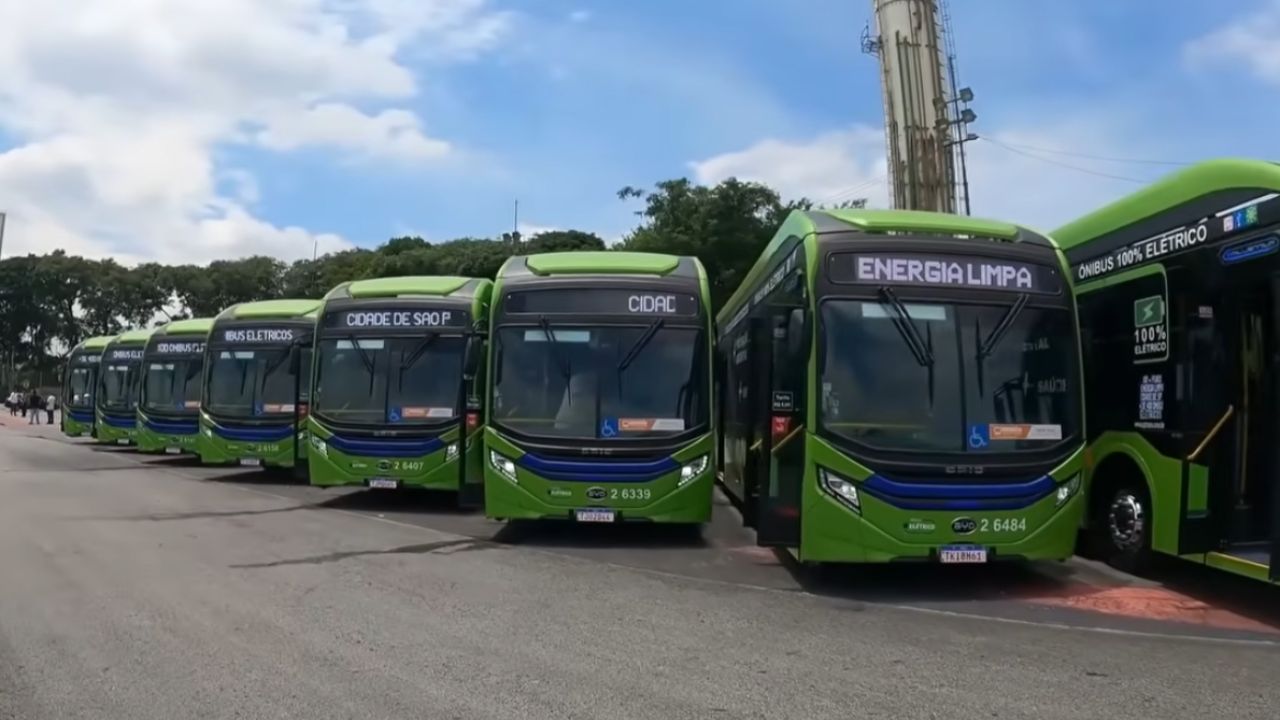


Chinese Electric Buses Gain Space in São Paulo, Reduce Diesel, Noise and Pollution, Increase Comfort in Public Transport and Reveal Challenges of Cost, Energy, Recharging and Dependence on China
The Chinese electric buses have ceased to be an exception and are now part of everyday life in São Paulo. Amid the chaotic traffic and congested avenues, silent vehicles have begun to replace the constant noise of diesel engines, noticeably altering the experience of those navigating the city.
This change did not happen by chance. The growing presence of Chinese electric buses is the result of a combination of ambitious environmental goals, the need for fleet renewal, and China’s strong entry into the global public transportation market, with São Paulo becoming the main laboratory for this transformation outside Asia.
How the Chinese Electric Buses Reached the Streets of São Paulo
The turning point began when the city hall established strict targets to reduce emissions in public transportation. With the obligation to gradually replace a fleet historically powered by diesel, companies began seeking viable large-scale solutions.
-
The government puts R$ 8.6 billion on the table to change the highway (BR) with 50 overpasses, 28 bridges, 4 tunnels, and 40 km of bike lanes in 180 km of historic duplication.

-
BRL 20.1 Million Bridge Project Kicks Off: 200-Meter Construction to Improve Access in Three Cities in Minas Gerais

-
‘Endless Road’ In Brazil Is One of The Largest In The World: 145 Km Stretch On An Important Highway (BR) Crosses The West Of Bahia And Had 135.9 Km Revitalized With R$ 35.3 Million
-
Engineer From ITA Who Worked at Embraer Leads Free Flow Expansion With National Artificial Intelligence and Technology for Toll Without Barriers in Brazil

It was in this context that Chinese electric buses found space. Manufacturers from China already dominated this technology, offering ready vehicles, batteries, complete systems, and accumulated experience in large cities, which accelerated adoption in São Paulo.
Silence, Less Smoke and Another Urban Experience

The most immediate impact of Chinese electric buses is sensory. The engine noise practically disappears, there is no constant vibration, and the smell of diesel is no longer part of the journey.
Quieter streets, less polluted air, and reduced noise stress have become a reality on corridors where electric buses operate frequently, benefiting not only passengers but also local residents.
Comfort Changes the Routine of Drivers and Passengers
For drivers, the difference is profound. Those who spent years driving diesel buses report reduced fatigue, less physical pain, and a lighter work routine. No clutch, no vibration, and with automatic transmission, daily effort decreases considerably.
Passengers also notice the gains. Air conditioning, smoother suspension, USB ports, Wi-Fi, and information panels make the journey more comfortable and predictable, distancing the image of hot and noisy public transport from the past.
Real Reduction of Diesel and Pollution
The adoption of Chinese electric buses has brought concrete environmental gains. Replacing diesel vehicles significantly reduces fossil fuel consumption and the emission of polluting gases.
Less smoke, fewer particles in the air, and lower climate impact reinforce the role of electric public transport as a central piece in the city’s environmental strategy.
High Costs Hinder Faster Expansion

Despite the benefits, the advancement of Chinese electric buses faces a clear obstacle: the initial cost. An electric bus costs significantly more than a diesel model, making fleet replacement a financial challenge for operators.
Even with lower maintenance costs and less expense per kilometer over time, the initial investment weighs on the budget and requires financing, subsidies, or public incentives to enable expansion.
Energy and Recharging Are Still Bottlenecks
Another central challenge lies outside the buses. To operate, Chinese electric buses depend on robust energy and recharging infrastructure, especially in garages.
The need to bring high electrical power to these points, combined with bureaucracy and network limitations, creates delays. There are cases of new buses parked due to lack of available energy, leading to frustration and operational losses.
Operation Requires New Planning
Unlike diesel, electric buses require adjustments in daily operations. Shorter range, charging time, and route planning become critical factors.
Companies need to revise schedules, shifts, and routes. A power failure can mean a stationary fleet, something that did not exist in the traditional model.
Dependence on China Enters the Debate

A sensitive point is the technological dependence. Most of the Chinese electric buses used in São Paulo are imported or assembled locally with Chinese technology, including batteries and systems.
This creates vulnerability to currency fluctuations, supply delays, and external decisions. The debate over the nationalization of production and the development of proprietary technology is gaining strength, but it still faces time and investment barriers.
Public Financing Accelerates the Transition
To enable electrification, financing agreements with Chinese banks have become part of the strategy. Credit with lower interest rates and long terms helps to dilute the financial impact of fleet replacement.
At the same time, these agreements reinforce the bond with Chinese suppliers, raising questions about long-term dependence.
A Change That Goes Beyond Buses
The advancement of Chinese electric buses in São Paulo is not just a matter of vehicle replacement. It represents a structural change in urban transport, requiring a new mindset, new investments, and strategic decisions.
The city is advancing, but faces clear challenges. The balance between environmental benefits, economic viability, and technological sovereignty will be decisive for the future of this silent revolution.
Do you think Chinese electric buses represent a definitive advancement for public transport or a dependence that is too risky for Brazil?





a matéria não fala que existe produção nacional da Electra, produção da Volkswagen, Iveco…entre outras.. não é só byd.
Tudo que é feito para melhorar a qualidade de vida em nosso planeta compensa os esforços
Perguntinha básica,
Nessas comprinhas bobas vale tbm a taxação de 50% + taxas de importação e frete ?,
ou é só p nós mesmos %.