





 English
  Francês
  Alemão
  Italiano
  Japonês
  Norueguês
  Portuguese
  Spanish
 3 min of reading


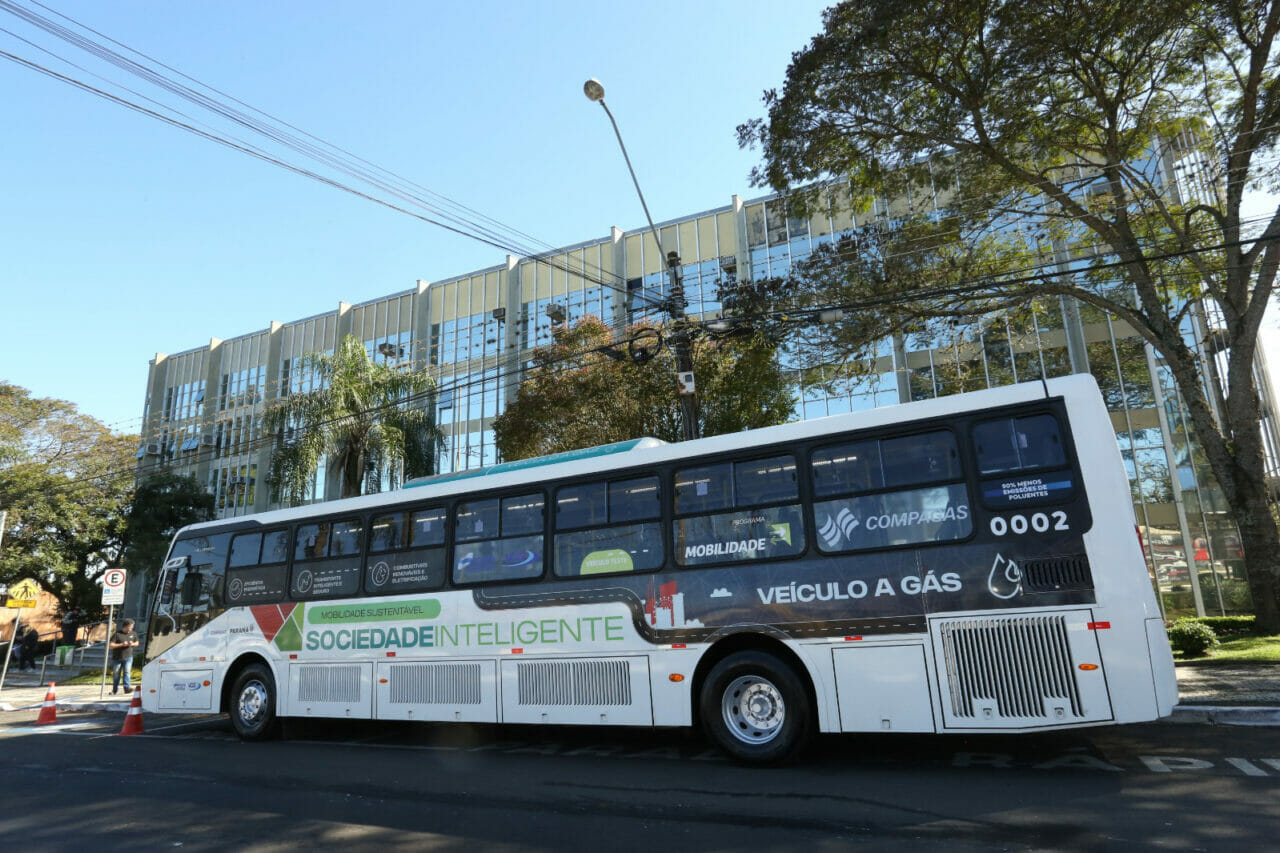
The Objective of the Compagas Project Is to Prove the Efficiency of Natural Gas as Fuel for Buses
Compagas, in partnership with Scania and the City Hall of Ponta Grossa (PR), has started an innovative demonstration with a bus 100% powered by natural gas. This initiative is part of a project aimed at promoting more sustainable urban mobility in major cities in Paraná. The goal is to certify the efficiency indicators, especially the reduction of pollutants in the use of the vehicle, contributing to sustainability goals in Paraná.
According to Petronotícias, Mayor Elizabeth Silveira Schmidt highlights the importance of the project for the city and thanks Compagas and Scania for the opportunity to test this more sustainable technology, which benefits both the environment and the citizens.
Gas Bus Tests Achieved Positive Results
This action in Ponta Grossa is the fourth conducted in 2023 by the project coordinated by Compagas and Scania. The first demonstrations took place in the Metropolitan Region of Curitiba, with the Government of Paraná, and in the capital, with the City Hall of Curitiba, between March and May. In June, the same vehicle operated in Londrina (PR), fueled 100% with biomethane, in a historic real operation in Brazil. In all three locations, the viability of using the gas bus on complex and extensive routes was proven, ensuring autonomy and significantly reducing pollutant emissions.
-
With 160,000 m² of collectors, an area larger than 20 football fields, Silkeborg, in Denmark, hosts a solar thermal plant that heats 19,500 homes and could become the largest solar heating plant in the world.

-
A study reveals the expansion of renewable energy procurement in Brazil and shows how companies are taking advantage of opportunities to reduce expenses, ensure energy efficiency, and strengthen strategic environmental commitments.

-
Brazil accelerates decarbonization in the South: International forum in Foz do Iguaçu gathers leaders to discuss the advancement of biomethane in the energy matrix and the potential of “caipira pre-salt.”
-
Mato Grosso do Sul excels in the sugar-energy sector: the state reaches a milestone of 22 operating mills and accelerates the production of clean energy in MS with a focus on sustainability.

Compagas CEO, Rafael Lamastra Júnior, emphasizes the positive results obtained during the initial tests, demonstrating the efficiency of the gas vehicle compared to diesel. In Curitiba, the competitiveness of CNG (Compressed Natural Gas) allowed for a reduction in operating costs of about 10% and a 20% decrease in pollutant emissions. Lamastra highlights that these results were achieved with only one bus on route, indicating that a concentrated operation with more vehicles could bring even greater advantages to the local economy.
Benefits that Compagas Can Bring to the City and Environment with Gas Buses
The model manufactured by Scania, the K 280, with a length of 14 meters and capacity for 86 passengers, is equipped with a lift for accessibility and internal space for wheelchair users. Its engine is powered 100% by gas and biomethane, representing a sustainable and environmentally friendly alternative compared to diesel models.
Celso Mendonça, Sales Manager for Mobility Solutions at Scania Commercial Operations Brazil, highlights the importance of exploring other energy sources to diversify the transportation matrix and make it less dependent on diesel, contributing to a more sustainable future.
The project of the natural gas bus in Ponta Grossa demonstrates the benefits of sustainable urban mobility and is an important step towards cleaner and more efficient transportation in Paraná cities. Investment in more sustainable technologies is a way to ensure a better future for the next generations and for the environment. The pioneering initiative of Compagas and Scania shows that it is possible to unite innovation, efficiency, and environmental responsibility to create a more sustainable and planet-friendly transportation system.






Seja o primeiro a reagir!