





 Portuguese
  English
  Spanish
  5 min of reading
  2 comments


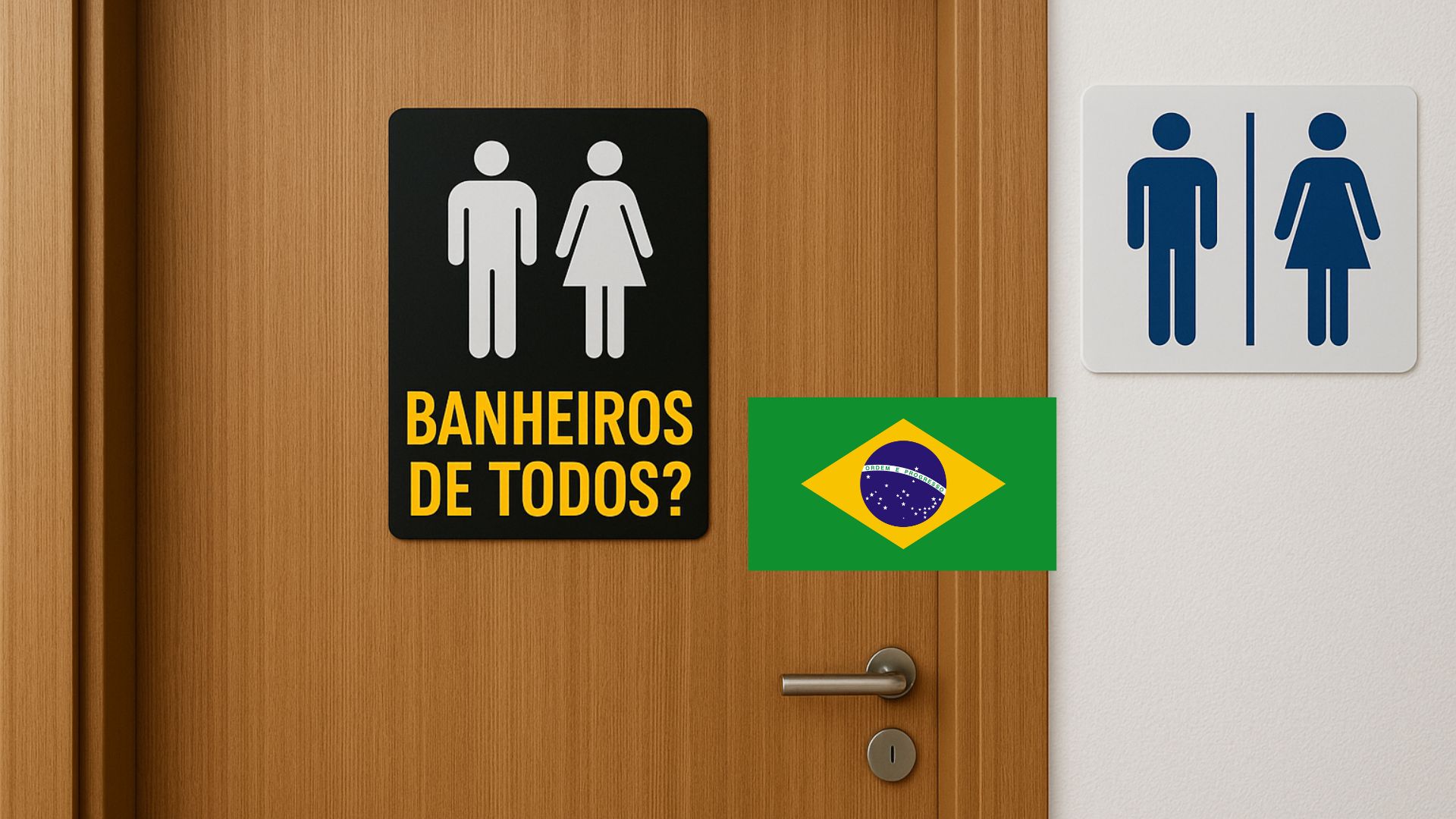


CNJ Issues Order Requesting Courts to Provide Information on Gender Policies and Access to Bathrooms According to Declared Identity, Which Raised Legal Doubts and Different Interpretations Regarding the Scope of the Measure.
The National Justice Council (CNJ) issued, on August 8, an order that has been interpreted as a directive for all courts to ensure access to bathrooms and changing rooms according to gender identity, and set a deadline of 15 days for them to inform their internal policies.
According to information from the newspaper Gazeta do Povo, the measure reignited the debate about the extent of the agency’s authority and the practical reach of the text sent to the courts.
What Exactly the CNJ Requested from the Courts
The document was divided into two parts.
-
The noise law will no longer be in effect at 10 PM starting in June with a new rule valid during the 2026 World Cup.

-
The Chamber opens a debate on driver’s licenses at 16 years old as part of a reform that includes around 270 proposals to change the Brazilian Traffic Code and may redesign rules for licensing, enforcement, and circulation in the country.

-
The new Civil Code could revolutionize marriages in Brazil with “express divorce” and changes that could exclude spouses from inheritance.

-
Banco do Brasil sues famous influencer for million-dollar debt and intensifies debate on delinquency, risks of seizure, and direct impact on Gkay’s credibility.


First, the CNJ requested that each court inform whether there are already rules or practices that allow the use of common spaces, such as bathrooms and changing rooms, according to the gender with which the person identifies.
Then, it determined that the courts ensure access to these locations with clothing compatible with the declared identity.
The order, signed by councilor Guilherme Feliciano, states: “All Brazilian courts are summoned to inform, within a period of 15 (fifteen) days, whether they have any normative act or policy that ensures […] free access to all common use spaces in the buildings of the Judiciary, including bathrooms and changing rooms, in accordance with the identification gender, as well as ensuring access to these spaces with clothing compatible with the identification gender.”
Context of the Process and Origin of the Demand
The initiative responds to a request for action made by representative entities of the LGBTQIA+ population.
These organizations advocate that transgender individuals have access to courts and extrajudicial services without requiring clothing associated with biological sex and may use bathrooms according to their self-declared identity.
The proponents argue that, although the Supreme Federal Court (STF) recognizes rights for the LGBTQIA+ population, decisions on the subject tend to take time, while violence against transgender individuals remains a persistent problem.
As an additional argument, they recall that the CNJ acted in 2013 to facilitate same-sex civil marriage through a resolution, before a specific ruling from the STF on the matter.
Proceedings, Suspensions, and Resumptions
According to case records, the first order on the CNJ’s website dates back to December 2022.
The process was suspended for a period while awaiting deliberation from the Supreme regarding actions on the same theme.
Later, the STF canceled the general repercussion and did not assess the merits, which led to the resumption of the procedure at the CNJ.
With the reopening, the Council requested that the applicants update the status of actions in the Supreme with similar content and determined that representative organizations of the transgender and Black populations be invited to express their views.
The declared objective is to gather insights on access barriers in Judiciary buildings — from the use of social name to clothing rules — and assess the need for training for staff and public agents to deal with gender issues.
Interpretations of the Scope and Legal Doubts
The wording of the order provoked divergent readings.
In its most literal interpretation, some understand that the CNJ is directing the courts to stop separating bathrooms by sex, as the guideline focuses on gender identity and the compatible clothing with that identity.
A professor of Literature and Linguistics at a federal university, who wished to remain anonymous, assesses that the text, taken literally, could allow individuals to enter any bathroom dressed indistinctly, as items like pants and shirts are worn by different genders.
Critically, consulted legal experts acknowledge a problem of normative technique.
They argue that an order is not usually the appropriate tool to impose a substantial and general policy on all courts, which would indicate a poorly worded information request.
For attorney and professor Flávio Pansieri from the Law School of the Pontifical Catholic University of Paraná (PUCPR), “in my view, the text is ambiguous and poorly written. This does not provide security for the courts on how to act. It seems to me that the courts have to inform how they currently act, but the CNJ’s order should be more direct and clearer.”
What the Courts Need to Do Now
While the interpretation of the order’s scope persists, the courts have been called to respond whether they have internal rules, administrative acts, or practices that govern access to bathrooms and changing rooms according to gender identity.
In parallel, it is expected that they inform whether they already adopt procedures to avoid embarrassment to the public, the staff, and transgender judges, including regarding compatible clothing and the use of social name in registrations and badges.
In the absence of guidelines, some courts may issue their own regulations; others may await a clearer regulatory act from the CNJ, should the Council choose to convert the order into a recommendation, ordinance, or resolution with more specific commands.
CNJ’s Position and Uncertainties After the Deadline
When approached, the CNJ did not clarify whether the intention of the order from August 8 was merely to gather information or whether there was indeed an imposition for the courts to authorize the use of bathrooms according to gender identity.
Nor did it detail the situation following the end of the 15-day period for responses.
This lack of clarification supports the assessment that the text lacks precision regarding which measures are immediately exigible and which depend on complementary regulation.
What is at Stake at the Core of the Issue
The discussion involves two main fronts.
On an administrative level, there is debate over the CNJ’s authority to issue acts that standardize conduct in Judiciary buildings, establishing parameters regarding bathrooms, changing rooms, identification, and service protocols.
On another level, the legal controversy regarding gender identity in spaces segregated by sex remains scattered in actions and incidents in the courts, without a recent binding decision from the Supreme regarding this specificity.
Amid arguments for protection of dignity and free access to public services and concerns about security, privacy, and normative technique, the challenge remains to reconcile fundamental rights, regulatory predictability, and property management.
Possible Next Steps
As courts submit their information, the CNJ may consolidate a national diagnosis regarding practices already adopted.
From there, it may choose to deliberate in a collegiate manner, convert the guidance into a recommendation, open public consultation, or propose a resolution with detailed rules.
Meanwhile, local courts may issue their own regulations to govern access according to gender identity, define signage in bathrooms, provide reporting channels, and offer training to staff, aiming to reduce conflicts and ambiguities in the everyday application of coexistence rules.
How should the Judiciary balance protection of gender identity and the safety of users in public buildings without creating new zones of normative uncertainty?








Assim vamos há espaço para DF ,é só criar mais um para lgbtqivxyz…
Isso pode fazer aumentar o caso de abuso. Essa lei tira toda proteção da mulher …