





 Portuguese
  English
  Spanish
  4 min of reading
  0 comments


Scientific Discovery Points to Genetic Link Between New African Fungus and the Famous “Magic Mushroom” Cultivated Worldwide
A recent scientific discovery has caught the attention of the international mycology community and brought new elements to an old evolutionary debate.
Researchers from South Africa and the United States have identified a new species of psychedelic mushroom that may help explain the origin of Psilocybe cubensis, now considered the most cultivated psychedelic mushroom on the planet.
The study was published in the scientific journal Proceedings B of the Royal Society, one of the academic publications of the Royal Society, a scientific organization founded in 1660 in the United Kingdom.
The research indicates that the new African fungus shared a common ancestor with Psilocybe cubensis about 1.5 million years ago, suggesting an evolutionary history that is older than the traditional hypothesis defended by many scientists.
The discovery also reinforces the importance of studying fungal diversity in regions that are still underexplored by science, especially on the African continent.
-
ZCC 11000 crane lands at the port of Vitória and heads to Ceará in a convoy with 64 trailers: Zoomlion, founded in 1992, builds a monster that lifts over 600 compact cars to 93 m.

-
The biggest drama of being born on Mars is not breathing: Rice biologist says that colonists’ children may cease to be Homo sapiens, shaped by low gravity, radiation, and isolation that divides humanity.

-
With no separate outdoor unit and designed to fit in the window, monoblock air conditioners used in Japan emerge as an alternative for those who cannot install a split system in a rented apartment.

-
China prepares a 78,000-ton pilotable floating island for deep-sea research: it accommodates 240 people for months, withstands category 17 typhoons and 9-meter waves, and uses metamaterials that dissipate nuclear explosions.


The New Species Found in African Pastures
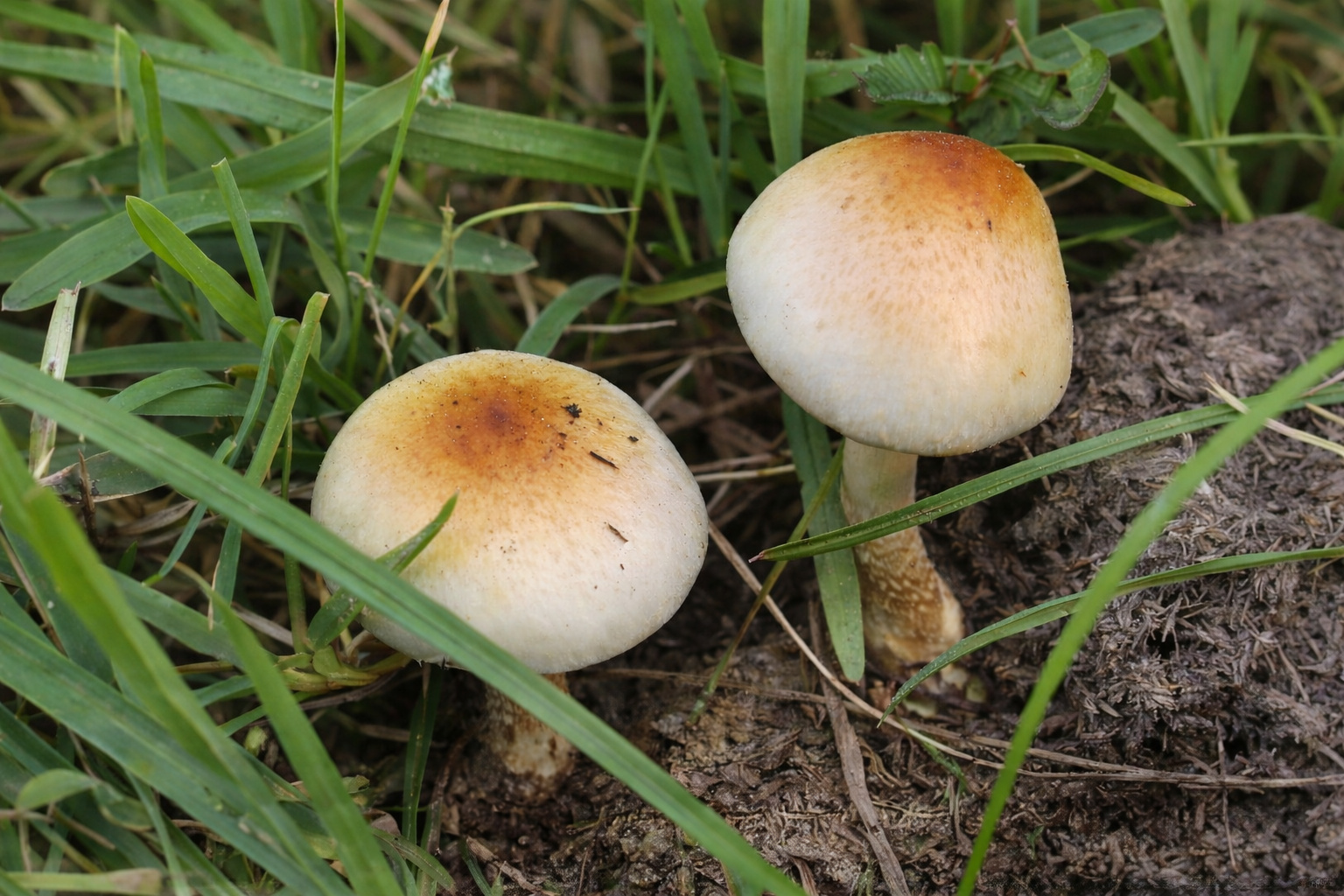
Scientists identified a new species called Psilocybe ochraceocentrata, found growing on cattle dung in pasture areas in South Africa and Zimbabwe.
The scientific name was chosen due to the ochre-yellow coloration observed at the center of the mushroom’s cap, a characteristic used to differentiate the species.
Although visually similar to Psilocybe cubensis, genetic analyses revealed important differences between the two fungi.
These differences were detected during the comparison of genetic sequences used to reconstruct evolutionary relationships between species.
The discovery also showed that the new species had already been cultivated in various parts of the world without its scientific identity being recognized.
What Are the So-Called Magic Mushrooms
The so-called “magic mushrooms” are fungi that contain natural psychedelic compounds, primarily psilocybin and psilocin.
These substances act on the nervous system and can alter perception, mood, and sensations.
Among the reported effects are:
- alterations in the perception of time and space
- visual distortions
- altered states of consciousness
In Brazil, the mushrooms themselves do not explicitly appear on the list of prohibited organisms by the National Health Surveillance Agency (Anvisa).
However, the substances psilocybin and psilocin are classified as prohibited psychotropics, which means that sale and cultivation are often treated by the Justice system as drug-related crimes.
Scientific History of Psilocybe cubensis
The Psilocybe cubensis was first scientifically described in 1906, in Cuba.
Since then, the species has been recognized as the most cultivated psychedelic mushroom in the world.
For decades, many scientists believed that this fungus had been introduced to the Americas only in the last centuries, possibly when cattle were brought from Europe and Africa to the Americas starting in the 16th century.
This hypothesis considered that the fungi had spread alongside the animals, as these mushrooms typically grow on dung from large herbivores.
The new research, however, suggests that the evolutionary relationship between species in this group may be much older.
Differences Between the Species Revealed by the Research
Although the mushrooms appear similar, scientists identified important differences.
According to Breyten van der Merwe, a mycologist and doctoral student at Stellenbosch University in South Africa, these distinctions were confirmed by detailed genetic analyses.
Van der Merwe explains that Psilocybe ochraceocentrata had already been cultivated in various regions around the world.
However, until the study was conducted, no one had realized it was a different species from the classic Psilocybe cubensis mushroom.
The researcher also highlighted that this variety became popular because it is considered relatively potent and easy to cultivate, contributing to its spread without proper identification.
DNA Analyses Reveal the Evolutionary History of Fungi
To reach these conclusions, the team analyzed DNA from samples collected in different regions of southern Africa.
Additionally, historical specimens preserved in scientific collections were examined.
The researchers used phylogenetic techniques, a method that compares genetic sequences to reconstruct evolutionary relationships between species.
They also applied scientific models capable of estimating when different lineages separated throughout evolutionary history.
These analyses allowed for the estimation that the two species may have diverged about 1.5 million years ago.
Environmental Changes May Have Influenced Evolution
The scientists suggest that environmental transformations that occurred millions of years ago may have contributed to this evolutionary separation.
During this period, pastures began to expand in South America, while large herbivores spread from Africa to other regions of the planet.
These animals provided the ideal substrate where these mushrooms typically grow.
Thus, new ecological conditions may have created favorable environments for the emergence of distinct species within this group of psychedelic fungi.
The Diversity of African Fungi Still Underexplored
Finally, the researchers highlight an important point.
According to them, the diversity of fungi in Africa still receives little scientific investigation.
Therefore, new research may reveal other unknown or evolutionarily relevant species.
Furthermore, discoveries like that of Psilocybe ochraceocentrata demonstrate how genetic studies and field research expand knowledge about the evolution of fungi.
In light of this new scientific evidence, how many other unknown species of fungi may exist in African pastures?








Seja o primeiro a reagir!