





 Portuguese
  English
  Spanish
  7 min of reading
  0 comments


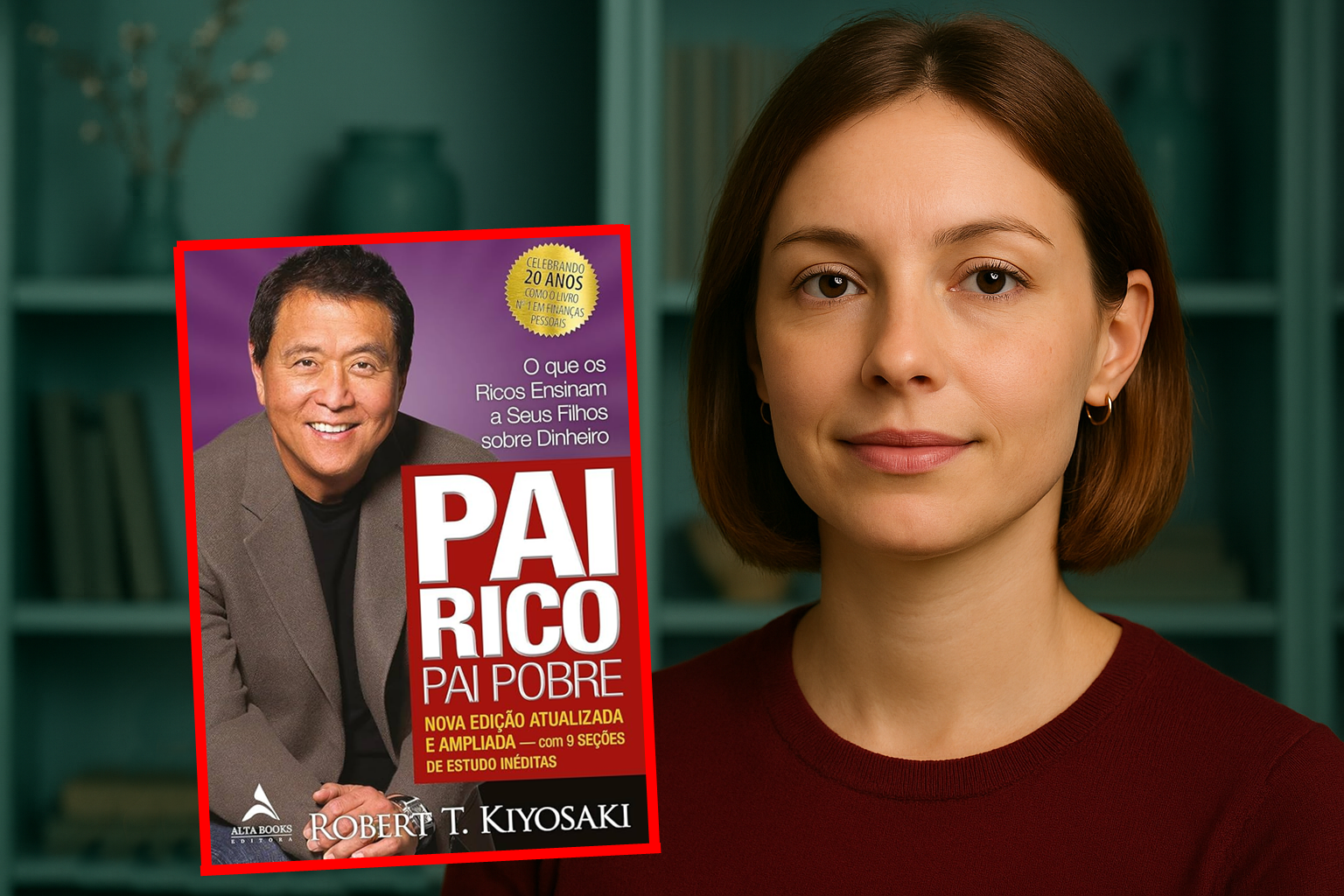
A Classic in Financial Education, the Book “Rich Dad, Poor Dad” Presents Practical Lessons to Get Out of Debt and Build Wealth with Discipline
Many people think that managing money is something for specialists. But the truth is that there is a huge amount of books and content available today that helps anyone learn about finance. One of the most well-known is “Rich Dad, Poor Dad” by Robert T. Kiyosaki.
This book is a true phenomenon and is considered a classic in financial education. Even those who have never studied investments or understand nothing about economics may have heard of it.
But what explains its success? The book presents simple, yet very powerful ideas that can change how someone deals with money.
-
From sertanejo star to international investor: Ana Castela invests millions in a mansion in the USA, creates a themed accommodation in Orlando, and shows that the “boiadeira” also wants to grow away from the stage.

-
The 10 most stunning motorhomes in the world: a $3 million trailer with a rooftop nightclub and garage for a Ferrari, “palaces on wheels” with Italian marble, private cinema, and five-star hotel luxury for billionaires.

-
Trump wanted to spend $400 million on the White House, but the courts prohibited the million-dollar construction.

-
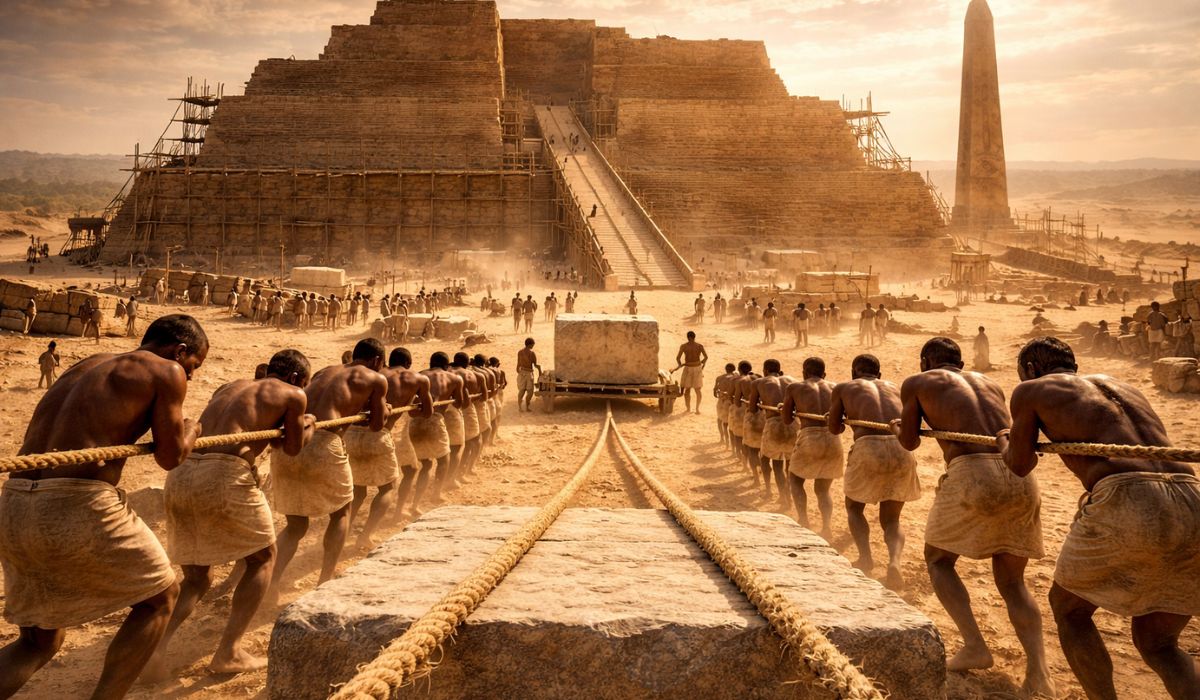
How the Egyptians erected giant structures like pyramids, temples, and obelisks without modern technology, cranes, or engines still amazes the world and reveals the power of engineering based on ramps, levers, ropes, and colossal organization.

In this article, we will explore the 7 main teachings of the book. All of them are useful for those who want to improve their financial life.
Let’s start from the beginning.
What the Book Is About
The book “Rich Dad, Poor Dad” has the main goal of teaching people how to use money intelligently.
The author’s focus is to show that it is possible to make money work for you, not the other way around. In other words, you don’t have to be a slave to your salary. It is possible to learn how to build wealth with practical attitudes.
To teach this, the author uses a different strategy: he presents two characters.
The “poor dad” is his biological father, a man who studied a lot and had a respected career. He had a doctorate, was a university professor, and had many academic titles.
The “rich dad” is the father of Kiyosaki’s best friend. This man did not finish high school, but he knew how to use money to his advantage.
Both worked hard. They both earned well. But the way they used money made all the difference.
The poor dad died in debt. The rich dad became one of the richest men in Hawaii. He left an inheritance for his children, donations to institutions, and a legacy of wisdom.
Kiyosaki shows in the book that the difference between them wasn’t intelligence but how they dealt with money.
The work is full of teachings. Now, let’s highlight the seven main ones.
1 – Escape the Rat Race
One of the most significant concepts in the book is the “rat race.”
This term represents the routine of many people: working the entire month to pay bills, buy goods, and repeat this every month.
Even when they earn more, they continue to spend more. They buy expensive things, raise their standard of living, and end up unable to save anything.
This cycle repeats for years without the person stopping to think about the future.
The problem appears later when retirement comes and there aren’t enough savings.
The author warns that if you don’t change this behavior, you will spend your life just trying to pay bills.
Therefore, the first step is to escape the rat race. This requires a change of mindset and habits.
2 – Financial Education Is Key
How to escape the rat race? The author answers: with financial education.
According to him, one must understand how money works. Knowing how the market operates, how taxes impact your earnings, and what to do to invest safely.
Kiyosaki argues that learning about finance is essential for anyone, regardless of profession.
It is with this knowledge that you learn to control your budget, save, invest, and grow financially.
Without it, you run the risk of working a lot and not being able to build anything.
3 – Always Seek Knowledge
Another important point in the book is the value of continuous learning.
Kiyosaki makes it clear that the pursuit of knowledge should be constant.
And this applies not only to those in school or college. Even those who have graduated should continue studying.
He also emphasizes that not everything is learned from books.
Practical experiences, life experiences, observations, and even mistakes are ways of learning.
In the case of the rich dad, for instance, even without formal education, he became a wealthy man. Meanwhile, the poor dad, despite having many titles, ended his life in debt.
In other words: more than titles, what matters is the ability to learn every day.
Today, with the internet, this has become even easier.
Studying has never been so accessible. You just need to want it.
4 – Know the Difference Between Asset and Liability
One of the simplest and most practical teachings of the book is how the author explains two concepts: asset and liability.
In traditional accounting, these terms have technical meanings.
But Kiyosaki offers a simple explanation:
An asset is anything that puts money in your pocket.
A liability is anything that takes money out of your pocket.
It’s that simple.
He uses the example of a car. For a company, a car can be an asset. But for personal use, it is generally a liability.
This is because the car incurs costs: fuel, maintenance, insurance, taxes.
These expenses take money out of your pocket.
Many people go into debt to buy goods like cars, which only generate costs later.
The lesson here is clear: stop buying liabilities and invest in assets.
Assets can be stocks, rental properties, businesses that generate income, among other examples.
This is one of the keys to changing your financial life.
5 – Make Money Work for You
Another central idea of the book is to reverse the common logic: instead of working for money, money should work for you.
Most people enter a cycle: they work, earn, spend, and then work again to pay the bills.
Even when they earn more, they continue to spend everything.
Kiyosaki teaches that to change this pattern, it is necessary to build sources of passive income.
In other words: ways to make money without needing to work all the time.
This can be done in two main ways: by entrepreneurship or investing.
Entrepreneurship can yield great results, but it involves risks.
Investing may be safer and allows you to grow gradually.
The logic is simple: the more you invest, the more your wealth grows. And the more it grows, the more income you have.
Over time, this income can replace your salary.
And then, you achieve the long-desired financial freedom.
6 – Start Early and Avoid Limiting Beliefs
One point the author emphasizes is the importance of time.
The earlier you start managing your finances, the greater the results.
Time allows compound interest to work in your favor.
Additionally, starting early helps develop discipline.
But what about those who are older?
According to the author, it is never too late to start.
The important thing is not to fall into mental traps, like the idea that “it’s too late now.”
These are limiting beliefs. They hinder and prevent change.
The right thing is to start now, regardless of age.
Every day counts.
The sooner you change your habits, the more time you have to see results.
7 – Invest in Yourself
Finally, Kiyosaki brings an essential teaching: the best investment you can make is in yourself.
This means studying, learning new skills, and taking care of your personal and professional development.
If you become a better, more capable, and more prepared person, you will have better chances of growing financially.
The author reinforces: invest in your knowledge, in your experiences, and in your ability to make good decisions.
This is the surest path to prosperity.
About the Author of the Book
Robert Kiyosaki is American, born in 1947 in the city of Hilo, Hawaii. He has Japanese-American ancestry.
His journey includes experiences as an entrepreneur, investor, and economist.
But it was as a writer that he became famous worldwide.
In total, he has written more than 15 books on personal finance.
“Rich Dad, Poor Dad,” released in 1997, is the most well-known.
The book has sold more than 26 million copies, has been translated into 40 languages, and is sold in over 80 countries.
With its simple and accessible language, it has helped to popularize important financial concepts.
The Legacy of the Work
“Rich Dad, Poor Dad” is not just a book about money.
It is a work about changing mindset.
It teaches that wealth does not depend only on how much you earn.
The most important thing is how you use what you have.
Even those with a low salary can build wealth.
As long as they change their way of thinking, acting, and dealing with money.
This is the greatest legacy of the book.
And that’s why it remains relevant, even after nearly three decades from its release.
The Book
The book “Rich Dad, Poor Dad” has become a phenomenon because it teaches things simply and clearly.
Its ideas do not require magic formulas or exaggerated promises.
They are practical lessons that anyone can apply.
More than that, the book shows that financial prosperity depends on conscious choices, behavioral change, and continuous education.
If you haven’t read it yet, maybe this is the right time to start.
And if you have already read it, you can always reread it and gain new insights.
The important thing is to remember: the change starts today.
And it depends only on you.








-

-

-

-

17 pessoas reagiram a isso.