





 Portuguese
  English
  Spanish
  4 min of reading
  1 comment


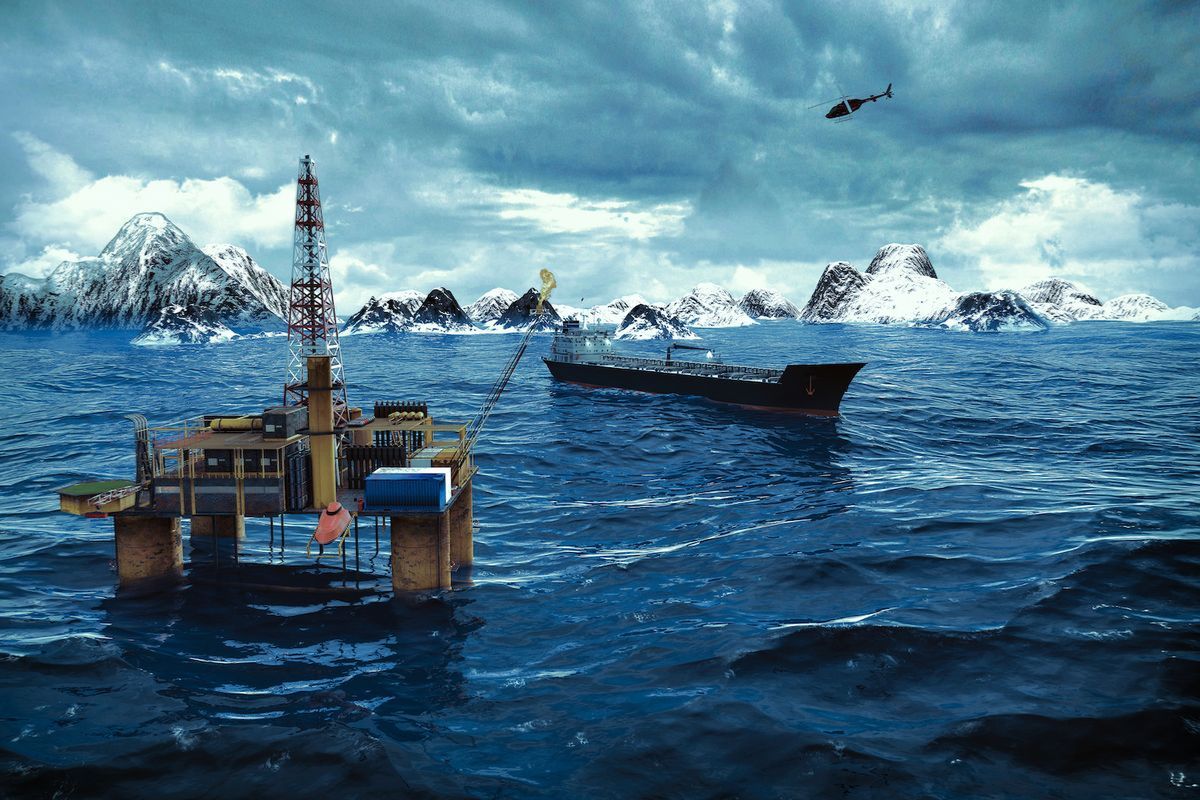


With The Melting Facilitating Access, A Wealth Of 90 Billion Barrels Of Oil Reserves Hidden In The Arctic Has Become The Epicenter Of A Strategic Dispute Between Russia And NATO Forces
The accelerated melting of the Arctic is not only changing the planet’s climate; it is revealing the prize of a new Cold War: a massive hidden oil reserve beneath the ice. By 2025, the top of the world has become the newest and most sensitive stage for competition among great powers, a silent confrontation that could define the global energy future.
Driven by economic necessity and a desire to regain its strategic depth, Russia is advancing with a dominance project involving nuclear submarines and an unparalleled fleet of icebreakers. In response, NATO, strengthened by new members in the region, is waking up to the challenge and moving its pieces on this geopolitical chessboard.
90 Billion Barrels Of Oil And The New Gold Rush
What is at stake in the Arctic has been quantified by a landmark study from the U.S. Geological Survey (USGS). The assessment estimates that the region north of the Arctic Circle contains approximately 90 billion barrels of undiscovered oil, along with vast reserves of natural gas. This represents about 13% of the remaining oil in the world.
-
This small town in Germany created its own currency 24 years ago, today it circulates millions per year, is accepted in over 300 stores, and the German government allowed all of this to happen under one condition.

-
Curitiba is shrinking and is expected to lose 97,000 residents by 2050, while inland cities in Paraná such as Sarandi, Araucária, and Toledo are experiencing accelerated growth that is changing the entire state’s map.

-
Tourists were poisoned on Everest in a million-dollar fraud scheme involving helicopters that diverted over $19 million and shocked international authorities.

-
Hidden beneath the dense forest of the Sierra Nevada, Betoma emerges in a neighbor of Brazil as the greatest archaeological discovery of the century, revealing a colossal ancestral city covering over 18 km², with 8,334 stone structures and the potential to rewrite the history of South American civilizations.


A crucial factor is that 84% of these resources are located offshore, making control of maritime routes key to exploration. The geography favors Russia, whose geological provinces, such as the West Siberian Basin, contain the bulk of these resources. This explains Moscow’s strategic bet on the region.
Russia’s Arctic Fortress, Submarines, And Nuclear Icebreakers
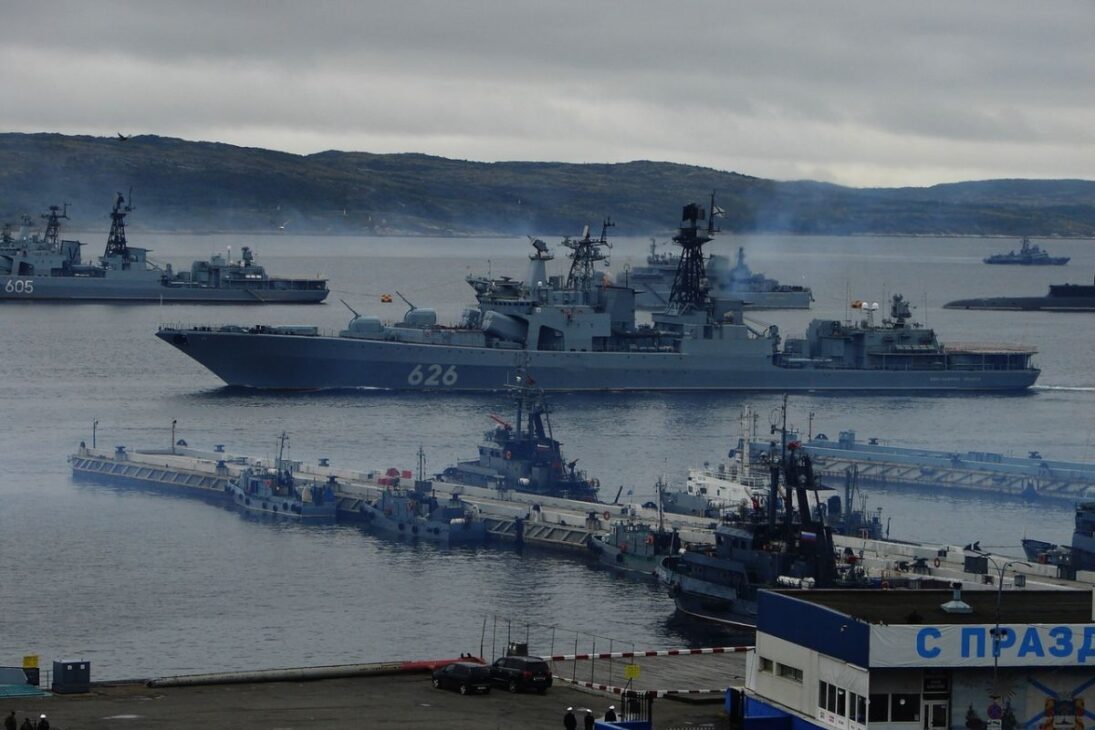
To counter NATO’s conventional military superiority, Russia is betting on an asymmetric strategy to impose its dominance in the Arctic. The goal is to create an “Arctic Fortress,” a sort of impenetrable military bubble to protect its assets and control the region.
The heart of this strategy is the Northern Fleet of the Russian Navy, based in Severomorsk. It is the country’s most powerful fleet, focused on modernizing its submarines. This includes the new strategic submarines of the Borei-A class, which carry Bulava ballistic missiles, and the formidable attack submarines of the Yasen-M class, considered as quiet as their Western rivals. Additionally, Russia is reopening and modernizing Soviet-era bases along its Arctic coast, creating a layered defense network.
The Unmatched Icebreaker Fleet
Russia’s greatest advantage, and its trump card in the Arctic dispute, is something no other nation possesses: a fleet of nuclear-powered icebreakers. By 2025, Russia operates eight of these ships, a number higher than at the peak of the Soviet Union. The vanguard of this fleet is the Arktika class (Project 22220).
They are the largest and most powerful icebreakers in the world. By mid-2025, four of them are already in operation: Arktika, Sibir, Ural, and Yakutiya. These giants are capable of breaking ice up to 3 meters thick, ensuring the passage of ships through the Northern Sea Route year-round, a capability that only Russia possesses.
The Awakening Of NATO, The Pivot To The North, And The Military Response
Russian aggression in Ukraine served as a wake-up call for NATO. The subsequent membership of Finland and Sweden in the alliance not only changed the strategic map of northern Europe but also forced an awakening to the threat in the Arctic. With seven of the eight Arctic Council countries now part of the alliance, NATO has been compelled to address the threat on its northern flank.
The response has been a demonstration of strength and unity. The Steadfast Defender 2024 exercise, NATO’s largest since the Cold War, mobilized over 90,000 troops and tested the alliance’s ability to defend the region under extreme cold conditions. Although NATO does not possess the same icebreaker capabilities, its strategy relies on technological superiority, mainly in sub-surface dominance, and the ability to rapidly reinforce its allies in the region in the event of a crisis.
The Flashpoints Where The Dispute Over The Hidden Oil Reserve Could Erupt

The competition in the Arctic has several potential flashpoints for conflict. The Northern Sea Route, which Russia considers its internal waters, is a constant source of tension. The Barents Sea is the area of greatest military activity, with frequent encounters between Russian and NATO ships and aircraft. And the Svalbard archipelago, under Norwegian sovereignty but with Russian presence, is another sensitive area.
The dispute over the hidden oil reserve has created a clear “icebreaker gap” between Russia and the West. This disparity is not only numerical but reflects a profound difference in industrial capacity and political will to operate at the top of the world. While open conflict is not imminent, the mechanisms for escalation are in place. The dispute over the hidden oil reserve has set the stage for a dangerous new Cold War, fought over a sea of ice with the planet’s energy future at stake.







A provocação da Ucrânia contra a Rússia é o petróleo interesses dos EUA e Otan Europa ocidental, mundo imundo da ganância, perdendo o poder das boas relações diplomáticas