





 Portuguese
  English
  Spanish
  4 min of reading
  0 comments


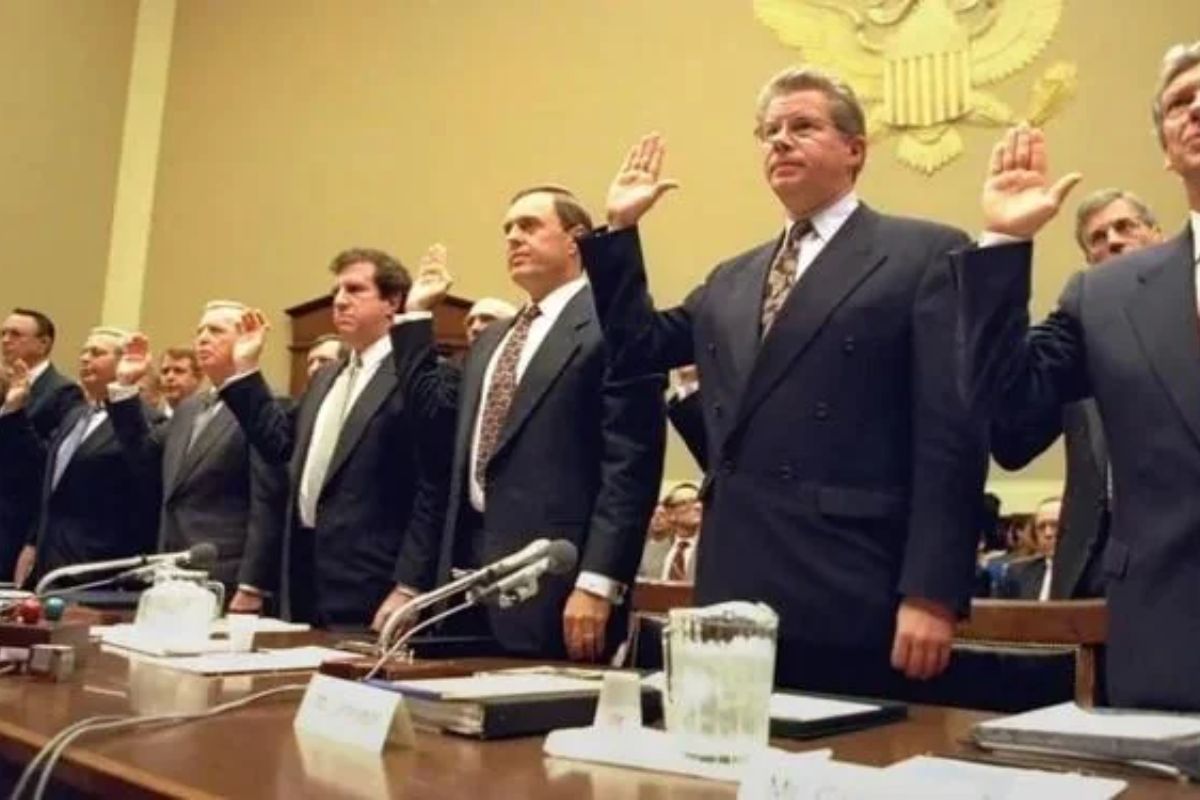
In 1994, the CEOs of the World’s Largest Tobacco Companies Denied Nicotine Addiction Before the US Congress. Revisit the Case That Changed the History of Public Health.
The hearing on April 14, 1994, in the United States Congress marked a turning point in the fight against smoking. That day, for the first time, the top executives of the seven largest tobacco companies testified together, and under oath, made a statement that would echo for decades.
Understand the context and the consequences of this historic event. We will analyze the statements of the CEOs, what science already knew at the time, and how this episode of denial triggered a flood of lawsuits and regulatory changes that transformed the industry forever.
The Hearing That Put Tobacco Companies Against the Wall
The 1994 hearing was the climax of decades of growing public health concerns. US Surgeon General reports, since 1964, had already linked smoking to serious diseases such as cancer and emphysema. Pressure mounted in early 1994 when the FDA (Food and Drug Administration) announced that it considered regulating tobacco products as drugs.
-
A forgotten cord on the floor of a basement in Vienna leads a plumber to a box containing 30 kilograms of gold with Mozart’s face, hidden before World War II. The treasure, worth 2.3 million euros, was just centimeters away from a worker who ignored the sign a day earlier.

-
A couple buys an old chalet, breaks the kitchen floor for renovation, and finds over a thousand coins of gold and silver hidden since the English Civil War over 4 centuries ago.

-
Rigid bags with their days numbered: new trend prioritizes comfort in 2026.

-
YouTuber creates an excavator equipped with a giant 4.5-meter sword to challenge his brother to a rematch, and the invention quickly goes viral on social media.


FDA Commissioner David Kessler presented evidence that tobacco companies deliberately manipulated nicotine levels to maintain addiction. TV reports reinforced the accusation, leading Congressman Henry A. Waxman to summon the CEOs to testify under oath. The pressure was so great that their presence was considered non-optional.
The Unified Denial That Nicotine Causes Addiction
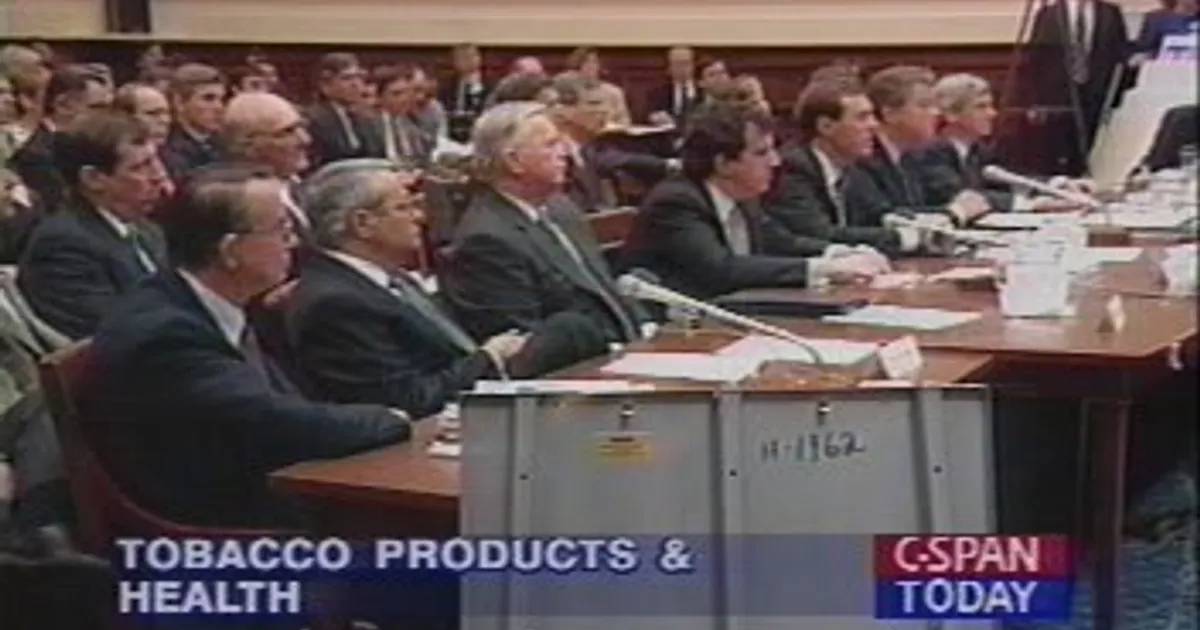
On the day of the hearing, the seven CEOs appeared. One by one, under oath, they denied that nicotine was addictive. William Campbell of Philip Morris stated: “I believe nicotine does not cause addiction.” James W. Johnston of R.J. Reynolds argued that “cigarettes and nicotine clearly do not meet the classic definition of addiction. There is no intoxication.”
All other executives maintained the same line. The united front they presented sought to project strength and conviction. In addition to denying addiction, they also denied manipulating nicotine levels or targeting children in their advertising campaigns, despite the existence of characters like Joe Camel.
Science Versus Industry: What Was Already Known About Nicotine Addiction
The position of the tobacco companies in 1994 strongly contrasted with the scientific consensus of the time. The 1988 Surgeon General’s Report had already been unequivocal in classifying nicotine as a drug that causes addiction, with pharmacological and behavioral processes similar to those of heroin and cocaine.
The tobacco industry, however, clung to an old and narrow definition of “addiction,” which required “intoxication.” Internal documents revealed later showed that the companies themselves had known about the addictive nature of nicotine for decades. The industry’s strategy was to create “doubt” and “controversy” to combat scientific facts and protect their interests.
Deliberate Deception and Its Consequences
Industry and public health experts consider the 1994 testimony an act of deliberate deception. The CEOs, under oath, perpetuated a denial strategy that their own companies knew to be false. This episode was a catalyst for the so-called “third wave” of litigation against tobacco companies.
Within weeks after the hearing, states like Mississippi and Minnesota initiated lawsuits to recover healthcare costs related to smoking-related illnesses. The Minnesota trial was crucial as it forced the disclosure of millions of pages of internal industry documents. These documents became the “smoking gun,” proving the deception. The climax was the Master Settlement Agreement (MSA) of 1998, a historic settlement of over US$ 200 billion between 46 states and the four largest tobacco companies, which also imposed severe restrictions on marketing.
How the 1994 Testimony Changed Public Perception and Health Policies
The testimony of the CEOs in 1994 and the revelations that followed left a profound legacy. The credibility of the tobacco industry was severely shaken, and the episode became a symbol of corporate misconduct. This propelled a social demand for greater transparency and accountability from companies.
The event also provided a significant boost to public health policies. The marketing restrictions imposed by the MSA and funding for educational campaigns contributed to a significant reduction in smoking among youth. The experience in the US, including the disclosure of industry documents, influenced the creation of the Framework Convention on Tobacco Control (FCTC) of the World Health Organization (WHO), the first global legally binding public health treaty, adopted in 2003. The fight against smoking continues, but the events of 1994 were a decisive step towards holding the industry accountable.









Seja o primeiro a reagir!