





 Portuguese
  English
  Spanish
  3 min of reading
  0 comments


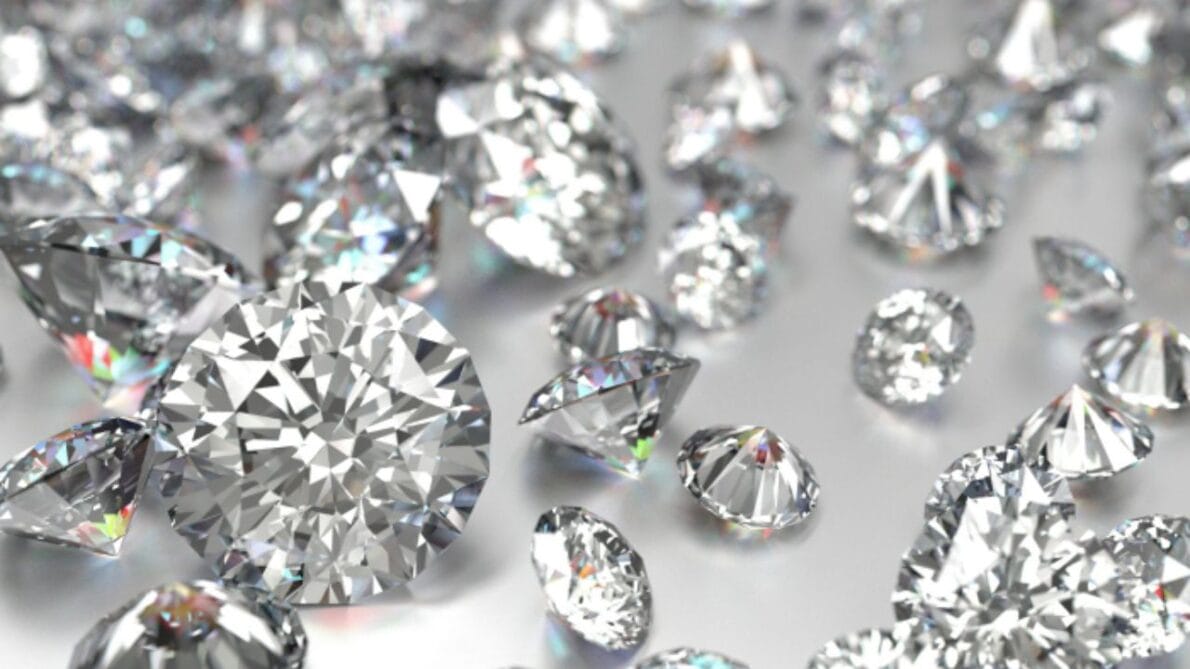
Discover How Synthetic Diamonds Are Dominating the Jewelry Industry: More Beautiful, Cheaper, and Purier Than Natural Ones!
Lab-grown diamonds are, from a physical-chemical standpoint, identical to natural ones. There is no difference between them. Both are minerals with a three-dimensional crystalline structure of carbon atoms. The proximity of their atoms and the strength of the bonds that hold them together make diamonds the hardest known mineral, understanding hardness as its resistance to being scratched. On the Mohs scale, diamond has a classification of 10.
Scientists managed to synthesize diamonds in the lab for the first time in the 1950s, and they did so in a very ingenious way: recreating the conditions that lead to their formation in nature. The problem is that these early synthetic diamonds were small and very impure, so their quality was overwhelmingly inferior to that of natural diamonds. However, seven decades have passed since then, and, as expected, materials engineering has advanced significantly.
So much so that the diamonds currently produced in the best labs are cheaper than natural ones. Furthermore, they have superior optical, chemical, physical, and electrical properties. But that’s not all. Production techniques have advanced so much in the last decade that today, it is possible to manufacture them on a large scale, making them highly valued by the jewelry industry. It’s incredible that we have reached a level of development where humans can produce diamonds better than nature itself.
-
Volcanic lava transforms into threads as fine as human hair that travel over 30 kilometers by wind and fall like cutting rain on roofs and backyards in Hawaii and Iceland.

-
NASA issues a warning for the feared Godzilla El Niño that could change the planet’s climate in 2026 with extreme warming of the Pacific capable of causing devastating droughts in some regions and historic floods in others simultaneously.

-
Archaeologists discover a 100-meter ship graveyard in a submerged Greek city, and what has appeared on the seabed of Libya could change what was known about this ancient port.

-
You buy the refrigerator and still have to see ads: Samsung starts displaying advertising on appliances and generates negative reactions among consumers.


Blessed Chemical Vapor Deposition
In late 1954, American chemist Howard Tracy Hall succeeded in synthesizing diamonds for the first time in a lab, although the technique he used was radically different from the most advanced methods employed today. In summary, what he did was create a pressure chamber designed by him and his team at General Electric, aiming to subject a mixture of iron sulfide and powdered coal to a pressure close to 100,000 atmospheres and a temperature of 1,600 degrees Celsius. Not bad considering the modest resources of that era.
Interestingly, the technique currently used to make diamonds is not directly inspired by nature. At least, not in a literal way. This process is known as chemical vapor deposition and is also used to produce other materials and chemical elements, such as borophene or beryllium. The strategy is relatively simple: a solid material is deposited onto a surface using vapor in which a chemical reaction occurs. In the case of diamond manufacturing, the first step is to heat carbon to the necessary temperature to evaporate it and turn it into a gas of isolated atoms.
Next, it is necessary to induce its crystallization so that, as it cools, it adopts the structure of a diamond. The first scientist to manufacture diamonds using the chemical vapor deposition technique was American William Eversole in 1958. From there, the Soviet Union, Europe, and Japan joined the United States and began their own research to refine the chemical vapor deposition method. They wanted to improve the quality of the diamonds that could be produced in the lab. This competition among the scientific powers of the time is, in fact, what has brought us to where we are today.
The chemical vapor deposition techniques used today are much more advanced and refined than those employed in the 1960s and 1970s. In fact, they allow scientists to assign specific physical, mechanical, optical, and thermal characteristics to the diamonds they produce by manipulating temperature, pressure, and reaction duration, as well as introducing some controlled impurities into the reactive gas.
The result of this technology is what we anticipated from the title of this article: the diamonds that can be manufactured today in a lab are purer, more beautiful, and cheaper than natural ones. And understandably, the jewelry industry benefits enormously, as the development of this technology has put an end to scarcity once and for all.










-

-

2 pessoas reagiram a isso.