





 Portuguese
  English
  Spanish
  6 min of reading
  1 comment


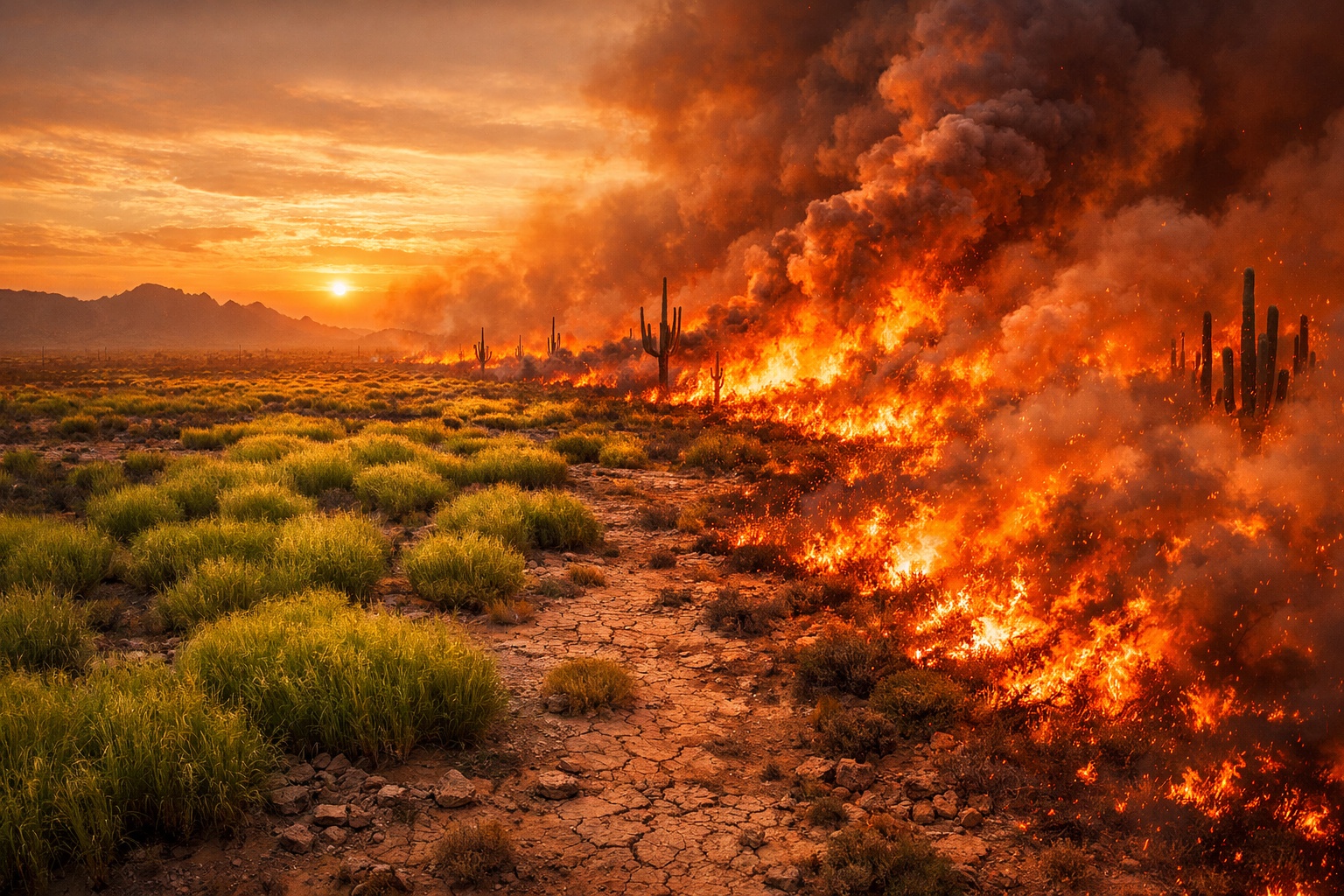


Buffel Grass Introduced in Arizona to Control Erosion Became Invasive Plant in the Sonoran Desert, Creating Intense Fires That Threaten Centennial Cacti.
The United States Soil Conservation Service began planting buffel grass in southern Arizona starting in the 1940s with a rationale that at the time seemed technically perfect. The African grass was extremely drought-resistant, grew quickly in rocky soils, and helped stabilize land on slopes degraded by extensive livestock grazing. Additionally, it produced up to three times more biomass for grazing than the native desert grasses. For agronomists and land managers of the time, the plant represented an efficient solution for restoring degraded arid areas.
Decades later, however, the United States National Park Service began classifying buffel grass as “the number one enemy of the Sonoran Desert”, turning an environmental restoration project into one of the largest ecological problems in the region.
What started as a strategy for restoring arid soils ended up creating one of the most aggressive invasive plants in the southwestern United States.
-
Archaeologists have discovered a colossal submerged wall in the Atlantic, dating back 7,000 years and weighing 3,300 tons, regarded as the largest prehistoric submerged structure ever found in France.

-
Scientists have discovered a gigantic magnetic anomaly hidden beneath the soil of Australia that mirrors the shape of the entire continent and holds geological records of two and a half billion years that could change what we know about the Earth.

-
The heatwave that has been affecting Brazil in recent weeks is coming to an end: a cyclonic vortex is moving in during Holy Week with heavy rains, and a cold air mass is already threatening to lower temperatures in the South starting in April.

-
(VIDEO) Cameras from an astronomical observatory captured two meteors falling over Santa Maria in Rio Grande do Sul with only a one-minute difference and such close trajectories that scientists are now investigating whether the two objects have the same origin.


Buffel Grass: African Grass Introduced in the USA That Spread Through Arizona and Northern Mexico
Buffel grass (Pennisetum ciliare, also classified as Cenchrus ciliaris) is a grass native to the semi-arid regions of Africa, the Middle East, and southern Asia. The species was introduced to the United States in the 1930s as part of agricultural programs aimed at controlling erosion and creating pastures in dry areas.
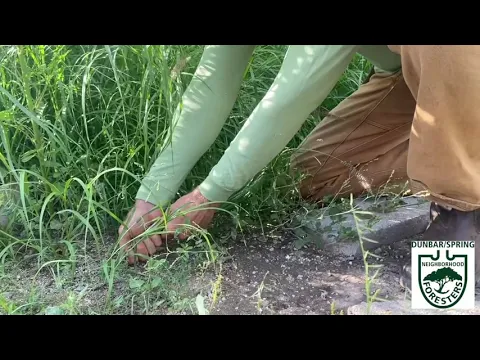

In southern Texas, the initial introduction was considered successful. Farms began planting the grass on a large scale in the 1950s to restore areas degraded by intensive grazing.
During the so-called Green Revolution, between the 1960s and early 1970s, Mexico adopted a similar strategy in the Sonoran Desert, promoting the planting of the grass to increase productivity in arid areas.
Over time, seeds began to cross the border naturally, being transported by truck tires, agricultural equipment, clothing, and merchandise.
Expansion of Buffel Grass in Arizona Began in Mining and Infrastructure Areas
In Arizona, the experimental planting of the grass gained momentum during the 1970s. Buffel grass began to be used to stabilize eroded slopes, highway margins, and areas affected by mining.
The mining company ASARCO extensively used buffel grass to stabilize embankments in its copper mine south of Tucson, a practice that continued at least until the end of the 1980s.
The first documented occurrence of the plant in a natural environment within Saguaro National Park was recorded in 1989. In 1993, the park established a specific program to control the invasive species. Even so, the rate of expansion surprised researchers and environmental managers.
Sonoran Desert: Rare Ecosystem Where Natural Fires Were Extremely Rare
To understand why buffel grass represents such a serious problem, it is necessary to understand the unique ecological characteristics of the Sonoran Desert. This biome extends through southern Arizona, southeastern California, and northwestern Mexico. Despite the arid conditions, it is considered one of the most biodiverse deserts in North America.
One of the symbols of this ecosystem is the saguaro (Carnegiea gigantea), the largest cactus in the United States. This cactus can reach about 12 meters in height, live between 150 and 200 years, and store thousands of liters of water inside.
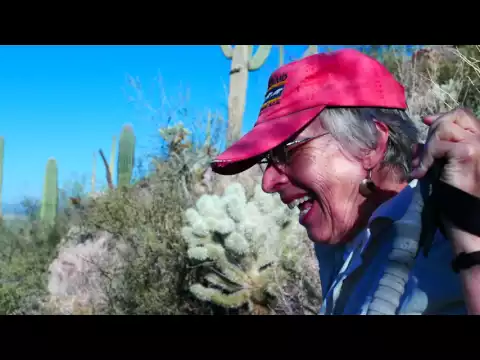
Desert plants naturally grow spaced apart, separated by large areas of bare soil and rock. This characteristic prevents fire from spreading easily.
Studies by the United States Department of the Interior indicate that natural fires in the Sonoran Desert could occur only once every 250 years or more.
Giant Desert Cacti Lack Adaptation to Fire
Unlike plants found in savannas or temperate forests, many species in the Sonoran Desert do not possess evolutionary mechanisms for fire adaptation. The saguaro, for example, lacks protective bark or the ability to regenerate after burns.
When exposed to high temperatures, the internal tissue of the cactus suffers irreparable damage. A saguaro that took more than 150 years to grow can be destroyed in a few minutes during a fire.
Buffel grass completely alters the dynamics of the Sonoran Desert because it grows exactly in the empty spaces between native plants.
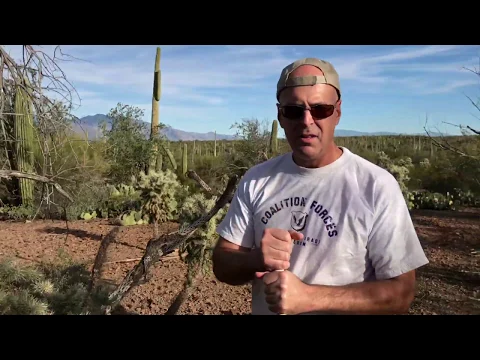
The grass forms dense clumps that can reach about 1.2 meters in height. Its roots can reach up to 2.5 meters deep, allowing access to groundwater that many native plants cannot reach.
During drought periods, while several desert species weaken, buffel grass remains vigorous.
When the dry season arrives, the plant goes dormant and transforms into large masses of highly flammable dry vegetation. Studies by the United States Geological Survey show that areas dominated by buffel grass can accumulate between 1 and 4 tons of vegetation fuel per hectare.
This creates, for the first time in the recent history of the Sonoran Desert, a continuous corridor of material capable of sustaining large fires.
Fires Fed by Buffel Grass Can Reach Extreme Temperatures
When fires occur in areas dominated by the invasive grass, the intensity is much greater than what is recorded in areas with native vegetation.
Research indicates that fires fueled by buffel grass can reach temperatures close to 760 °C, nearly three times more intense than the rare natural fires of the desert. This heat is enough to completely destroy plants that took centuries to develop.
Researchers from the USGS identified a concerning ecological cycle associated with buffel grass. First, the grass creates a continuous layer of vegetation fuel.
When a fire occurs, the flames eliminate much of the native vegetation, but do not completely destroy the grass, which will quickly regrow due to its deep root system.
The fire also releases nutrients into the soil, further favoring the growth of the grass. With less native vegetation competing for space, new areas come to be occupied by buffel grass. This cycle creates increasingly larger and more frequent fires in the Sonoran Desert.
Ecological Importance of the Saguaro for the Balance of the Desert
The saguaro is considered a keystone species in the Sonoran Desert ecosystem. Its growth is extremely slow. The plant may take eight years to reach just a few millimeters in height and decades to reach one meter.
The first lateral arms usually appear between 75 and 100 years of age. Full maturity occurs around 125 years.
After a severe fire, researchers estimate that it may take up to 150 years for new saguaros to replace the lost specimens.
Expansion of Buffel Grass Grows Rapidly in Saguaro National Park
Research conducted in Saguaro National Park shows the rapid invasion of the African grass. Between 2012 and 2019, areas infested with buffel grass increased from approximately 185 acres to nearly 800 acres.
Studies published in the scientific journal Invasive Plant Science and Management indicate that without continuous control, the expansion of the species may continue exponentially.
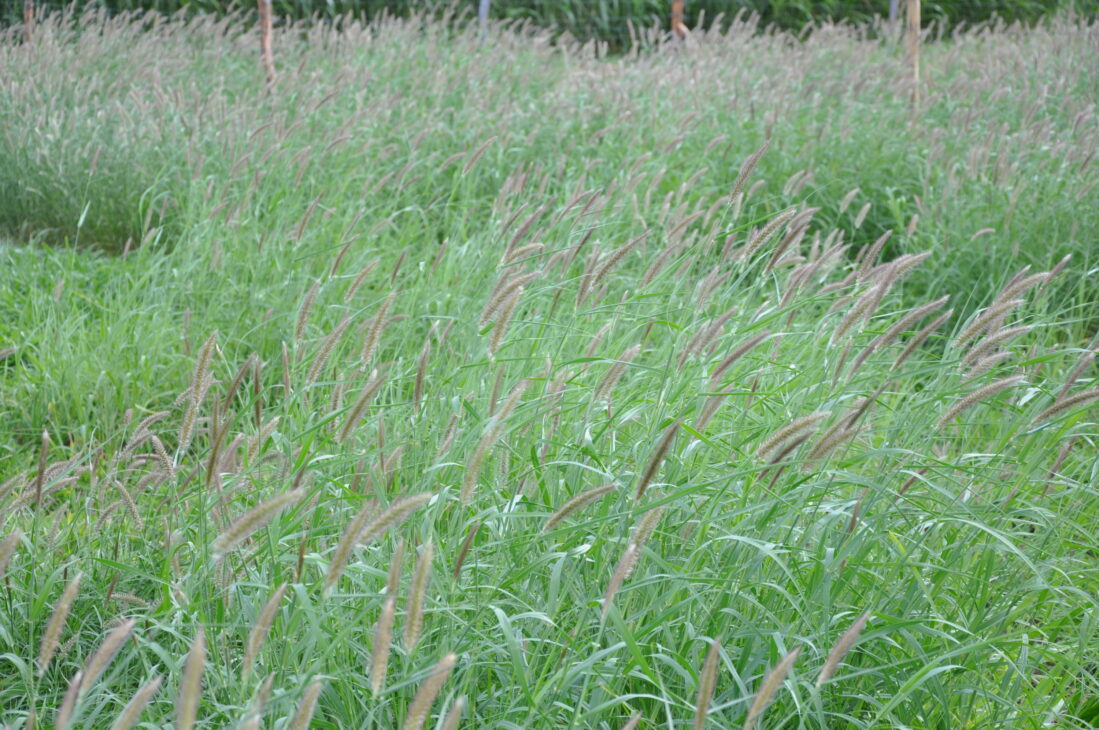
Controlling the invasive species involves two main strategies: applying herbicides and manual removal. Herbicides can be effective when the plant is green and actively growing, usually between July and September, a period when temperatures in Arizona often exceed 40 °C. Manual removal requires volunteers to completely remove the plant’s root system.
If any fragment remains in the soil, the grass may regrow quickly. Seeds can also remain viable in the soil for up to four years after the plant has been removed.
Control of the Invasive Plant May Become a Permanent Task
Saguaro National Park has maintained control programs since 1993. Various environmental organizations participate in the removal of the grass and the restoration of areas affected by fires.
However, a large portion of financial resources continues to be directed toward the ongoing removal of the invasive plant. Ecologist Perry Grissom from Saguaro National Park sums up the situation bluntly:
“It’s going to be maintenance work forever.”
Buffel Grass Represents One of the Greatest Ecological Threats to the Sonoran Desert
Today, buffel grass is officially classified as a noxious weed by the state of Arizona since 2006. Even so, the plant is still marketed in some states as agricultural forage.
The case of buffel grass has become a classic example of how species introduced for productive purposes can generate profound environmental consequences.
Researchers consider the invasion of buffel grass one of the fastest ecological transformations ever recorded in the Sonoran Desert and throughout North America.








Wonder if they’ve also experimented paying 10c for leaves of each harvested plant at start of the dry season? A subsistance job in the desert for those who like to living there.