Portuguese
  Spanish




Discover How the Waste of Clean Energy Raises Costs and Affects Consumers and Investors in Brazil.
Brazil has historically maintained a predominantly renewable energy matrix, marked by the abundance of hydro, solar, and wind resources.
However, despite this natural wealth, the country faces a serious and persistent problem: the waste of clean energy. Therefore, this phenomenon compromises the potential for sustainable production and generates a high cost for the economy, investors, and consumers.
In fact, the concept of waste of clean energy, technically known as “curtailment”, refers to the mandatory reduction of electricity generation from renewable sources, such as wind and solar energy, even when conditions are ideal for generating power.
-
Green Hydrogen Projects in Northeastern Brazil Stalled for 18 Months Awaiting Government Decree, Delaying Billions in Investments

-
Brazil Concludes Largest Energy Auction in History, Secures 18.97 GW and Mobilizes $12.8 Billion to Ensure Supply Until 2031
-
How Norway Produces More Energy Than It Consumes with Nearly 1,800 Hydropower Plants and Over 1,100 Reservoirs

-
Axia Energia Invests $280 Million in Q1, Increases Investments by 36%, and Turns Loss into $740 Million Profit


Thus, the phenomenon has gained significant attention in Brazil with the accelerated growth of distributed generation and large wind and solar parks, especially in the Northeast, a region that concentrates the majority of clean generation installations in the country.
Historically, the expansion of renewable sources in Brazil has seen high public and private investments. Since the 2000s, incentive programs for wind and solar energy have emerged to diversify the energy matrix and reduce dependence on fossil sources, such as oil and natural gas.
Therefore, the country quickly became one of the global leaders in renewable energy, with large-scale projects capable of providing enough electricity for millions of households. However, the transmission infrastructure has not kept pace with the rapid expansion.
Moreover, the lack of integration between different regions of the country exacerbates the waste of clean energy.
Thus, states that produce renewable energy often face difficulties in sending electricity to areas with higher demand, forcing the system to limit the generation of power plants even when wind or sunlight is abundant.
Therefore, this logistical challenge highlights the need for investments in smart and interconnected transmission networks, capable of optimizing the flow of energy throughout the entire national territory.
The Challenges of Infrastructure and the Free Energy Market
Consequently, the mismatch between the growth of renewable generation and the capacity of transmission networks directly generates waste of clean energy.
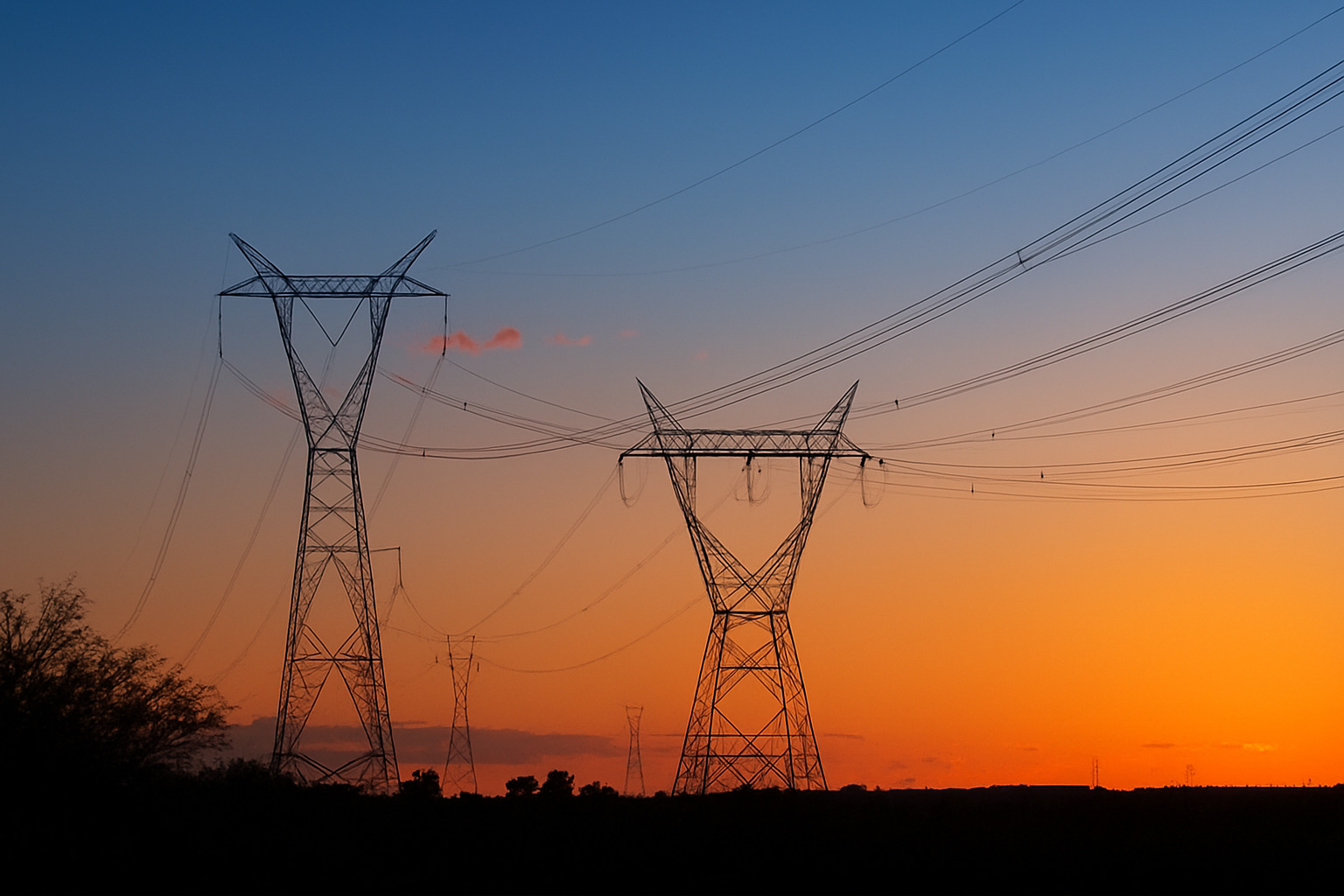
Often, wind and solar parks generate electricity but cannot deliver it to the electrical system due to the limitations of transmission lines. Therefore, this mandatory energy reduction causes significant financial losses.
In the Northeast, for example, losses are estimated to be over R$ 2 billion, affecting investors, operators, and ultimately, the end consumer.
Additionally, the disorderly growth of the free energy market contributes to the problem.
In fact, in recent years, companies and consumers have sought to benefit from the freedom to choose their electricity suppliers, promoting projects without adequately coordinating with the national electrical system.
Thus, this unplanned expansion has added over 40 GW to the system, without equivalent counterparts in infrastructure and strategic planning. As a result, clean energy is discarded while the country still relies on much more expensive thermal sources to meet demand.
Another important factor involves the actions of the regulatory authorities and managers of the electricity sector.
For example, the Ministry of Mines and Energy (MME), the National Electric Energy Agency (ANEEL), and the National Electric System Operator (ONS) have all the information about new projects and installed capacity. However, historically, these institutions did not anticipate the impacts of the simultaneous volume of new connections, which led to arbitrary cuts in renewable generation.
Therefore, the country has had to activate thermal plants with costs between R$ 1,700 and R$ 2,600 per megawatt-hour (MWh), while clean generation costs about R$ 170/MWh.
Consequently, this imbalance directly increases the price of energy for the consumer.
Economic and Social Consequences of Waste
The waste of clean energy causes economic effects that go beyond the immediate cost of electricity.
Thus, Brazil loses competitiveness in the global market, as higher costs deter new investments. Additionally, jobs in renewable energy sectors may be impacted, and the country’s tax revenue decreases due to lower energy production efficiency.
Therefore, the country risks regressing in the energy transition, jeopardizing goals for reducing greenhouse gas emissions and consolidating a more sustainable model.
Historically, countries that invested in renewable energy better integrated their transmission infrastructure and management systems.
For example, in Europe, centralized planning and investments in smart networks have drastically reduced waste of wind and solar energy. However, Brazil, despite having an extraordinary potential of natural resources, still needs to advance in planning, coordination, and technological innovation to achieve the same level of efficiency.
Moreover, the population also feels the social impacts of the waste of clean energy.
In fact, the necessity to activate more expensive and polluting sources causes frequent increases in energy tariffs, affecting low-income families and small businesses.
Additionally, the perception of inefficiency in the electricity sector may reduce the confidence of society and investors in the country’s ability to manage its energy sector sustainably.
Ways to Reduce Waste
Therefore, solving the problem of waste of clean energy in Brazil requires strategic actions.
First, the government must accelerate transmission works, ensuring that the energy generated reaches consumers without waste.
In parallel, it is necessary to revise the criteria for mandatory generation cuts, adopting rules that prioritize the use of clean sources before activating expensive thermal plants.
Furthermore, another fundamental measure involves valuing the flexibility of the electrical system, integrating new technologies for storage and distribution that efficiently balance supply and demand.
Moreover, integrating the planning of large projects and distributed generation is also crucial.
Although distributed generation, such as solar systems in homes and industries, has grown rapidly and received strong public incentives, the lack of strategic planning increases the waste of clean energy.
Thus, more effective coordination between new projects and existing infrastructure reduces arbitrary cuts and increases the efficiency of the electrical system.
Additionally, investing in technological innovation is also essential.
For example, storage solutions, such as large-scale batteries, allow energy generated during peak times to be used when needed, reducing waste and increasing the reliability of the system.
Wind and solar radiation forecasting systems, coupled with smart networks, optimize generation and reduce financial losses.
Consequently, the Brazilian consumer is already feeling the effects of the waste of clean energy.
The need to activate more expensive thermal plants raises the electricity bill, making energy more expensive and less predictable.
Therefore, this scenario reinforces the urgency of investments in transmission, integrated planning, and public policies that encourage not only production but also the efficient use of renewable energy.
A Paradox to Be Resolved
Therefore, the waste of clean energy represents a paradox of the Brazilian electricity sector.
The country has one of the most sustainable energy matrices in the world, but still faces significant financial and environmental losses due to the lack of coordination, insufficient infrastructure, and deficient regulation.
Thus, resolving this problem is not just an economic issue, but an opportunity to strengthen the energy transition, reduce costs, and promote sustainable development.
In summary, Brazil needs to align the growth of renewable generation, transmission infrastructure, and strategic planning to reduce the waste of clean energy.
Only then will it be possible to fully take advantage of the potential of sources such as wind and solar, ensuring accessible, sustainable, and reliable energy for the entire population, as well as consolidating the country as a global reference in energy efficiency and sustainable innovation.