





 Portuguese
  English
  Spanish
  3 min of reading
  2 comments





With 40-Meter Antennas and Positioned in Strategic Locations, China’s New Radio Telescopes Expand the Observable Area of the Sky by 25% and Improve Angular Resolution by 18%, Marking a New Chapter in Space Exploration.
China has taken a significant step in deep space exploration with the inauguration of two state-of-the-art radio telescopes equipped with 40-meter diameter antennas. These technological giants have been strategically positioned in the northeast and southwest of the country, promising to transform our understanding of the cosmos. But what makes these radio telescopes so special?
With these new instruments, China is not only expanding its network of observation but also unraveling mysteries that are billions of light-years away. It’s as if they have opened an even larger window to explore the universe.
Where Are the New Radio Telescopes?

The two telescopes were built in strategic locations: Changbai Mountain in Jilin Province, and Shigatse in the Tibet Autonomous Region. These areas were not chosen by chance. The high altitude and isolation of these regions create ideal conditions for space observation, minimizing terrestrial interference.
-
Beet greens that end up in the trash in many kitchens contain a high concentration of antioxidants, and a 2025 study shows that extracts may have even more potent activity when transformed into microparticles.

-
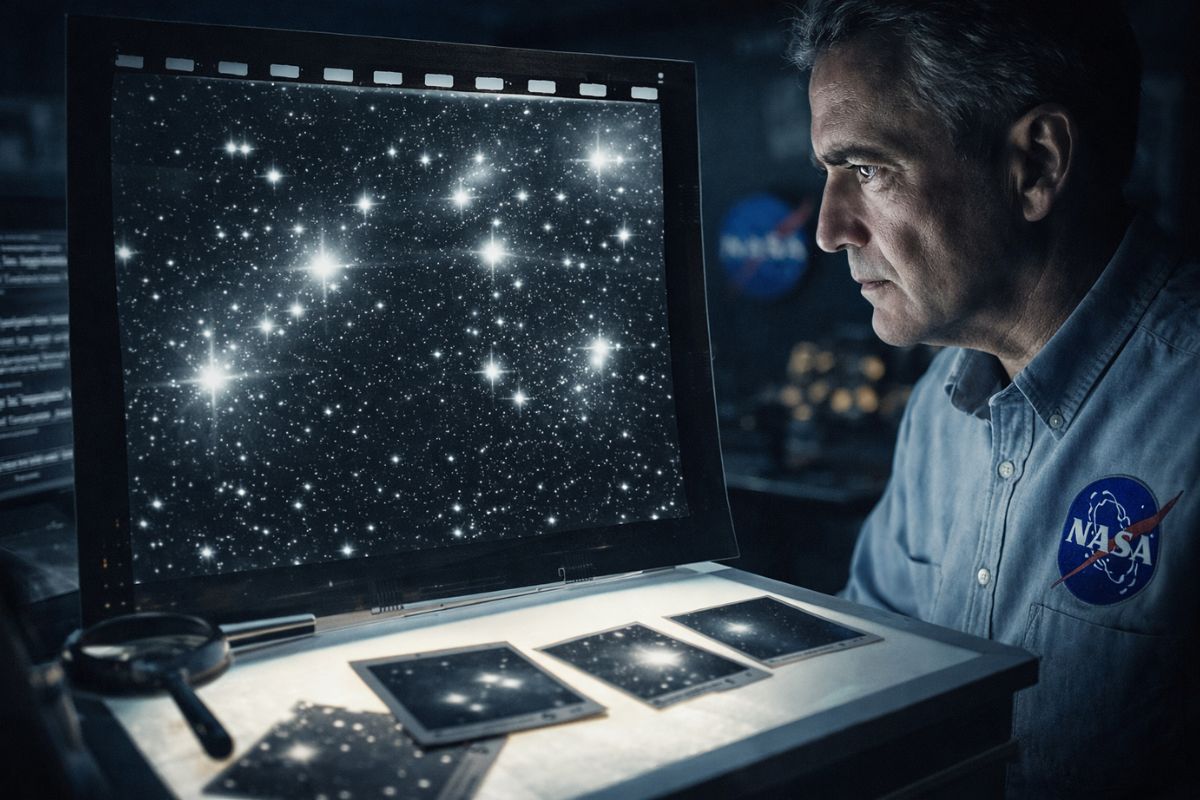
Something was orbiting Earth before any human launched a satellite into space: scientists have found thousands of unexplained flashes in old photos of the sky, and a NASA researcher says the evidence points to non-human intelligence.
-
There is a gap of hundreds of kilometers between weather observation points in the United States, and now drones flying at 6,000 meters altitude in strong winds are filling this gap to predict tornadoes before they kill.

-
The most famous volcano in the world could paralyze one of the largest metropolises on the planet: Japan accelerates emergency plans for the eruption of Mount Fuji, which could bury Tokyo in ash for over two consecutive weeks.


Imagine being in such a remote location that even the sky seems closer. That is precisely the feeling these bases offer scientists, making each observation more precise and detailed.
How Do Radio Telescopes and the VLBI Network Work
The new radio telescopes are part of the Very Long Baseline Interferometry (VLBI) network, a technology that allows signals from multiple telescopes to be combined to create a “giant virtual telescope.”
With these two new telescopes, the effective aperture of the VLBI network has increased from 3,200 km to 3,800 km, expanding the observable area of the sky by 25% and improving angular resolution by 18%. It’s like trading an old TV for a 4K: the details have never been so clear.
The Technology Behind the New Telescopes
The construction of these telescopes was a true challenge. One was erected at an altitude of 4,100 meters, while the other faced extreme temperatures below -20 degrees Celsius. Nevertheless, the team overcame these adversities to deliver instruments of the highest precision.
Combining signals received from different telescopes, the network creates a “cosmic magnifying glass,” allowing tracking of even the smallest details of celestial bodies, such as black holes and rapidly moving stars.
These radio telescopes are already prepared to support ambitious space missions, such as the Chang’e and Tianwen series, which aim to explore the Moon and Mars. With their advanced precision, they can measure the positions of spacecraft with impressive accuracy.
The ability to track multiple targets simultaneously provides a significant differential, making the network more flexible and efficient. It’s as if China had equipped its missions with intergalactic GPS.
Exploring the Cosmos and Beyond
The new tools also drive research in areas such as gravitational waves, supermassive black holes, and galactic dynamics. For scientists, it’s like receiving a new set of lenses to study the universe’s deepest secrets.
The radio telescopes are not just an advancement for Chinese astronomy; they symbolize the importance of scientific infrastructure in promoting innovation. These instruments represent a future where deep space will be more accessible and understandable.
On the horizon, there are already talks about missions to explore asteroids, Jupiter, and other celestial bodies. China is literally aiming for the stars.
The two new radio telescopes in China are more than just scientific equipment. They are a testament to the country’s commitment to space exploration and astronomical research. With these tools, China is not only expanding its horizons but also inspiring a new generation of cosmic explorers.








A China sempre me atraiu pelas suas pesquisas no campo das ciências. Esta notícia é um exemplo daquilo que têm feito e evoluído na pesquisa do espaço. Não poderemos ficar de forma alguma acabrunhados com as suas investidas na ciência, pois sabemos que afinal são-no também para toda a humanidade. Todos beneficiarão com esse progresso.
Um país com um compromisso de ser e dar o seu melhor para a humanidade. Todos vamos beneficiar destes saltos na evolução. Nunca esquecendo os americanos que gostemos ou não durante décadas foram os líderes.