





 Portuguese
  English
  Spanish
  3 min of reading
  0 comments


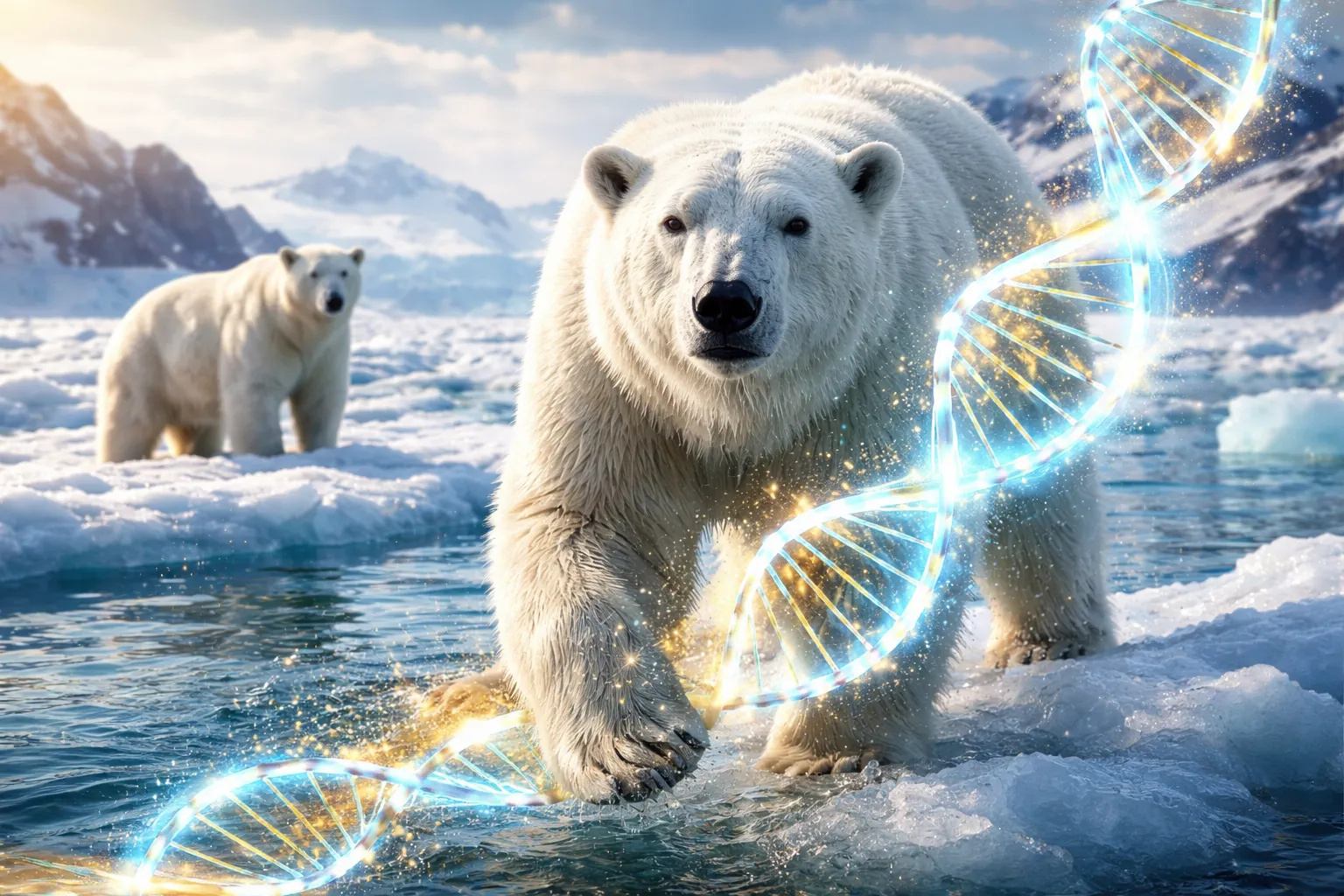
Study With 17 Polar Bears in Southern Greenland Identifies Increased Activity of Jumping Genes Associated With Thermal Stress, Sea Ice Melt, and Genetic Changes Linked to Metabolism, Aging, and Climate Adaptation in Warmer Regions
A scientific study revealed that polar bears in southern Greenland are activating jumping genes to rapidly alter their DNA in response to rising temperatures and the loss of sea ice, a phenomenon associated with global climate change and increasing thermal stress.
Researchers found that this specific population of Ursus maritimus lives under intense environmental pressure in a region where sea ice is rapidly diminishing, directly affecting hunting, movement, and the species’ survival in the Arctic.
The research was published on December 12 in the scientific journal Mobile DNA and analyzed how rising temperatures may be linked to accelerated genetic mutations in polar bears from southeastern Greenland.
-
Motorola launched the Signature with a gold seal from DxOMark, tying with the iPhone 17 Pro in camera performance, Snapdragon 8 Gen 5 that surpassed 3 million in benchmarks, and a zoom that impresses even at night.

-
Satellites reveal beneath the Sahara a giant river buried for thousands of kilometers: study shows that the largest hot desert on the planet was once traversed by a river system comparable to the largest on Earth.

-
Scientists have captured something never seen in space: newly born stars are creating gigantic rings of light a thousand times larger than the distance between the Earth and the Sun, and this changes everything we knew about stellar birth.

-
Geologists find traces of a continent that disappeared 155 million years ago after separating from Australia and reveal that it did not sink, but broke into fragments scattered across Southeast Asia.


Jumping Genes and Genome Rewriting
The study indicates that so-called jumping genes, or transposons, are segments of DNA capable of moving within the genome, altering how other genes are expressed depending on where they insert.
More than one-third of the polar bear genome is composed of transposable elements, a proportion lower than that of plants, which can reach 70%, but similar to that of the human genome, where these elements represent about 45%.
According to the lead author of the study, Alice Godden, a senior researcher at University of Anglia, this activation may represent an extreme survival mechanism in the face of rapid ice melt.
Comparison Between Populations and Climatic Data
Scientists analyzed the DNA of 17 adult polar bears in Greenland, consisting of 12 from the colder northeastern region and five from the southeastern area, which is warmer and has less sea ice cover.
The team compared transposon activity between the two groups and related this genetic data to local climatic information, identifying distinct patterns of genetic response to the environment.
In the southeastern population, changes were observed in genes linked to thermal stress, aging, metabolism, and fat processing, a crucial factor during periods of food scarcity, according to the presented results.
These changes suggest that the bears may be genetically adjusting to warmer conditions, with different parts of the DNA being modified at varying rates depending on the specific environment of each group.
Relationship With Previous Studies
The new research expands on findings from a study published in 2022 in the journal Science, which described an isolated population of polar bears in southern Greenland less dependent on sea ice.
This group may have separated from a population in northern Greenland about 200 years ago, presenting relevant genetic differences now associated with elevated activity of jumping genes.
Warning About Risks and Limits of Adaptation
Despite indicating a possible capacity for genetic adaptation, Godden emphasized that the results do not diminish the risks faced by polar bears in the face of accelerated global climate change.
According to the researcher, even if some level of adaptation exists, the species remains threatened, and reducing global carbon emissions remains essential to curb rising temperatures and the ongoing loss of sea ice.
The authors highlight that intense activation of transposons may represent a desperate response to environmental stress, not a guarantee of long-term survival, reinforcing the severity of the current climate scenario, even with signs of observed genetic resilience.








Seja o primeiro a reagir!