





 Português
  Inglês
  Espanhol
  4 min de leitura
  0 comentários


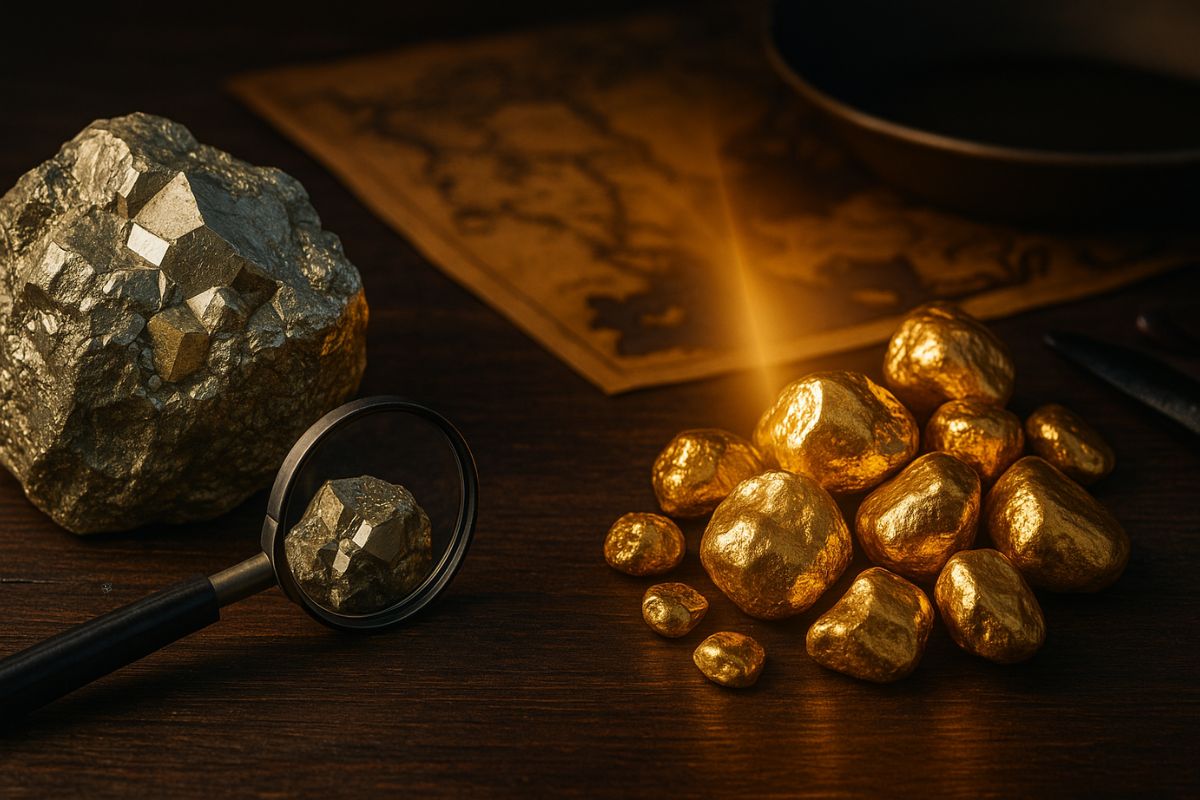
Metallic Mineral Confused with Gold Since 1576, Pyrite Was Responsible for Useless Shipments, Frustrated Dreams, and Even Today Deceives Amateur Collectors.
The fool’s gold — the common name for pyrite — has accompanied the history of mining for centuries. From the first major confusion recorded in 1576, when English explorer Martin Frobisher brought tons of the mineral to England believing it was gold, to modern gold rushes, pyrite continues to confuse beginners with its metallic shine. According to the channel Manual do Mundo, this visual similarity has already caused failed rushes, million-dollar losses, and can still deceive those unaware of its properties.
The most curious thing is that the fool’s gold deceives not only by appearance.
Pyrite often occurs in the same locations as real gold, which increases the difficulty of identification and explains why prospectors of different eras have insisted on the mistake.
-
The world’s first octopus farm wants to open in the Canary Islands and is already provoking an international reaction: the plan aims to produce 3,000 tons per year.

-
Drought may be creating stronger superbugs in the soil and helping antibiotic resistance reach hospitals, warns a study highlighting a problem that could grow alongside extreme weather.

-
The biggest scam in history: Napoleon’s France deceived the United States by selling them a territory that was Spanish.

-
Why is the Danakil Desert so dangerous? It has unstable terrain and how extreme temperatures and toxic gases turn the region into one of the most hostile environments on Earth.


Still, chemical and geological science offers simple ways to differentiate the two minerals.
What Is Pyrite and Why Is It Called Fool’s Gold?
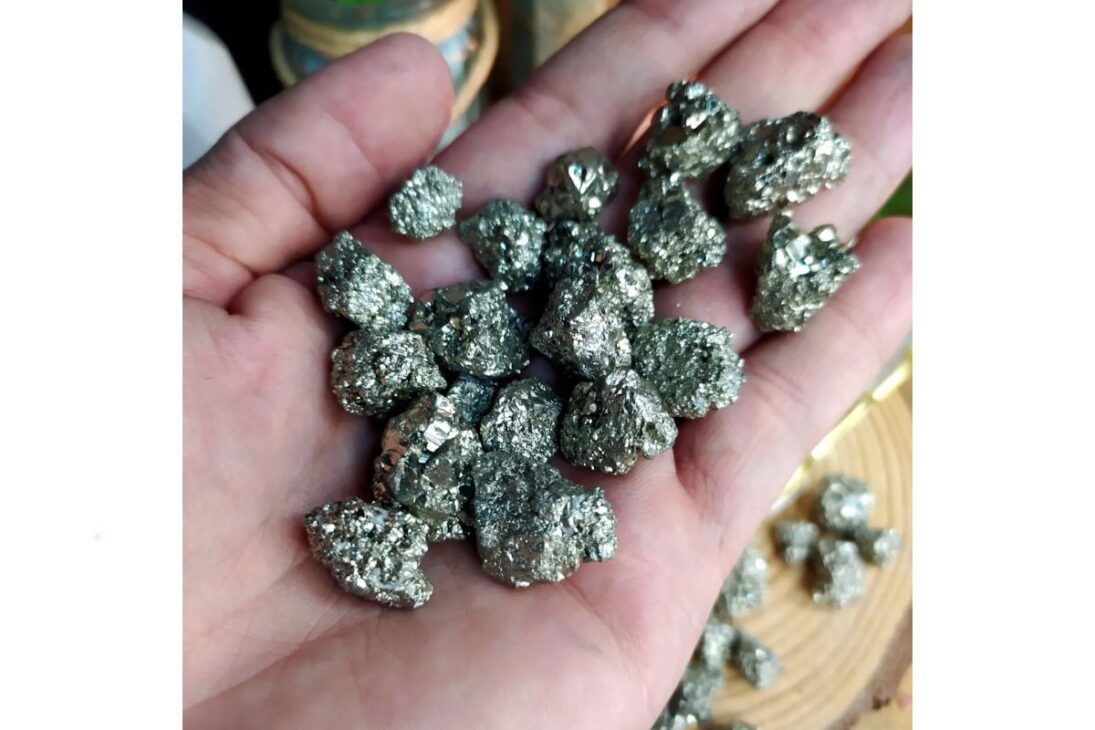
Pyrite is an iron sulfide (FeS₂), a metallic mineral that forms crystals with regular appearance and shiny surfaces.
Visually, it may look like gold, but its color tends to be more grayish or coppery. The common name comes precisely from the recurring confusion: in English, “fool’s gold.”
According to Manual do Mundo, a striking characteristic is the geometric shape of the crystals, often cubic, which appear machine-cut but are a result of natural crystallization.
Another difference is that when struck, pyrite can create sparks and release a sulfur smell, reminiscent of rotten eggs. Real gold, on the other hand, is malleable, yellowish, and does not produce this effect.
When Did Fool’s Gold Deceive Explorers?
The most famous case occurred in 1576, when Martin Frobisher, searching for the Northwest Passage, arrived at Baffin Island and found a shiny mineral.
Convinced it was gold, he took 200 tons to England. Two years later, he returned and collected an additional 10,000 tons.
The result was disastrous: all the material was pyrite. For comparison, this is equivalent to the weight of hundreds of modern trucks transported during the age of caravels.
This was not the only time that fool’s gold caused losses.
During the gold rushes of the 19th century — such as the California rush in 1848 and the Klondike rush in 1896 — many novice prospectors mistook pyrite for gold.
Manual do Mundo emphasizes that it was not a matter of naivety, but rather the geological nature itself: gold and pyrite often appear side by side.
How to Differentiate Real Gold from Fool’s Gold?


According to Manual do Mundo, some simple tests help differentiate the two minerals:
Color and Shine: gold is more yellowish, while pyrite tends to have a coppery tone.
Malleability: gold is soft and can be flattened; pyrite is hard and brittle.
Shape: pyrite forms cubic crystals, while gold appears as nuggets or embedded in quartz.
Smell and Sparks: when fractured, pyrite releases a sulfur smell and can spark.
Museums, such as the Geo-Sciences Museum at USP, display samples side by side, showing how even a trained eye can be deceived at first glance.
In some rocks, the two minerals coexist, which requires knowledge to avoid costly mistakes.
What Are the Uses of Pyrite?
Although it is not gold, pyrite has had important uses. Historically, it was a source of sulfur for sulfuric acid production and is still used in making brown glass, such as in medicine bottles.
Additionally, the phenomenon of pyritization — when pyrite replaces tissues of dead organisms — has allowed for the formation of preserved fossils, such as mineralized ammonites.
Still, its commercial value is much lower than that of gold, being exploited more as a mineralogical curiosity, ornamental piece, or object of scientific study.
Is It Worth Searching for Fool’s Gold?
For investors and prospectors, the answer is no: pyrite does not hold the same economic value and can bring historical disappointments, as shown by the cases of Frobisher and the gold rushes.
But, according to Manual do Mundo, for scientists, collectors, and the curious, it is a fascinating mineral, both for its aesthetics and the stories it carries.
The great lesson is clear: not everything that shines is gold, and scientific knowledge is the best way to avoid mistakes that have marked centuries of mineral exploration.
The story of fool’s gold reveals how pyrite shaped expeditions, gold rushes, and even popular legends. Today, science already offers clear methods to differentiate it from real gold, but the fascination for its metallic shine continues.
And you, have you ever heard of fool’s gold? Do you think pyrite can still deceive or do you believe modern technology eliminates this risk? Leave your opinion in the comments — we want to hear from those who experience this curiosity up close.








Seja o primeiro a reagir!