





 Português
  Inglês
  Espanhol
 4 min de leitura


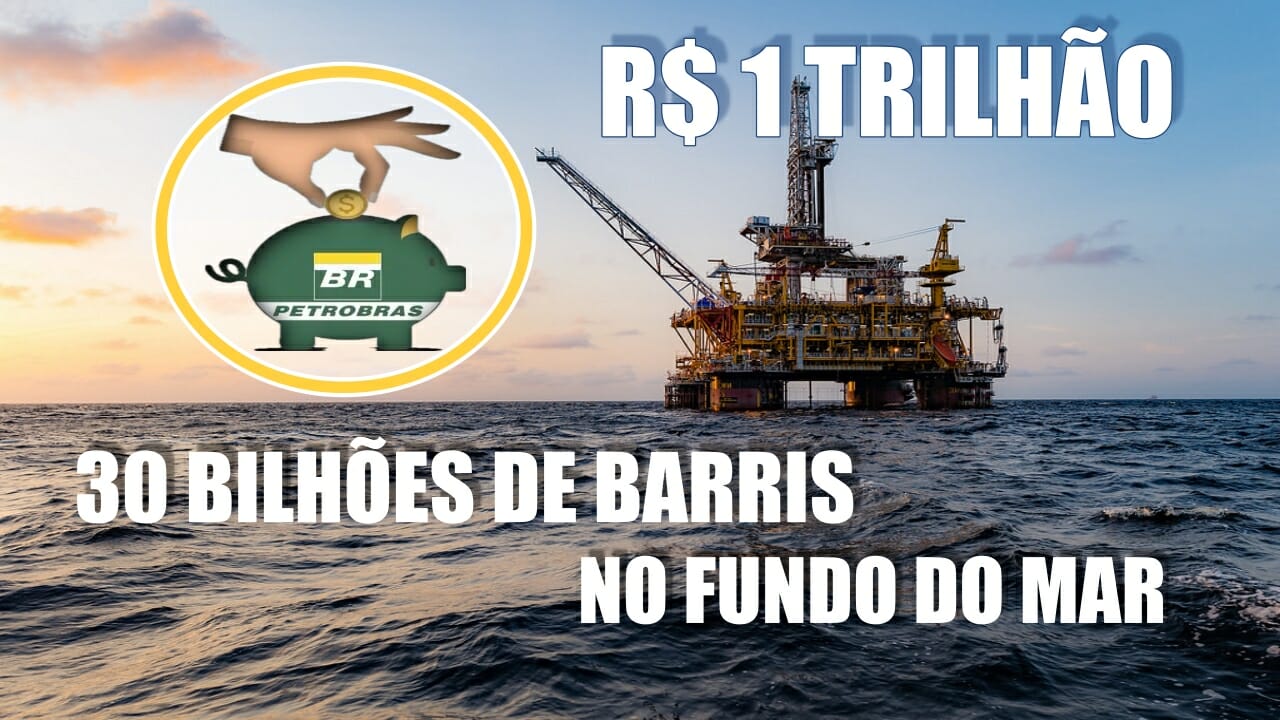
30 Billion Barrels Under the Sea: Oil Production in Brazil’s Equatorial Margin Promises to Generate Revenue of R$ 1 TRILLION
In the vastness of Brazil’s northern coast, a race for “black gold” is unfolding, triggered by the discovery of oil fields in neighboring countries Guyana and Suriname. However, this competition involves not only oil companies; it also divides the oil sector, environmentalists, and even the government of Luiz Inácio Lula da Silva (PT). The reason for this dispute? The relative proximity to the Amazon Rainforest and the mouth of the Amazon River.
The region extending from Rio Grande do Norte to Amapá is known as Brazil’s Equatorial Margin and shares geological characteristics with Guyana and Suriname, where oil reserves estimated at 13 billion barrels have been found. Conservative estimates from the Ministry of Mines and Energy (MME) suggest that the Brazilian side could have approximately 10 billion commercially recoverable barrels. However, some experts, such as economist Adriano Pires, director of the Brazilian Center for Infrastructure (CBIE), believe that the region may exceed the 13 billion-barrel mark.

The total volume of oil in deep waters could be even greater, reaching 30 billion barrels, but the focus is on the “recoverable” barrels, those considered commercially viable.
-
Offshore industrial demand in Macaé skyrockets with the recovery of oil and gas and could grow by up to 396% by 2026 in the Campos Basin.
-
Offshore industrial demand in Macaé surges with the recovery of oil and gas and could grow by up to 396% by 2026 in the Campos Basin.
-
Brazilian giant expands borders in the Southeast: Petrobras confirms new oil discovery in ultra-deep waters in the pre-salt of the Campos Basin.

-
Alert in the global energy market: Severe tropical cyclone hits the coast and disrupts gas production at major plants in Australia, threatening global supply.


The volume of 10 billion recoverable barrels is comparable to the proven reserves of the pre-salt layer, which total 11.5 billion barrels. This solidifies the Equatorial Margin as a “new pre-salt” in terms of potential size. Currently, Brazil has nearly 15 billion barrels in proven reserves, after decades of production that yielded about 23 billion barrels of oil from underground.
Eldorado – Petrobras Plans to Invest About US$ 3 Billion in the Next Five Years to Drill Up to 16 Wells in the Region
The Equatorial Margin is seen by some as a El Dorado, a unique opportunity to produce oil in large quantities before a potential decline in demand during the energy transition. Additionally, it is viewed as a chance to generate income and social development. However, environmentalists argue that exploration must be carefully controlled, due to the risks of oil spills and impacts on the Amazon Rainforest, which is home to unique and endangered species, as well as traditional communities.
The central focus of the current discussion revolves around the block “FZA-M-59,” acquired by Petrobras in 2013 during the 11th Round of Bidding by the ANP. Located in the mouth of the Amazon basin, this block has stirred significant interest, as Petrobras requested an environmental license to drill an exploratory well in the region. However, the request was denied by Ibama due to environmental concerns and “technical inconsistencies” in the studies presented by the company. Petrobras plans to invest about US$ 3 billion in the next five years to drill up to 16 wells in the region, representing almost half of all projected exploratory investments by the state company.
According to MME, there are currently 41 blocks with active concession contracts in the region for oil and natural gas exploration, in addition to 81 exploratory blocks on offer. However, other oil companies that acquired concessions in the region in 2013 have faced difficulties in obtaining environmental licenses, leading to the cancellation or suspension of projects. So far, only small production fields in shallow waters exist in the Equatorial Margin, all in the Potiguar basin.
Exploration of the New Pre-Salt is a Golden Opportunity for Brazil
The exploration of the Equatorial Margin is seen by many as a golden opportunity for Brazil. The economic potential is significant, with the Ministry of Mines and Energy estimating that oil production in the region could generate state revenue of around US$ 200 billion (equivalent to R$ 1 trillion considering the exchange rate of R$ 5 per dollar), considering a total production of 10 billion barrels of oil. This could boost social and economic development in one of the country’s most impoverished regions.
However, amid the global energy transition, the question arises: why seek more oil? The answer, according to Petrobras, lies in the need to finance its own energy transition. Even with advances in wind energy and other renewable sources, the demand for oil continues to grow in various industries, such as food, cosmetics, paints, and petrochemicals. The “new oil” of the Equatorial Margin, when explored responsibly, could contribute to the country’s energy transition.










Seja o primeiro a reagir!