





 Portuguese
  English
  Spanish
  4 min of reading
  0 comments


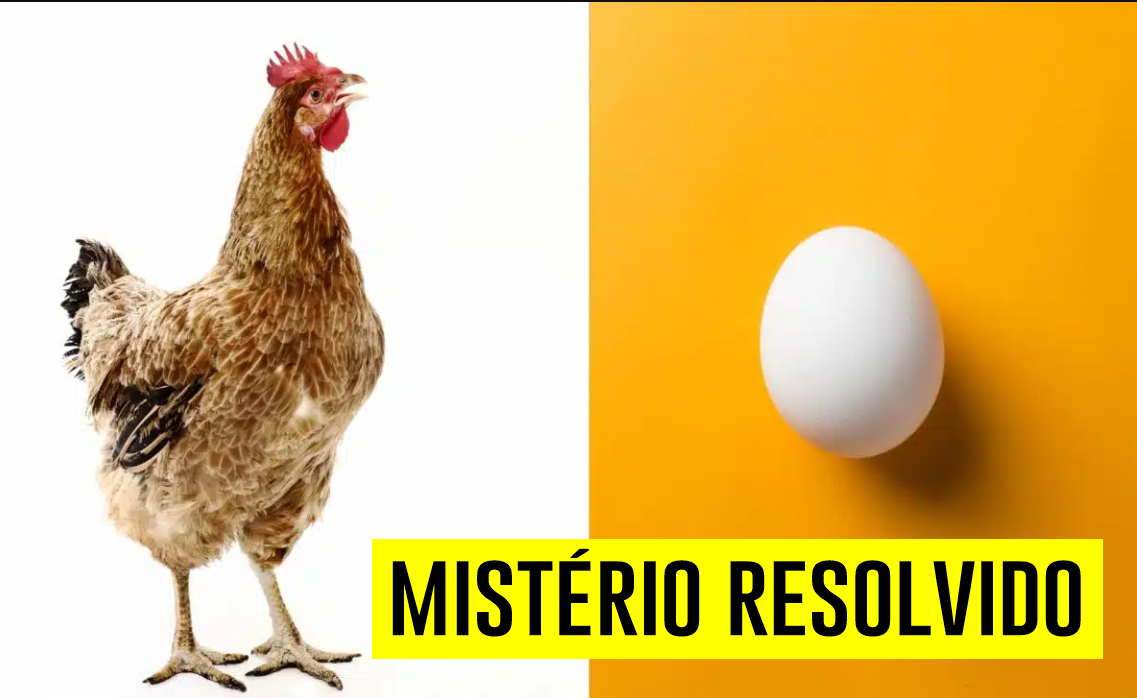
A Microbe Over A Billion Years Old May Have Helped Scientists Answer The Enigma Of What Came First: The Egg Or The Chicken
The enigma of the egg or the chicken has fascinated humanity for centuries, raising questions about the origins of life and evolution. What if the answer to this ancient puzzle has already been buried in the deep past of the Earth, long before the first animals or even chickens existed?
Scientists have discovered something surprising that could change our understanding of the evolution of life and the origin of multicellular development. This discovery involves a unicellular organism that may indeed shed light on the mystery of the egg or chicken and even reveal secrets about the origins of biological complexity.
The Organism That Challenges The Past
The organism in question is Chromosphaera perkinsii, a microbe that lives in shallow marine environments and has existed for over a billion years. Although it is unicellular, it exhibits reproductive behaviors that mimic processes found in modern animal embryos.
-
Scientists have discovered a gigantic magnetic anomaly hidden beneath the soil of Australia that mirrors the shape of the entire continent and holds geological records of two and a half billion years that could change what we know about the Earth.

-
The heatwave that has been affecting Brazil in recent weeks is coming to an end: a cyclonic vortex is moving in during Holy Week with heavy rains, and a cold air mass is already threatening to lower temperatures in the South starting in April.

-
(VIDEO) Cameras from an astronomical observatory captured two meteors falling over Santa Maria in Rio Grande do Sul with only a one-minute difference and such close trajectories that scientists are now investigating whether the two objects have the same origin.

-
Fireballs shoot across the skies of the USA and meteor explosions draw attention: what is causing this mysterious wave of sightings?


During reproduction, C. perkinsii divides into a cluster of smaller cells, creating structures with different types of cells. This is similar to the early stages of animal embryo development, known as the blastula.
For researchers like Omaya Dudin from the Swiss Federal Institute of Technology, this discovery is revolutionary:
“Although C. perkinsii is a unicellular species, this behavior shows that processes of coordination and multicellular differentiation were already present in the species, long before the first animals appeared on Earth.”
In short, the most remarkable feature of this microbe is its ability to form colonies with different types of cells. These colonies remained united for a specific period before dispersing, resembling how animal embryos undergo updates in cellular differentiation.
This behavior, found in a unicellular organism, suggests that the genetic programming necessary for creating eggs—one of the key elements of the chicken enigma—may have emerged long before any complex animal life existed.
The Discovery Of An Ancient Past
A study recently published in the journal Nature, challenges previous assumptions about when and how multicellular life evolved on Earth. C. perkinsii belongs to a group of organisms that diverged from the lineage leading to animals over a billion years ago.
The study reveals that long before the first animals appeared, processes like cellular differentiation—essential for egg formation—were already underway.
This not only brings a new perspective to the question of the egg or the chicken, but also opens doors to understanding how life evolved from unicellular organisms to multicellular forms.
Marine Olivetta, a researcher at the University of Geneva, highlights the importance of the discovery: “It is fascinating; a newly discovered species allows us to go back in time over a billion years.
This suggests that the tools to create eggs were available long before nature ‘invented’ chickens.”
A study of C. perkinsii offers an intriguing answer to the ancestral dilemma: eggs—or at least their genetic precursors—existed long before chickens ever did.
The Role Of Microbes In Evolution
The discovery of C. perkinsii brings a new perspective on how life may have transitioned from unicellular organisms to multicellular ones. These microbes can be seen as a missing link, a connection between unicellular ancestors and the complex multicellular animals we know today.
The key to this transition may be the ability of simpler organisms to form colonies and perform cellular coordination processes, which are essential for the evolution of animals.
Thus, while scientists cannot completely dismiss the idea of convergent evolution—when similar traits arise independently in different organisms—the similarity between the reproductive behavior of C. perkinsii and the embryonic development of animals suggests that the genetic underpinnings for egg formation in multicellular evolution were present long before the rise of the first animals.
Reframing The Mystery: The Egg Came Before The Chicken?
Based on the behaviors of C. perkinsii observed, the answer to the mystery of the egg or the chicken seems closer than ever. The processes necessary for egg creation began over a billion years ago, long before chickens appeared.
Thus, the answer to the timeless question may be surprisingly simple: the egg came first, followed by the development of animals capable of producing them.
In addition to solving one of the greatest mysteries in biology, this discovery also highlighted the specific traits of primitive organisms.
In this way, by studying ancient unicellular life forms, scientists are discovering how these early life forms performed complex processes. These processes were fundamental to the evolution of multicellular organisms.
Implications For The Future Of Science
This research opens a new chapter in understanding the evolution of life on Earth.
The findings about C. perkinsii provide new answers to fundamental questions about the origin of multicellularity. Furthermore, they offer a unique insight into the evolutionary mechanisms that enable the transition from simple organisms to complex organisms.
Researchers noted that “future research will be essential to elucidate how spatial cellular differentiation is established in C. perkinsii.
However, our study indicates that C. perkinsii represents a transitional form between temporal and spatial cellular differentiation. This provides insights into the evolutionary mechanisms that occurred in the emergence of animal multicellularity.
As more studies on these ancient unicellular organisms continue, new details about the origin and evolution of life on Earth may be revealed. This could further alter our understanding of biology and evolution.
The study of C. perkinsii is rewriting parts of the history of life and showing us that, in nature, complexity can arise from simple forms. This challenges our traditional notions of how life evolves.







Seja o primeiro a reagir!