





 Portuguese
  English
  Spanish
  2 min of reading
  0 comments


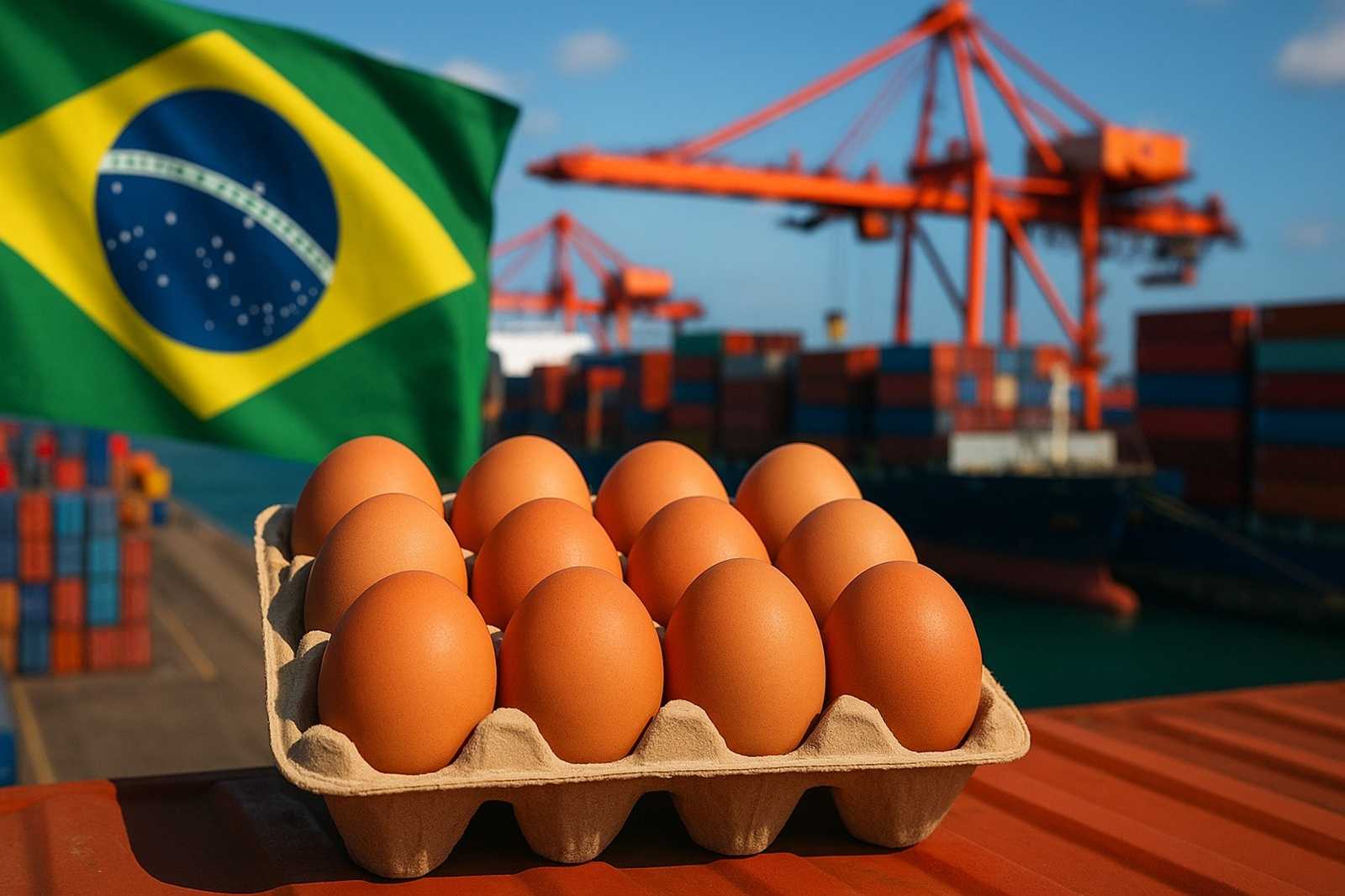
With Shipments That Grew Almost 40% in September and Revenue Up 94.2%, Brazil Confirms 2025 as the Best Year in History for Egg Exports, Driven by Expansion in Strategic Markets Such as Japan, Mexico, and the United Arab Emirates.
The Brazilian egg industry ended September with impressive results in the international market. The country exported 2,076 tons, including both fresh and processed products, which represents a growth of 39.7% compared to the same month in 2024, when shipments reached 1,485 tons.
The revenue accompanied this advance, jumping to US$ 5.5 million — an increase of 94.2% compared to last year, according to the Brazilian Animal Protein Association (ABPA).
Despite the good performance, the volume was slightly below that recorded in August, when 2,129 tons were exported.
-
The water that almost everyone throws away after cooking potatoes carries nutrients released during the preparation and can be reused to help in the development of plants when used correctly at the base of gardens and pots, at no additional cost and without changing the routine.

-
The sea water temperature rose from 28 to 34 degrees in Santa Catarina and killed up to 90% of the oysters: producers who planted over 1 million seeds lost practically everything and say that if it happens again, production is doomed to end.

-
An Indian tree that grows in the Brazilian Northeast produces an oil capable of acting against more than 200 species of pests and interrupting the insect cycle, gaining ground as a natural alternative in soybean, cotton, and vegetable crops.

-
The rise in oil prices in the Middle East is already affecting Brazilian sugar: mills in the Central-South are seeing their margins shrink just as ethanol gains strength.

Cumulative Data for 2025 Already Surpasses All Records
The result for September solidified a historic year for the sector. Between January and September 2025, Brazil exported 34,348 tons of eggs, up 174.1% compared to the 12,542 tons shipped in the first nine months of 2024.
Revenue also registered significant growth, reaching US$ 80.8 million — 201.7% above the total obtained in the same period last year, which was US$ 26.7 million.
Japan Leads Purchases and New Markets Gain Ground
The shift in the commercial landscape following the tariffs imposed by Donald Trump forced Brazil to diversify its destinations, a strategy that has yielded positive results.
In September, Japan stood out as the main buyer, importing 692 tons — a growth of 497.1% compared to the previous year.
Other notable buyers included Chile (400 tons, despite the annual decline), the United Arab Emirates (279 tons, with no previous records), and Mexico (251 tons, also with no previous records).
The president of ABPA, Ricardo Santin, emphasized that the reconfiguration of markets drove growth: “After the tariff increase, there was a reconfiguration in the export map of the sector.”
Even with reduced purchases from the United States, Brazil was able to compensate for the decline and expand its global presence thanks to the opening of new markets and the product’s competitiveness.










Seja o primeiro a reagir!