





 Portuguese
  English
  Spanish
  2 min of reading
  0 comments


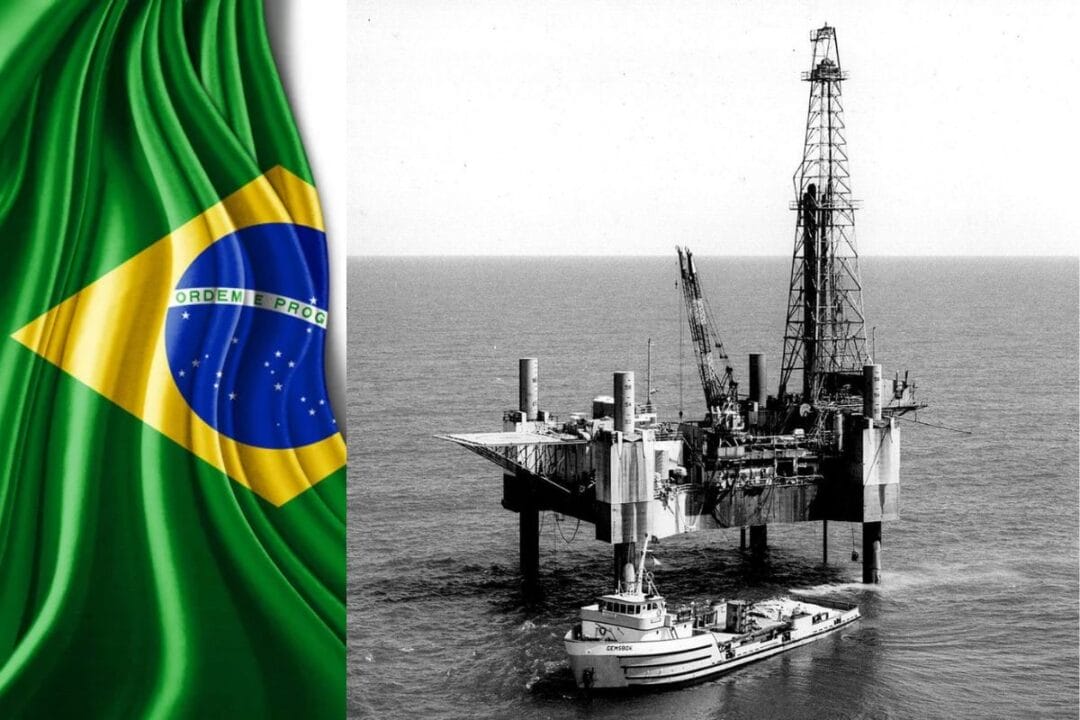
Pioneering Platform Installed In Shallow Waters In 1969 Paved The Way For Modern Technologies, Such As FPSOs In Ultra-Deep Waters.
In 1969, Brazil took a historic leap in offshore exploration with the P-1, the first Brazilian mobile drilling platform for oil extraction from the seabed. Operating in shallow waters, it confirmed the existence of the Guaricema field in Sergipe and accumulated 242 thousand meters drilled until its retirement in 1995. Today, its legacy inspires projects like the FPSOs P-88 and P-89, focused on ultra-deep waters.
P-1: The Historical Milestone Of Brazilian Offshore Exploration
The P-1 was installed at a time when the country sought to overcome the limits of land-based oil production. With technology adapted to operate in shallow water depths, the platform confirmed in 1969 the viability of the Guaricema field in Sergipe, marking the beginning of national offshore exploration. Its technical success accelerated investments in research and innovation to advance further into the sea.
Over 26 years, the P-1 accumulated 242 thousand meters of drilling, equivalent to 27 times the height of Mount Everest. Operating at depths of less than 100 meters, the platform utilized fixed anchoring systems, a pioneering technology for its time. Its retirement in 1995 coincided with the beginning of the era of deep-water exploration in Brazil.
-
A study confirms that the natural gas sector will reduce greenhouse gas emissions in Brazil by 0.5% and accelerate the energy transition by 2026.

-
Petrobras implements a severe adjustment and confirms a 55% increase in the price of aviation kerosene with a proposal for installment payments for the companies.

-
The rise in oil prices could ensure an extra revenue of R$ 100 billion for the Federal Government, indicates a recent economic study.

-
Naturgy begins an investment of R$ 1.6 million to expand the gas network in Niterói and benefit thousands of new residences and businesses.


Legacy Of The P-1 Inspires New Technologies In Ultra-Deep Waters
The expertise gained from the P-1 allowed for the development of platforms such as the FPSOs P-88 and P-89, capable of operating in water depths greater than 2,000 meters. These modern units process up to 150 thousand barrels of oil daily, a technical advancement unthinkable without the pioneering tests of the Sergipe platform.
The country is today responsible for 23% of global deep-water oil production, according to ANP. The journey began with the P-1 and evolved into complex systems like the pre-salt, which demands pressures of up to 700 bar and temperatures of 80°C. Petrobras estimates that by 2027, 70% of its production will come from ultra-deep waters.







Seja o primeiro a reagir!