





 Portuguese
  English
  Spanish
  8 min of reading
  0 comments


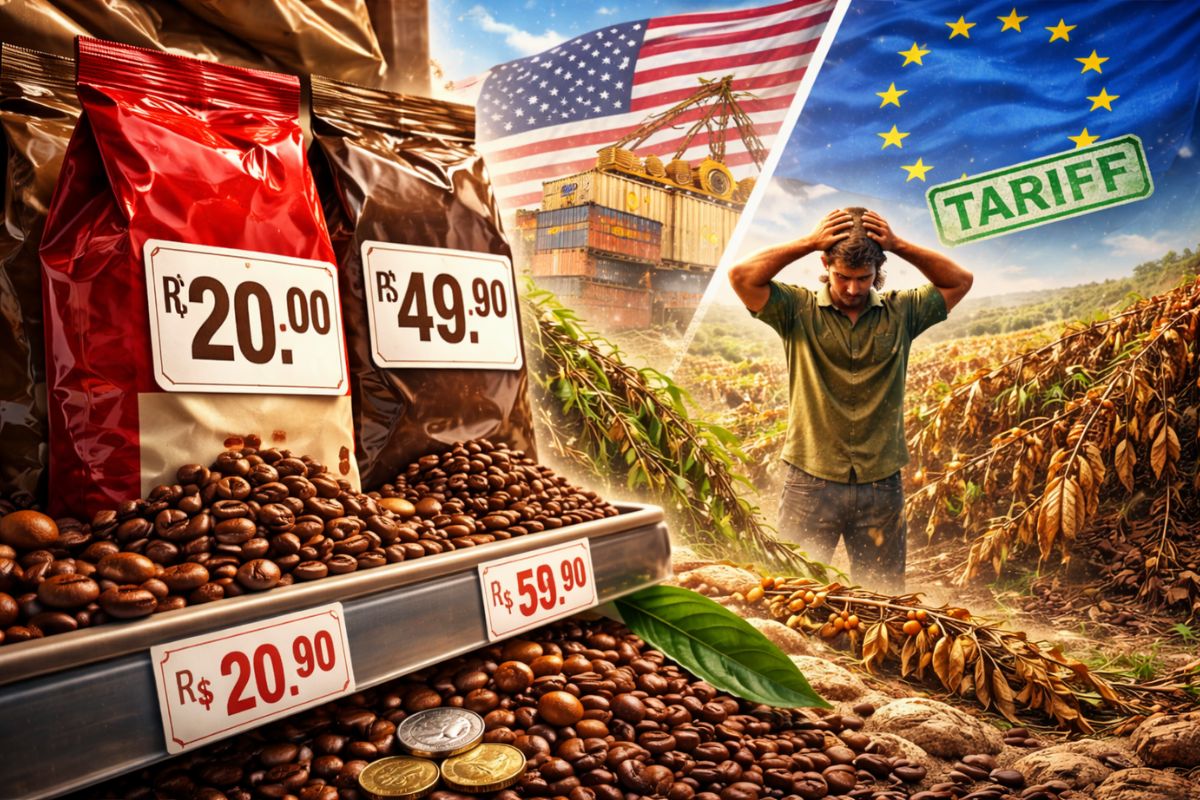
Understand How the Coffee Crisis Affects Brazilian Coffee, Raises Coffee Prices on Shelves, Reduces Coffee Production, and Threatens Coffee Exports Worldwide.
Whether you are a fan of the sacred coffee or someone who only drinks it occasionally, it is impossible to go to the market and not feel the impact on your wallet. That 500 g pack of coffee that cost around R$ 20 at the beginning of 2024 now appears on the shelf between R$ 35 and R$ 45. In many regions, with R$ 20 you cannot even take 250 g home. Many people have started cutting back on coffee or migrating to cheaper brands just to maintain the habit.
What many people attribute to “the usual inflation” or “political crisis” is, in fact, a rare combination of factors pushing Brazilian coffee into a structural crisis, both in the domestic market and in exports. Extreme weather harming the harvest, the European Union’s anti-deforestation law, and tariffs imposed by the United States have created a perfect storm that impacts producers, industry, and consumers.
Coffee: From a Pillar of the Brazilian Economy to a Product on a Tightrope

The coffee has never been just a beverage in Brazil. It is among the pillars that helped build the country’s economy.
-
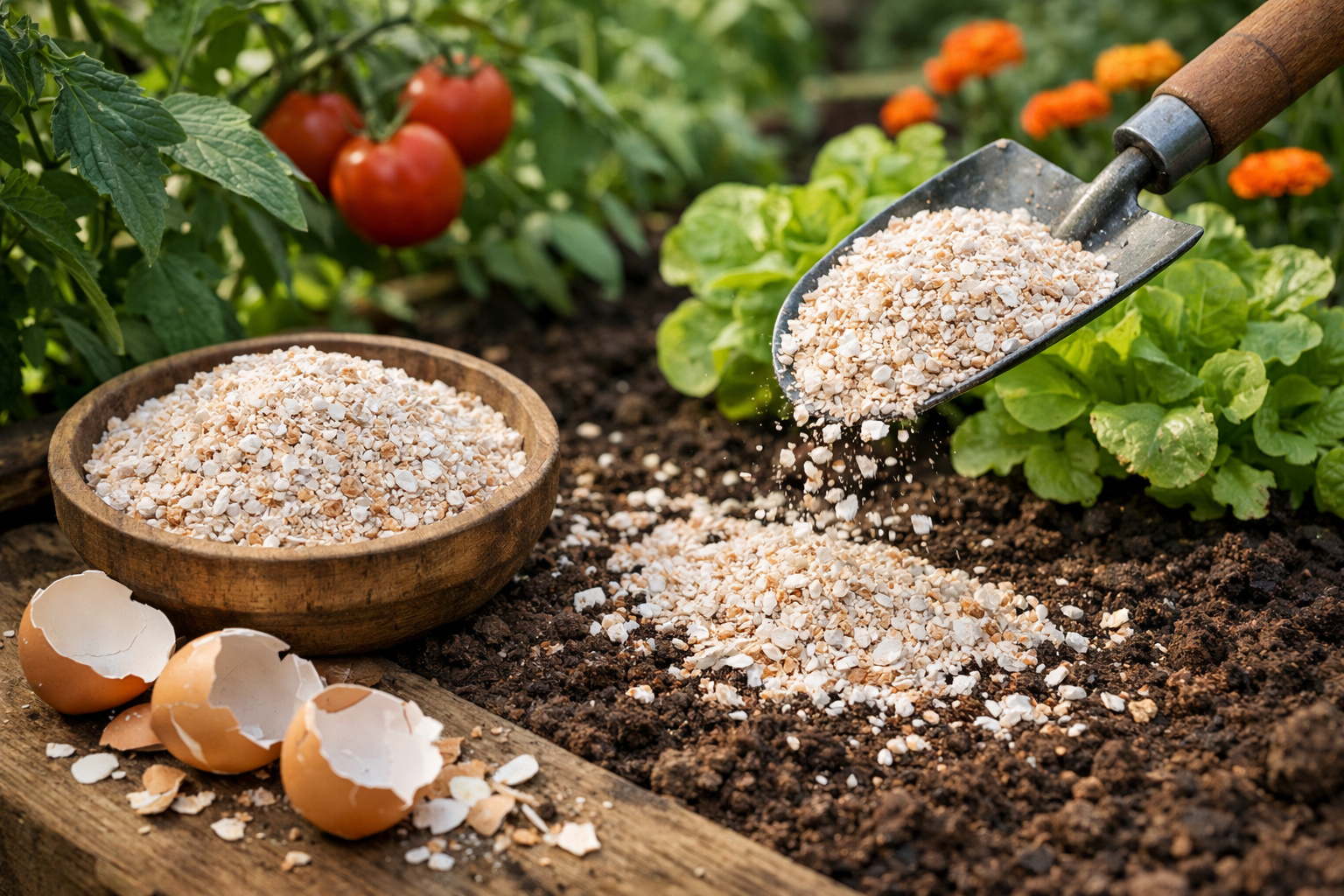
The eggshell that almost everyone throws away is made up of about 95% calcium carbonate and can help enrich the soil when crushed, slowly releasing nutrients and being reused in home gardens and vegetable patches.
-
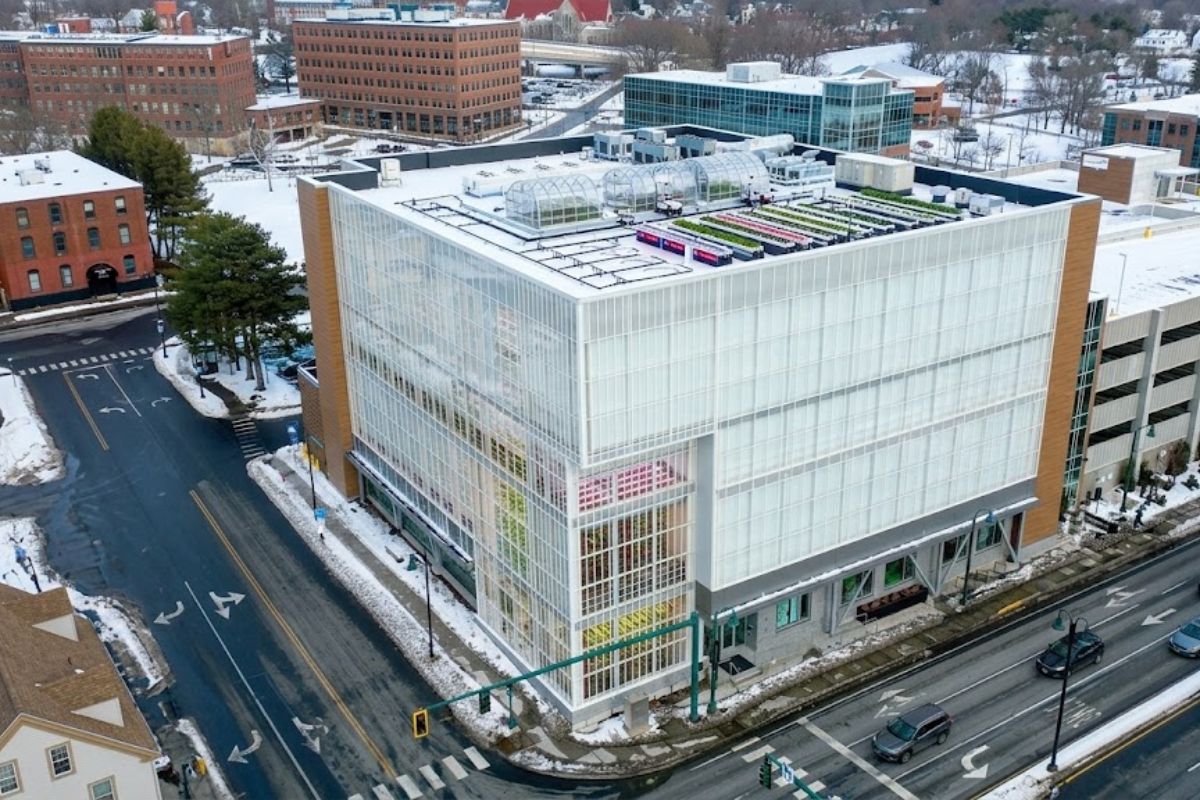
This farm in the United States does not use sunlight, does not use soil, and produces 500 times more food per square meter than traditional agriculture: the secret lies in 42,000 LEDs, hydroponics, and a system that recycles even the heat from the lamps.
-
The water that almost everyone throws away after cooking potatoes carries nutrients released during the preparation and can be reused to help in the development of plants when used correctly at the base of gardens and pots, at no additional cost and without changing the routine.

-
The sea water temperature rose from 28 to 34 degrees in Santa Catarina and killed up to 90% of the oysters: producers who planted over 1 million seeds lost practically everything and say that if it happens again, production is doomed to end.


After brazilwood, sugarcane, and gold that boosted Minas Gerais, came the coffee cycle in the 19th century. Unlike other cycles that remained only in history, coffee has remained relevant and alive to this day.
Currently, Brazil is the largest producer and exporter of coffee in the world, accounting for over 30 percent of all that is produced on the planet.
There are over 51 million sacks per year, sustaining a vast chain of jobs, income, and revenue. Now, however, this giant is under pressure like never before.
The coffee crisis did not arise from a single mistake or isolated event. It is the result of several forces pushing in the wrong direction at the same time: harvests harmed by climate change, skyrocketing production costs, new environmental regulations, and import tariffs that have disrupted the international market.
Smaller Harvest, Extreme Weather, and Coffee Farms on the Edge
One of the engines of this coffee crisis is climate change. While some people still debate whether this is real, cyclical, or a “future problem,” coffee farms are already feeling the impact now.
The 2024 harvest was at 54 million sacks, a 1.6 percent drop from the previous year. The initial forecast for 2025 was even more concerning, with only 51.8 million sacks expected, representing a 4.4 percent decline.
In September, a new estimate raised that number to 55.2 million sacks, but considering the increased cultivation area, this modest growth is a bad sign for productivity.
Behind these numbers are extreme weather conditions. In 2024, regions of Minas Gerais went more than 150 days without significant rain, practically half a year without water falling from the sky.
The coffee plants activated defense mechanisms, lost leaves, wilted, and in more severe cases, died.
Intense heatwaves also affected flowering and the development of the beans, shortening the harvest and reducing quality.
However, climate is not the only villain. Between 2001 and 2023, over 11 million hectares of forests were deforested in coffee-producing areas in Brazil.
At least 312,803 hectares were directly converted into coffee plantations. When the forest disappears, the rainfall cycle changes, the region heats up, the drought intensifies, and productivity plummets.
This water crisis is no longer a rare event. Since the drought in 2014 in the Southeast, periods without rain have become practically annual.
Studies indicate that, by 2050, up to two-thirds of the arabica coffee cultivation area in Brazil may be at risk, with states like Minas Gerais, São Paulo, and Paraná among the most affected.
Less rain, stressed plants, smaller harvests, and higher costs form the first layer of the crisis: coffee is getting more expensive right in the fields, even before it reaches the roaster or supermarket.
Coffee Prices Soar Worldwide and Squeeze Consumers’ Wallets

With lower production and climate working against it, the reflection appears directly in the price of coffee. In January 2025, the global value of the commodity reached $310.12 per pound, an increase of nearly 76 percent compared to the same period the previous year and the largest increase since 1977.
This movement was not limited to the future market. In day-to-day life, consumers felt the hit on the package. Traditional 500 g coffee reached nearly R$ 50 on some shelves. Packs of 250 g of arabica coffee are already appearing for R$ 35.
Those who just wanted to keep their daily coffee ended up paying nearly double what they paid a few years ago.
And it’s not just the end consumer who is suffocated. Small producers struggle to cover the costs of inputs, labor, and technology.
Large groups, on the other hand, have lost entire crops in some areas, with losses that take years to recover.
In the midst of this scenario, the question is inevitable: if the price of coffee is rising like this worldwide, how does Brazil, the largest producer, manage to defend itself? This is where the new European rules and tariffs imposed by the United States come into play, complicating the game even further.
European Anti-Deforestation Law: The Filter That Blocks Brazilian Coffee

To try to curb global deforestation, the European Union created an anti-deforestation law that directly impacts Brazilian coffee.
The rule is clear: products like soy and coffee can only enter Europe if they can prove that they did not come from areas deforested after December 2020, even if the deforestation was legal in the country of origin.
In practice, this means that to export coffee to the continent, producers and exporters need to implement traceability systems capable of proving the origin of each batch.
For a continental country like Brazil, with tens of thousands of small and medium producers, this is a huge challenge.
The European Union started to classify countries as low, medium, or high risk of deforestation. Brazil fell into the medium-risk category, which was considered a relief amid fears of being categorized as high risk.
However, direct competitors in the coffee market, such as Vietnam, India, and Costa Rica, were classified as low risk. The result: lower requirements and lighter supervision for them.
The Brazilian government has classified this regulation as unilateral and punitive, arguing that it disregards national legislation combating deforestation and recent progress.
It even proposed an international fund to compensate countries that protect their forests instead of punishing them with trade barriers, but the idea did not advance.
Although the entry into force has been postponed from December 2024 to December 2025 for large companies, and to June 2027 for micro and small ones, coffee producers already need to invest in technology and traceability now, without having full clarity on how, in practice, the rules will be applied.
U.S. Tariff: The Blow to Brazilian Specialty Coffee
If Europe tightened the screws on the environmental side, the United States complicated matters on the tariff side. Americans are the largest individual buyers of Brazilian coffee.
In 2024 alone, they imported 8.1 million sacks. Any shift in this relationship shakes the entire chain.
In August 2025, the Trump administration imposed a 50 percent tariff on Brazilian products, including coffee. The charge had two layers: a 10 percent reciprocal tariff and a 40 percent surcharge.
It was a political decision, part of a larger trade war, and the impact on Brazilian coffee was devastating.
Between August and October 2025, Brazilian coffee exports to the United States plummeted. Specialty coffees, with higher added value, suffered a nearly 67 percent reduction in sales in the American market.
In September, overall coffee exports fell nearly 53 percent compared to the same month in 2024.
For the specialty coffee segment, the damage was even deeper. A sack of this type of coffee can exceed R$ 3,000, far above that of regular coffee.
It is precisely these high-quality coffees that sustain the income of many small and medium producers, who invest more in care, technology, and differentiation.
When the American market closed, these producers lost their main buyer almost overnight.
In November 2025, a partial turnaround came. Trump announced the removal of the 40 percent surcharge on coffee, meat, and other products after a conversation with President Lula. The measure eased some of the pressure, but did not erase the damage.
During the months of the tariff, American importers sought other suppliers, contracts were broken, and years of commercial relationships were shattered. Reclaiming that space does not happen overnight.
Three Crises at the Same Time and the Future of Brazilian Coffee

When everything is put together, the picture becomes clear: the Brazilian coffee crisis doesn’t have a single cause, but three huge fronts acting together.
First, climate changes, aggravated by deforestation in producing regions, are reducing water availability, altering rainfall cycles, and leaving crops vulnerable.
Second, the trade relationship with the United States has proven unstable, capable of turning upside down due to a political decision, directly affecting the coffee that generates the most value.
Third, the environmental demands from Europe create a high trade barrier for those who cannot prove the grain’s origin with complete traceability.
These three factors do not act in isolation. They feed into each other, creating a cycle that is difficult to break, where the coffee producer tries to survive, invest in technology, comply with new rules, and still deal with fluctuating prices and uncertain markets.
The projections for the short term are not encouraging. Experts point out that coffee prices are expected to remain high throughout 2026, with a chance of relief only if the weather cooperates and productivity improves in the upcoming harvests.
There is no magic solution that resolves everything at once. What exists are possible paths that go through innovation, sustainability, traceability, and new ways to negotiate with the major buyers.
Even with this scenario, there are reasons for some optimism. Coffee has been part of Brazilian identity for over two centuries and has endured crises, wars, and profound economic changes.
The sector has shown resilience in other times and can reinvent itself again, but this requires that producers, industry, governments, and buyers take on their responsibilities.
The decisions that are being made now will define whether Brazilian coffee will continue as a global protagonist or lose ground to competitors that have adapted more quickly.
And you, have you felt this coffee crisis in your wallet, had to cut back on your daily coffee, or switch brands to keep drinking every day?








-

2 pessoas reagiram a isso.