





 Portuguese
  English
  Spanish
  3 min of reading
  0 comments



The “Father of Pix”, Carlos Eduardo Brandt, Left the Central Bank to Lead at the IMF the Development of an International Payment System Capable of Reducing Fees and Accelerating Remittances Between Countries
The engineer Carlos Eduardo Brandt, nationally known as the “Father of Pix”, left the Central Bank of Brazil to take on a strategic role at the International Monetary Fund (IMF). The information was shared by the BBC last week. From now on, he will lead, in Washington, the area dedicated to payment systems and market infrastructures of the organization.
Brandt, who built a 23-year career at the Central Bank, became one of the most influential figures in the global financial sector after the creation of Pix. In 2021, he appeared as the only Brazilian on the list of the 50 most important people for the future of global business, compiled by Bloomberg. The recognition came just a year after the launch of the instant transfer system, which quickly became a phenomenon of adoption among Brazilians.
The Possibility of an International Pix
At the IMF, Brandt will apply his experience in developing solutions that simplify transactions between countries. Global interest in a model similar to Pix has grown as Brazilian technology surpassed credit cards as the most used payment method in the country. The central idea is to find mechanisms that allow fast, inexpensive, and accessible international transfers.
-
Havan buys historic football land in Blumenau for a million-dollar amount protected by a confidentiality clause and is already planning to change even the layout of streets to build a megastore in half-timbered style costing 80 million reais.

-
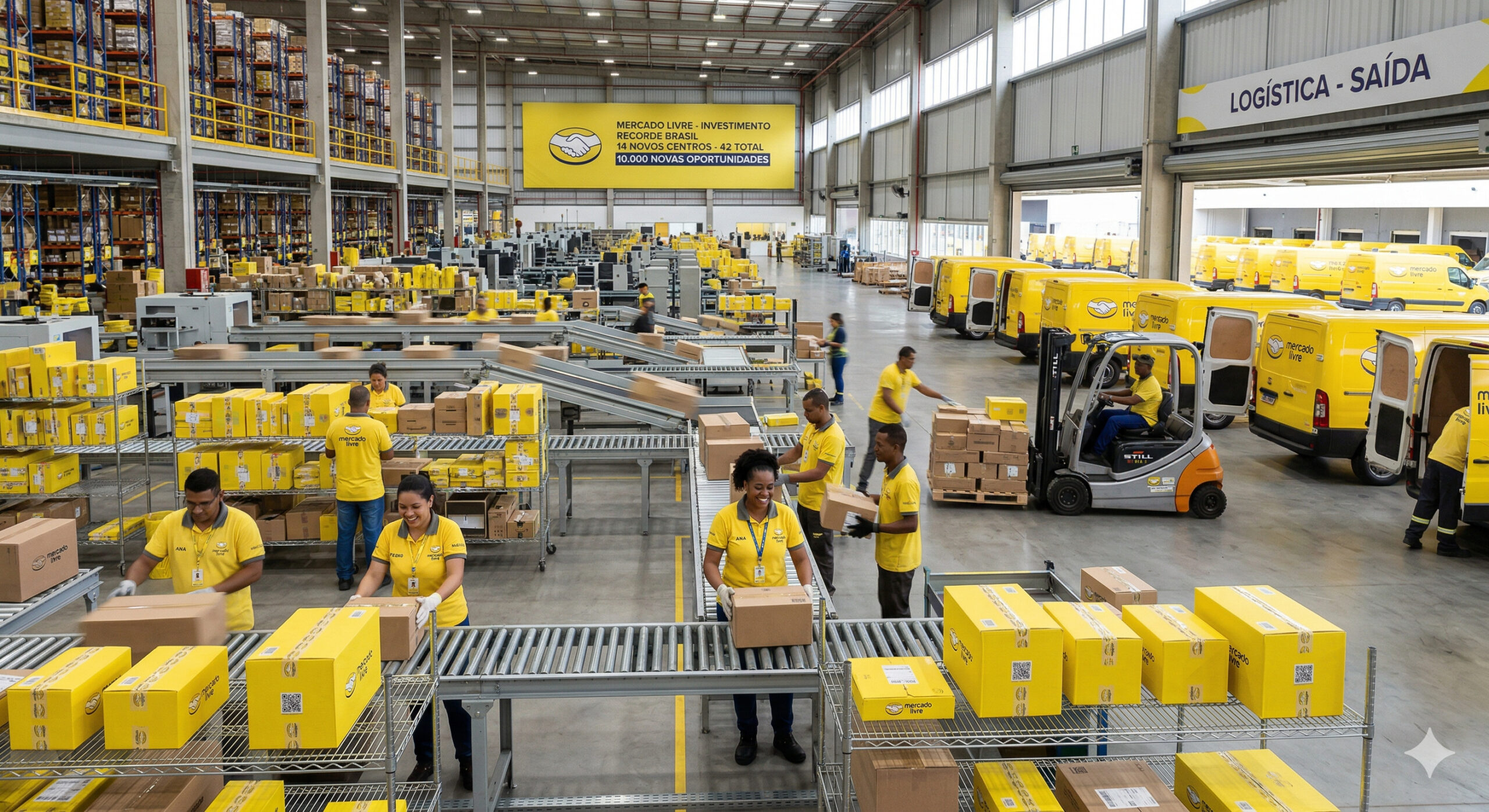
Mercado Livre “opens the vault” and announces a record investment of R$ 57 billion in Brazil in 2026, a value 50% higher than the previous year, with an expansion plan that includes 14 new logistics centers, totaling 42 units in the country and hiring an additional 10,000 employees.
-
How investment in technology can revolutionize the national economy and enhance industrial gains, according to a study that highlights the direct impact on productivity, innovation, and wealth retention within Brazil.

-
The largest food company on the planet, JBS, has just opened a 4,000 square meter laboratory in Florianópolis to develop customized proteins that modulate muscle mass gain, immune response, and metabolic performance.



Since August, the specialist has been following initiatives like that of the Southern African Development Community (SADC), formed by 16 countries, which is working on a regional integration system for payments. Another closely monitored project is the Nexus, created by the Bank for International Settlements (BIS). It connects payment systems from different nations and has already been tested in India, the Philippines, Singapore, Thailand, and Malaysia. For this proposal, Nexus has begun to be compared to the “international Pix.”
According to Brandt, working at a multilateral institution opens up space to contribute on a global scale. “My perception was that I could help other countries and do this on a much larger scale,” he told the BBC.
Challenges and Opportunities in International Transfers
International transfers remain expensive and slow compared to Pix. High fees, intermediary steps, and regulatory differences between countries hinder the adoption of a more efficient system. At the IMF, Brandt also monitors the evolution of Central Bank Digital Currencies (CBDCs), digital assets that operate similarly to cryptocurrencies but are issued and regulated directly by the monetary authorities of each country.
Based on Pix, the specialist seeks models capable of reducing costs, simplifying operations, and increasing security. The proposal follows a different path from that adopted by some countries, such as India, where private companies are responsible for both the development and operation of payment systems.
Reduction of Fees and Global Impact
An international system inspired by Pix could replicate effects observed in Brazil, such as the decrease in banking fees and the deregulation of services. The topic gained traction following statements from Tobias Adrian, head of the IMF’s Monetary and Capital Markets Department. He criticized the fees charged by companies specialized in international remittances, which amount to US$ 45 billion per year (approximately R$ 242 billion at the current exchange rate).
For the IMF, adopting a modern and public infrastructure – similar to the Brazilian model – could drastically reduce these costs. However, this requires regulatory standardization, technological integration, and a high level of coordination between central banks.
With the experience accumulated in Brazil, Brandt is now becoming one of the key figures behind the attempt to transform not only Pix into a global standard but also the entire system of international payments.









Seja o primeiro a reagir!