





 Portuguese
  English
  Spanish
  5 min of reading
  0 comments


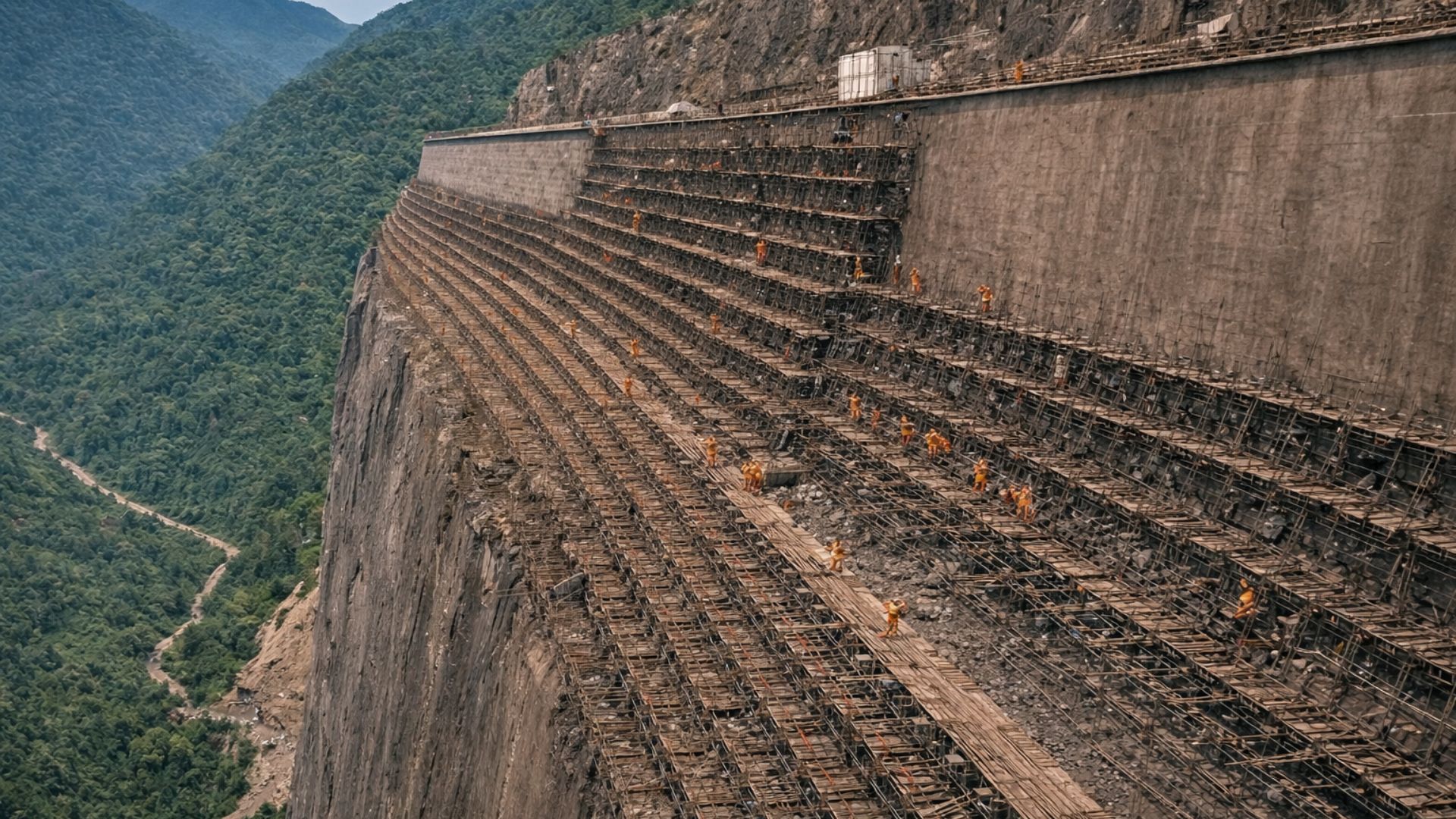
Megaproject in the Mountains of Central Asia Combines Extreme Engineering, Geopolitical Water Disputes, and Economic Bet of a Country Dependent on Remittances. The Rogun Project Promises to Transform Tajikistan’s Electricity System, but Faces Seismic Risks, Climate Challenges, and Decades of Regional Tension Involving Water Resources.
Tajikistan has resumed construction of the Rogun Dam with international support, a hydropower project that, when completed, is expected to reach 335 meters in height and become the highest in the world.
The power plant was conceived during the Soviet era, survived the dissolution of the USSR, the Tajik civil war, and years of diplomatic impasse with Uzbekistan.
After decades of interruptions, it has returned to the center of the economic strategy of a country that remains dependent on foreign remittances and still faces energy restrictions in the winter.
-
Italian researchers have detected what appears to be a second Sphinx buried under the sands of Egypt, and satellite scans reveal a gigantic underground megastructure hidden beneath the Giza Plateau for over 3,000 years.

-
There are 4,223 drums and 1,343 metal boxes concreted with 50-centimeter walls that store the radioactive waste from Cesium-137 in the worst radiological accident in Brazil, just 23 kilometers from Goiânia, with environmental monitoring every three months.
-
Giant Roman treasure found at the bottom of Lake Neuchâtel in Switzerland reveals an advanced trade system, circulation of goods, and armed escort in the Roman Empire about two thousand years ago.

-
He buried 1,200 old tires in the walls to build his own self-sufficient house in the mountains with glass bottles, rainwater, and an integrated greenhouse.


Tajikistan Bets on Megadam to Solve Energy Crisis
Landlocked in the heart of Central Asia, Tajikistan is a country without access to the sea and has a strong hydropower potential.
The population has surpassed 10.5 million inhabitants, and remittances sent by migrant workers reached 47.9% of GDP in 2024, signaling an economy still very vulnerable to external shocks.
At the same time, the persistent lack of electricity in the cold months remains a structural problem, which helps explain the political and economic weight attributed to the Rogun project.
Soviet Origins and Resumption After Civil War
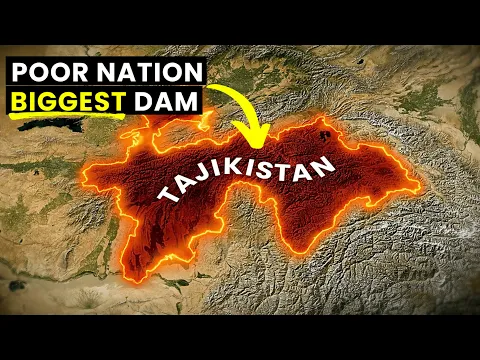

The origins of the project date back to 1976, when Moscow launched the initiative on the Vakhsh River, a tributary of the Amu Darya.
The choice of location was not casual, as the narrow valley surrounded by mountains offered favorable conditions for a large rock-fill dam with an impermeable core.
The plan envisaged a reservoir of about 13.3 km³ of water and a large power plant to strengthen the region’s energy system.
However, the Soviet schedule was never completed.
With the collapse of the Soviet Union in 1991, Tajikistan gained independence and soon plunged into a civil war that lasted until 1997.
The conflict left tens of thousands dead and displaced over half a million people, which paralyzed the economy and halted the construction for decades.
When the government decided to reactivate Rogun in the 2000s, the project ceased to be merely a Soviet legacy and began to be treated as a cornerstone of national energy security.
In 2018, the first generating unit went into operation.
In 2019, the second turbine began operations.
Both operate at partial capacity while the main structure remains under construction, and the full filling of the reservoir depends on progress in the works.
Water Dispute with Uzbekistan
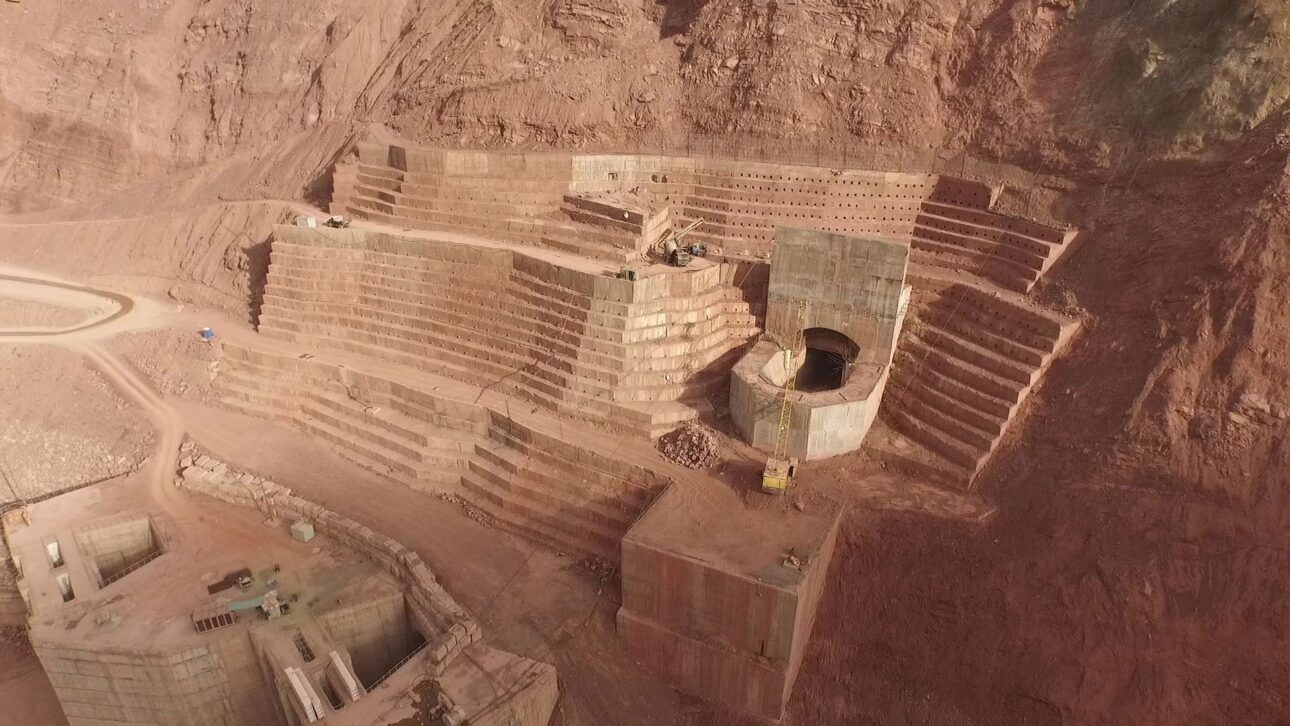
Rogun has always been at the center of a larger regional dispute involving water use in Central Asia.
As the Vakhsh River is part of the Amu Darya basin, downstream countries have watched the project with concern, especially Uzbekistan, whose irrigated agriculture heavily depends on these flows.
In 2012, then-Uzbek President Islam Karimov stated that water disputes could lead to military conflict in the region.
The diplomatic pressure delayed financing and pushed the project into a long phase of technical and environmental studies.
International assessments comprehensively analyzed the benefits and risks of the project, including regional impacts and dam safety.
The regional scenario began to change after 2016, with Karimov’s death and the rise of Shavkat Mirziyoyev in Uzbekistan.
The relationship between Dushanbe and Tashkent became less confrontational and opened space for cooperation in energy and water management.
The debate began to include even agreements for purchasing electricity generated by the future plant, transforming a longstanding point of tension into a potential energy partnership.
Extreme Engineering in a Seismic Region
From a technical perspective, Rogun encompasses unusual characteristics even among megadams.
The adopted model is that of a rock-fill dam with an impermeable core, a solution deemed more suitable for a complex and seismically active terrain.

The stability of the structure has been designed considering high-magnitude earthquakes and different hydrological pressure scenarios.
The geological challenge goes beyond seismic activity.
Studies identified sensitive geological formations in the dam area, requiring constant mitigation, structural monitoring, and engineering adaptations throughout the project’s lifespan.
Nevertheless, technical evaluations indicated that the site can support a dam of the planned dimensions when appropriate safety measures are applied.
Energy Capacity and Dimensions of the Power Plant
The energy dimension has also undergone technical revisions over the years.
Although for decades Rogun has been publicized as a project of 3,600 megawatts, recent documents work with 3,780 MW of installed capacity.
The generation would be distributed across six turbines of approximately 630 MW each.
The reservoir remains estimated at 13.3 km³ of water, while the projected average annual generation is around 14.4 terawatt-hours when the plant is fully operational.
Billion-Dollar Bill and International Financing

The cost of the project has also evolved over time. Over US$ 5 billion has already been spent on the construction of the dam.
Estimates indicate that an additional US$ 6.29 billion will be required to complete all stages of the project.
Part of the funding comes from the Tajik government’s own budget.
Other resources depend on concessional loans, international donations, and investments from multilateral institutions.
This financial arrangement has transformed Rogun into one of the largest infrastructure bets ever taken by a relatively low-income country.
Climate Change Increases Water Uncertainty
The urgency to expand electrical supply coexists with another difficult-to-predict variable: climate change.
The accelerated melting of glaciers in the Pamir mountains is altering the behavior of the rivers that feed Tajikistan’s hydrological system.
Climate reports indicate a significant reduction in glacial mass over the past decades.
In the short term, this process may increase water flow and favor hydropower generation.
In the long term, however, the permanent reduction of these glaciers could drastically alter the regime of the Vakhsh River.
For a project that depends on hydrological behavior for many decades, this uncertainty represents a significant operational challenge.
Even so, Tajik authorities and international funders argue that Rogun could reduce power cuts, increase access to electricity, and strengthen the country’s role as a regional energy exporter.
The official expectation is that the plant will benefit around 10 million people and help integrate Central Asia’s electrical systems, enhancing energy trade between neighboring countries.









Seja o primeiro a reagir!