





 Portuguese
  English
  Spanish
  5 min of reading
  0 comments


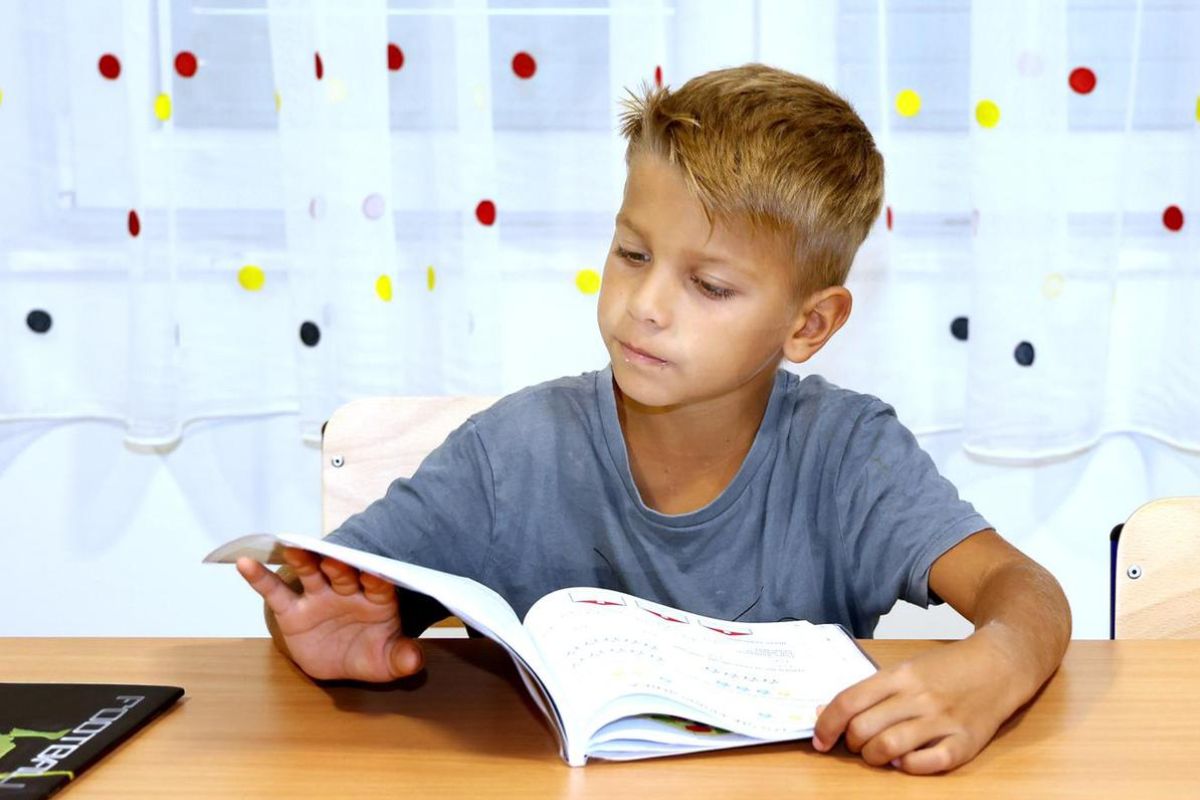
With School Reopened Only for One 7-Year-Old Student, Croatian Island of Kaprije Resumes Classes After 52 Years of Closed Doors and Becomes a Living Laboratory for Family Retention, Public Policy, and Resistance to Rural Maritime Depopulation in the 21st Century Under the Eye of Residents and National Government
The decision to reopen a school that had been closed for 52 years for only one student put the small island of Kaprije, in Croatia, back on the map of educational and demographic policies. The classroom today serves the boy Val Mudronja, 7, who walks across the island to reach the building where the only teacher, who depends on a one-and-a-half-hour ferry ride, waits for him daily.
In a community with about a hundred permanent residents outside the summer season, reopening the school for this single student ensures that the family remains on the island, mitigates the immediate risk of exodus to the mainland, and transforms an isolated case into a symbol of how access to education can determine the survival of seaside villages.
School Reopened for One Student in Almost Empty Island

Kaprije is part of an archipelago of over a thousand Croatian islands and is an extreme example of how the loss of public services accelerates aging and population depopulation.
-
Spain surprises the world by erecting 62 artificial dunes, mixing sand with natural remains of posidonia, and causing the structure to lose only 1.4% of its volume in 1 year.

-
With 16 Bulava missiles, improvements in acoustic stealth, and a design focused on silent patrols, Russia’s nuclear submarine was born to ensure Moscow’s invisible retaliation and has become one of the pillars of its maritime strength.

-
‘Populous’ city in Rio among the worst in Brazil in national ranking and exposes silent development crisis.
-
Couple buys house in the South Zone of São Paulo, opens a hidden door in the garage, and finds a secret wine cellar with dozens of old wines forgotten since the 1970s.

For decades, the school remained closed while younger residents left the island in search of education and work on the mainland.
The turning point came when local authorities accepted a proposal made by a priest from a neighboring island, who campaigned to bring basic education back to Kaprije.
The condition was clear: without a school, Val’s family would have to abandon the place; with the reopening, the only student could continue studying without leaving home, and the island would gain a new chance to renew its population.
Today, the school operates regularly, with a teacher dedicated exclusively to Val.
In practice, the entire pedagogical model is adapted to a single student, from organizing the math routine to English activities, which is the boy’s favorite subject.
The physical education class may involve cycling with the teacher along the waterfront, using the island itself as an open-air classroom.
Teacher’s Routine Between the Ferry and the Classroom

For the school to exist, the teacher must adopt a routine that combines long commutes with maintaining a minimal teaching structure.
The ferry ride to Kaprije takes about one and a half hours, requiring daily planning and coordination with the ferry schedule.
Despite the journey, the teacher does not hide her commitment to the individualized teaching experience.
Instead of full classes with little time for each student, the complete focus on one student allows for deeper content work, real-time monitoring of difficulties, and transforming the island’s landscape, the waterfront, and the sea itself into constant teaching resources.
This configuration, uncommon in mass education networks, raises questions about cost, scale, and financial sustainability, but also highlights the concrete impact that the presence of a school has on a family’s decision to stay in an insular territory.
The Family That Made the Island a Life Project
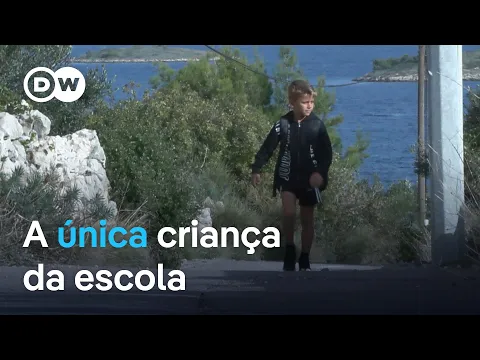

At the center of this story is the Mudronja family. Livia, Val’s mother, has lived in Kaprije for 16 years with her husband and children.
The 7-year-old boy, now the only student at the school, has two younger siblings and is awaiting the arrival of a sister, which reinforces the presence of children in a community marked by elderly residents.
In the island’s only café, Livia often meets with neighbors while waiting for classes to end.
For her, the reopening of the school was described as a small miracle, since the alternative would be to abandon their home by the sea and reorganize their entire life on the mainland.
The existence of the school meant, in practice, the right to continue living where the family chose to build their future.
With the return of classes, Kaprije sees a new generation emerging amidst a scenario of demographic decline.
The presence of three children from the same family, along with the prospect of another baby, contrasts with the reality of many insular villages, where the closure of services such as schools and health posts often marks the first step toward definitive abandonment.
Work, Fishing, and Childhood by the Seaside
The routine of the Mudronja family is not limited to school. Val’s father, Borko, is a fisherman and leaves home early to work at sea.
When the school day ends, the boy returns home, plays with his siblings, and waits for his father’s return to accompany the next boat outing.
In the fall, it is squid fishing season, which yields the best results at night.
It is in this context that Val’s childhood unfolds, divided between the status of only student at a specially reopened school and his gradual participation in traditional island tasks, such as tying up the boat, checking the catch, and slowly learning his father’s trade.
This combination of formal education and practical learning at sea reinforces a lifestyle model that contrasts with the urban standard.
Instead of long daily commutes in congested centers, Val’s journey to school takes him along empty streets, a peaceful waterfront, and a community where everyone knows the student, the teacher, and the parents.
School, Public Policy, and Retention in the Territory
The case of Kaprije illustrates, on a minimal scale, a broader discussion about public policies in isolated areas.
Keeping a school open for a single student entails costs that, in traditional management models, would be seen as inefficient.
However, for insular communities, the closure of the educational unit often signifies the beginning of an irreversible process of depopulation.
In practice, reopening the school serves as a demographic policy tool, keeping a young family on the island and signaling that the government is willing to maintain basic services even in small localities.
The decision also reinforces the symbolic role of education as a central element in ensuring citizenship, regardless of the community’s size.
By making Kaprije an example of how a school can operate for a single student while simultaneously supporting a family’s life project, the country adopts a management model that favors retention in the territory over the exclusive concentration of services on the mainland.
The experience creates a precedent for other archipelagos and villages in similar situations.
In your opinion, should a country keep public schools open even for a single student in isolated communities if that is the condition for families to continue living in those territories?







-

-

-

3 pessoas reagiram a isso.