





 Portuguese
  English
  Spanish
  3 min of reading
  0 comments


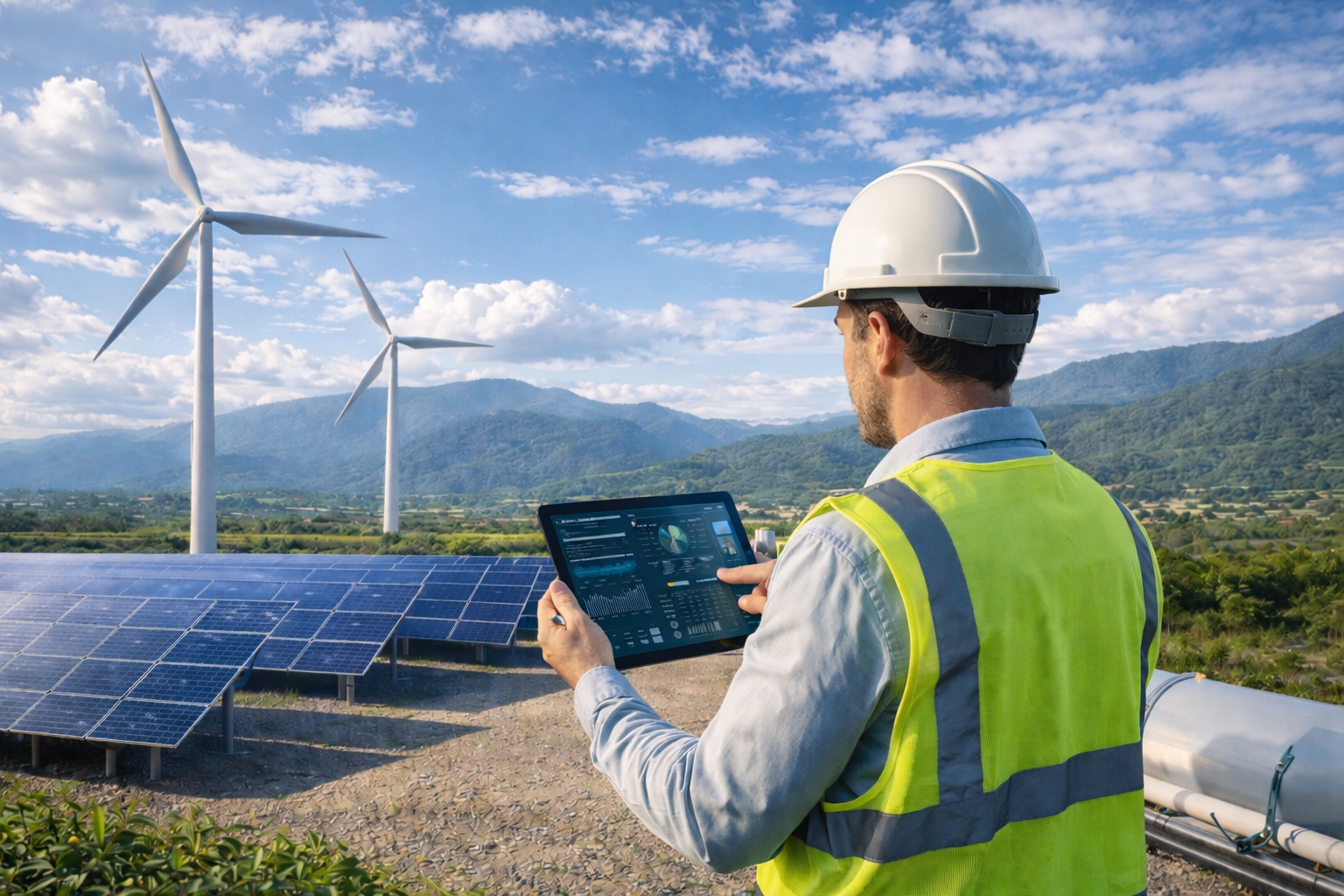
Discover How Innovative Technological Projects and Strategic Partnerships Are Transforming the Colombian Energy Matrix and Generating Significant Social and Economic Impacts
Colombia is leveraging technology to promote renewable energy at a critical moment when Latin America faces increasing challenges of energy security and climate change. Since 2023, governmental and private initiatives have integrated innovative solutions, such as smart storage systems and cloud monitoring platforms, aiming to diversify the energy matrix and reduce dependence on water resources.
These actions are being implemented across the national territory, mainly in urban and rural areas, ensuring reliable access to clean energy for thousands of people.
The Role of Technology in the Expansion of Renewable Energy in Colombia
According to data from the International Renewable Energy Agency (IRENA), more than 60% of Latin America’s energy capacity comes from renewable sources, and Colombia stands out as the fourth global destination for investments in this sector.
-
The government requests the Federal Revenue Service for a new system to automate the income tax declaration, reducing errors, time, and bureaucracy for millions of Brazilians.

-
Pix in installments, international Pix, and contactless payment without internet: the Central Bank revealed the new features coming to the tool that is already used by almost every adult in Brazil.

-
Mercado Livre has just started selling medications with delivery in up to three hours to your door, and this move could completely change the way Brazilians buy medicines on a daily basis.

-
In Dubai, rising tensions from the war in the Middle East are causing super-rich individuals to leave the Gulf and direct their fortunes to a new financial refuge in Asia.

About 70% of the energy produced in the country comes from hydroelectric, solar, and wind sources, but experts warn of the need for diversification to face dry periods and ensure continuous supply.
Technology companies have played a decisive role in this process. Huawei, for example, has implemented the FusionSolar platform, which uses artificial intelligence to optimize solar energy generation in homes and businesses.
The company’s Digital Power initiative, aimed at reducing costs and facilitating access to clean energy, has already contributed globally with over 1.1 billion kWh of green energy, an equivalent savings to planting 719 million trees.
In addition to large companies, platforms like Unergy allow investors to create mini solar farms, democratizing access to renewable energy production and encouraging local community participation in sustainable projects.
Energy Projects and Strategic Collaborations Driving Change
In 2024, Huawei had already executed more than 30 solar energy projects in Colombia, reaching an installed capacity of 1.5 gigawatts, sufficient to supply approximately 150,000 households.
This expansion not only contributes to the environment but also generates social benefits, providing reliable electricity to rural areas and isolated communities.
Partnerships with local and international organizations, such as ACOSOL, FISE, and the World Energy Council, strengthen the implementation of these projects.
According to Diego Tang, director of Huawei Digital Power in Colombia, “technology should be a facilitator to solve urgent problems, such as climate change and energy efficiency, contributing to a sustainable future.”
Economic and Social Impact of the Energy Transition
The transition to renewable energy is also an engine of economic growth. Reports from IRENA and the International Labour Organization (ILO) indicate that investments in sustainable infrastructure in Latin America have generated over 1.2 million jobs in the last five years.
It is estimated that the expansion of clean energy in Colombia could reduce energy tariffs for consumers by up to 30% in the next decade, according to a study by the Economic Commission for Latin America and the Caribbean (ECLAC).
This effect mainly benefits the most vulnerable populations, promoting social inclusion and stimulating local development.
Technological innovation in Colombia demonstrates that it is possible to integrate efficiency, sustainability, and positive social impact. As more projects emerge, the country moves toward a diversified and resilient energy matrix, serving as an example for other countries in the region.









-

-

2 pessoas reagiram a isso.