





 Portuguese
  English
  Spanish
  8 min of reading
  0 comments


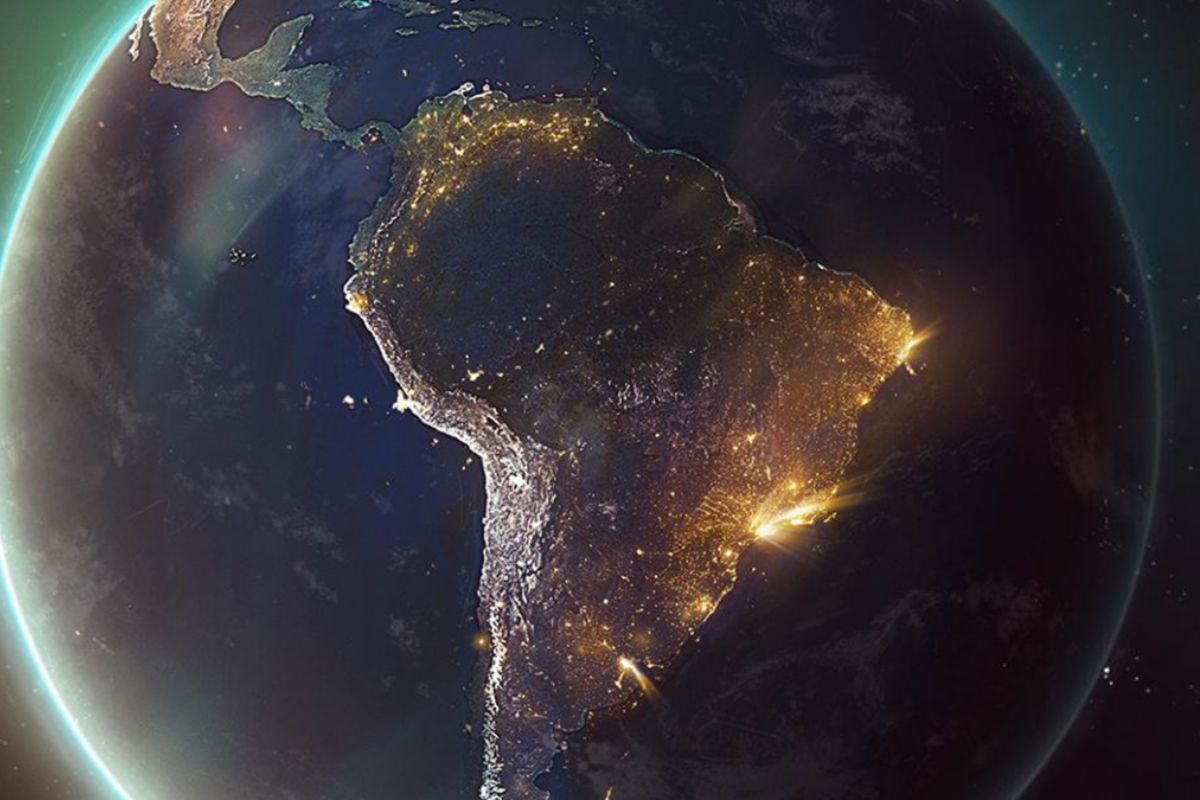
In Different Moments Of The Nineteenth Century And The Beginning Of The Twentieth Century, South American Countries Emerged In Rebellious Provinces, Strategic Ports, And Isolated Regions, Organized Authorities, Symbols, And Military Forces, But Quickly Collapsed In The Face Of A Lack Of Recognition, Durable Support, And The Ability To Resist Politically, Militarily, And Externally.
The South American countries did not just arise from the independence processes that ultimately became consolidated on maps and in books. In times of crisis, civil war, tax dispute, and conflict between regional elites and central governments, experiences emerged that attempted to become a state with territory, political command, their own symbols, and some local belief that separation might last.
Some of these experiences lasted only a few months. Others lasted a little longer, but none stabilized sufficient sovereignty, recognition, and military strength to face empires, centralizing capitals, or more organized regional coalitions. The result was a succession of flash countries that lasted briefly but left a historical trail much greater than their own time of existence.
When A Region Stops Being A Province And Tries To Become A Country
To understand these cases, the central point is not just the declaration of independence.
-
Italian researchers have detected what appears to be a second Sphinx buried under the sands of Egypt, and satellite scans reveal a gigantic underground megastructure hidden beneath the Giza Plateau for over 3,000 years.

-
There are 4,223 drums and 1,343 metal boxes concreted with 50-centimeter walls that store the radioactive waste from Cesium-137 in the worst radiological accident in Brazil, just 23 kilometers from Goiânia, with environmental monitoring every three months.
-
Giant Roman treasure found at the bottom of Lake Neuchâtel in Switzerland reveals an advanced trade system, circulation of goods, and armed escort in the Roman Empire about two thousand years ago.
-
He buried 1,200 old tires in the walls to build his own self-sufficient house in the mountains with glass bottles, rainwater, and an integrated greenhouse.


What transforms a rebellion into a real attempt at nationhood is the combination of some minimal elements: more or less defined borders, an operating government, political symbols, and a local population or elite willing to act as if that new order had some legitimacy.
Without this, there is revolt; with this, a state project exists, even if fragile.
In the South American countries that emerged this way, the problem was rarely just proclaiming the break.
The difficulty began right after, when it was necessary to raise funds, maintain troops, control strategic cities, avoid internal divisions, and resist the reaction of larger powers.
In almost all cases, the window of opportunity was short, and the material structure to sustain independence was smaller than the political enthusiasm that had launched it.
The South Of Brazil Tried To Escape The Imperial Map
The most well-known case in Southern Brazil was the Rio Grandense Republic, proclaimed in 1836 by gaucho rebels during the Farroupilha Revolution. There was economic and political dissatisfaction, and the response was to create a self-governing body, along with a flag, anthem, and currency.
It was not just a symbolic gesture, but a concrete attempt to organize an authority parallel to the Empire and sustain a rupture that could last.
Still, the experience never gained international recognition and remained surrounded by the political and material superiority of the central government.
The reintegration into Brazil in 1845 showed that the project could survive in war but could not easily transform into stable sovereignty. Nonetheless, the attempt left a lasting legacy in the political memory of the country.
The extension of this movement to Santa Catarina produced one of the shortest and most impressive episodes among the South American countries cited in this trajectory. In July 1839, after the capture of Laguna, the Juliana Republic was proclaimed.
The plan was to unite this new republic with the Rio Grandense experience and form an independent block in the far south.
However, the ambition lasted briefly. In November of the same year, imperial troops retook the city, and the Juliana Republic ended after about four months.
This is a clear example of how temporary territorial control, without continuous military support, could produce a country on paper and a quick defeat in practice.
The Northeast Tried Republics Before And After Independence
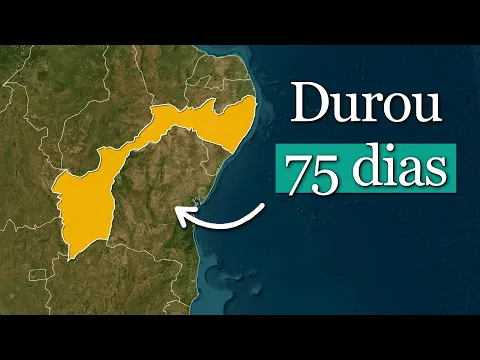

Even before Brazil’s Independence, Pernambuco attempted to break with Portugal and the rest of the colony in 1817. The Republic of Pernambuco organized its own government, flag, and constitution, becoming one of the first republican experiences in the Americas.
However, the duration was only 75 days, insufficient time to consolidate alliances, resources, and defense against Portuguese repression.
The Pernambuco experience demonstrated a pattern that would reappear in other South American countries that arose in moments of crisis: local legitimacy might exist, but the military power of the center remained much greater.
Without a balance of power, autonomy became a race against time.
A few years later, already in independent Brazil, the Confederation of the Equator emerged, proclaimed in 1824 by Pernambuco, Ceará, Paraíba, Rio Grande do Norte, and parts of Bahia.
The project combined republic and regional autonomy in reaction to the central control of the Empire under Dom Pedro I, expressing a deep dispute over the distribution of power within the new Brazilian state.
The military defeat came quickly. The Confederation could not convert regional adhesions into effective capacity for resistance against the imperial center.
The episode made clear that the formation of Brazil was not linear or peaceful. There were, within its own territory, competing models of country, and some of them managed to exist for a brief interval before being crushed.
Argentina In Formation Opened Space For Ephemeral Republics
In 1820, Argentina was still going through a turbulent formation, with provinces in dispute and Buenos Aires trying to centralize authority. In this environment, Francisco Ramírez proclaimed the Republic of Entre Ríos, uniting Entre Ríos and Corrientes.
There was government, army, flag, and a leadership that presented itself as sovereign power amid the broader disorder of the region.
The idea was to build a federation free of direct influence from the political center of Buenos Aires. But the project collapsed in less than a year. In 1821, Ramírez was defeated and killed in battle, and the republic was dissolved.
The speed of the fall shows how a country can be born in the midst of a power vacuum and disappear as soon as the military correlation changes.
During the same period, Tucumán attempted a similar path. Bernabé Aráoz proclaimed himself president of the Republic of Tucumán, organizing congress, armed forces, and its own currency.
The scenario seemed to indicate broader autonomy for Northwestern Argentina, but the support base was narrow, and the new government lacked both a robust army and sufficient regional support to resist.
The political adventure lasted just over a year. In 1821, Tucumán was reintegrated into the United Provinces of the Rio de la Plata, demonstrating that Argentine internal disputes produced rapid ruptures, but equally quick recompositions.
Entre Ríos and Tucumán help explain how South American countries could emerge in the midst of fragmentation without successfully navigating the decisive stage of consolidation.
Cartagena And Santa Cruz Show The Weight Of Geopolitics
Long before Colombia consolidated as we know it today, Cartagena de Índias decided to break from Spanish rule in 1811. It was a wealthy port city with significant commercial weight, tired of paying high tributes to the Crown.
The Republic of Cartagena was born with its own government, constitution, and an improvised army, fueling the ambition to become a relevant nation in South American Caribbean.
But the gap between political intention and effective power became evident in 1815, when Spanish General Pablo Murillo besieged the city with 10,000 men. The crushing was accompanied by hunger, disease, and summary executions.
The lesson is harsh and recurring: without a strong regional coalition, a newly proclaimed country may be defeated even before maturing institutionally.
Another revealing case appeared in Bolivia in 1838, during the crisis of the Peru-Bolivian Confederation. Andrés de Santa Cruz created the Republic of Santa Cruz as a practically independent territory, supported by strategic positioning, its own revenue, and attempts at autonomous military articulation.
This was not a simple local rebellion, but a reorganization of power within a collapsing regional structure.
The experience ended after the Confederation’s defeat in the battle of Yungay in 1839. Santa Cruz was exiled, and the political arrangement disappeared.
Here, the scale of the problem was even larger: it was not enough to resist internal centers; it was also necessary to confront pressure from neighboring countries. When geopolitics enters the game, the survival of short-term projects becomes even more unlikely.
Economic Crisis And Isolation Also Created Flash Countries
In 1932, Chile was undergoing a severe economic crisis. The fall in copper prices, the rise of poverty, and government weariness opened space for military leaders led by Marmaduke Grove to proclaim the Socialist Republic of Chile in Santiago.
The new power promised to reorganize the economy, redistribute land, and confront external influences on Chilean trade.
However, the supporting structure was too weak. The newly created government could not sustain itself in the Army, among elites, or with a sufficiently broad popular base.
The outcome came in just 12 days. Few experiences show so clearly how the speed of taking power can be slower than the speed of the reaction against it.
In the Peruvian Amazon, isolation also produced a remarkable episode. In 1896, during the rubber boom, the elite of Iquitos wanted to stop sharing profits with Lima.
Guillermo Cervantes gathered supporters, expelled Peruvian authorities, and proclaimed the Free Republic of Loreto, also associated with the Republic of Iquitos. There was a provisional government, tax collection, and even a small army with armed boats to control the Amazon River.
The response from Peru was swift. In about three months, troops sent from the capital arrived through the forest and rivers, surrounded Iquitos, and overthrew the rebel government.
The episode reinforces a decisive pattern among the South American countries that existed for a short time: when the center reestablishes logistics, manpower, and command, the isolated periphery loses its initial advantage.
Why Almost Everyone Was Crushed So Quickly
Despite the regional differences, the cases follow a similar logic. These countries were born in windows of weakness of central power, taking advantage of war, economic crisis, tax revolt, provincial dispute, or institutional rupture.
While the center hesitated, flags, decrees, improvised congresses, currencies, provisional governments, and local armies emerged. Creating the appearance of a country was possible; sustaining it was another stage, much harder.
The main obstacle was structural. Empires and central republics had more resources, more manpower, greater administrative continuity, and more capacity to impose blockades, retake ports, and reorganize offensives.
Moreover, there was a lack of international recognition, durable external support, and internal unity. In many cases, the arrival of regular troops was enough to dismantle projects that seemed irreversible just a few months prior.
Thus, these episodes are not merely curiosities. They reveal how the political formation of the continent was more fragmented, violent, and experimental than the subsequent national narrative often admits.
The South American countries that lasted briefly were not folkloric accidents, but radical tests of autonomy in moments of historical imbalance. They lost the war, but helped expose where the fractures of power lay in each region.
These experiences show that South American history was not made solely by nations that survived, but also by projects that almost changed the map and failed before maturing.
The Rio Grandense Republic, Juliana Republic, Confederation of the Equator, Republic of Entre Ríos, Republic of Tucumán, Republic of Cartagena, Republic of Santa Cruz, Socialist Republic of Chile, and Free Republic of Loreto arose for different reasons, but fell before the same decisive test: transforming regional ambition into lasting sovereignty.
If one of these experiences had survived, which one do you think would have reshaped the political map of the continent most profoundly and why? Does the separation of Southern Brazil, Argentine fragmentation, Northeastern breakaway, or an autonomous pole in the Amazon seem to you the most capable scenarios of changing the history we know today?









Seja o primeiro a reagir!