





 Portuguese
  English
  Spanish
  8 min of reading
  3 comments


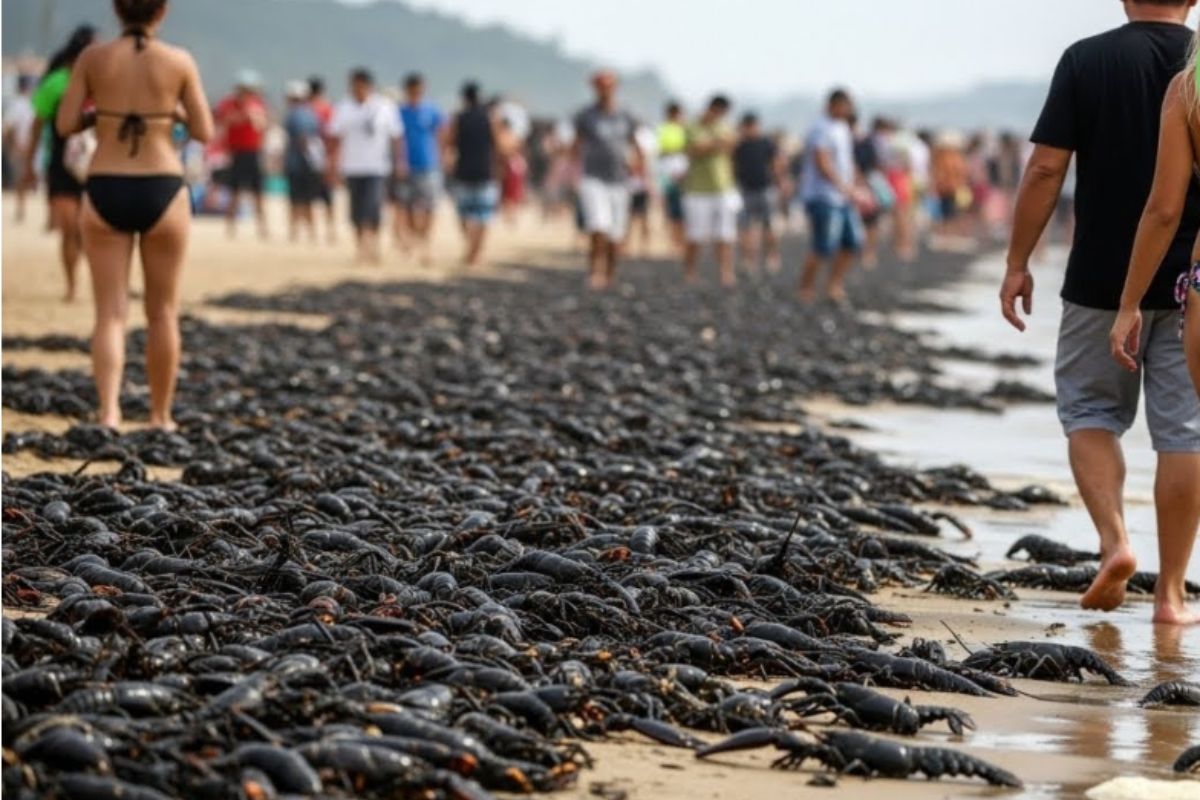


In This Dangerous Paradise, The Coast of Australia and The Beaches of Australia Enchant, But The Jellyfish in Australia and The Rip Currents Demand Total Respect for The Sea.
The Australian coast is the perfect portrait of a dangerous paradise. There are thousands of white sand beaches, clear water, and sunsets that look like paintings, but hiding invisible risks that insurers, rescue teams, and locals know all too well. Behind every postcard photo lies a dangerous paradise where a moment of inattention can cost someone their life.
In a setting where families walk peacefully in the sand, the country keeps beaches closed for months, registers tens of thousands of medical calls due to stings, and deals with venomous creatures, treacherous currents, and discreet predators. Understanding why Australia is a dangerous paradise is the first step to enjoying the sea with fascination, preparation, and respect.
When The Dangerous Paradise Emerges From The Very Nature of Australia

To understand this dangerous paradise, one must go back millions of years, when Australia separated from Gondwana and began to evolve almost in isolation.
-
Scientists reveal a new method using solar light that transforms plastic into vinegar and could change the game against pollution, converting waste into a sustainable solution with future global impact.
-
3,500-year-old tear discovered reveals a textile technique much more advanced than previously thought in the Bronze Age.

-
One of the largest manufacturers of military ammunition in the world is Brazilian and has just signed an agreement with the Navy to develop national ammunition for the frigates built in Santa Catarina that will protect the Blue Amazon.

-
Scientists are baffled by hundreds of perfect circles that have emerged on the seabed in Scotland, formed by living seagrass meadows, and no one can explain whether it is nature self-organizing or something completely unknown to science.

This isolation allowed land and marine animals to follow their own paths, maintaining toxins and defense strategies that other parts of the world have lost.
On land, the Eastern Brown Snake, the Taipan, the Funnel-Web Spider, and the Bulldog Ant are examples of extreme venoms. In the sea, the same process that created dreamlike landscapes helped turn the coastline into a dangerous paradise filled with discreet, yet potentially lethal, species.
In a dry continent, where water is a critical resource, many species have specialized to survive in harsh conditions, and this is reflected in the sea surrounding the island-continent.
Invisible Creatures That Turn The Dangerous Paradise Into A Risk Zone

When talking about danger in the sea, many people think of sharks. In Australia, however, the first villain of the dangerous paradise is almost always invisible: jellyfish. The Portuguese Man o’ War, for example, looks merely like a floating blue bubble.
In practice, a single sting can send anyone directly to medical care. On one beach, thousands of them formed a living carpet on the sand, to the point where someone could fall there and be practically trapped.
On some coasts, in just 60 days, more than twenty thousand people needed medical attention for jellyfish stings, an impressive number for a developed country.
Experts explain that Australia not only has many jellyfish but also the perfect conditions for true “inundations” of these animals. They are so relevant that they even appear in bulletins as if they were announced storms.
Between November and March, the country experiences Blue Bottle Season, the official jellyfish season. Beaches display red flags for weeks, with some remaining closed for up to half a year.
Children who want to enter the sea wear Stinger Suits, full-body suits that look like astronaut gear, specifically to reduce the risk of contact.
At the top of the concern chain are the box jellyfish, the sea wasp, and the tiny yet powerful Irukandji, nicknamed “killer pepper.” The combination of extremely potent venoms with almost transparent animals is the essence of this dangerous paradise: you don’t see the risk until it’s too late.
There have been attempts at mass destruction with explosives in breeding areas, which failed and were followed by an even larger return of jellyfish.
In recent years, unprecedented events reinforce this feeling of a dangerous paradise in transition. In Sydney, for example, a bloom of jellyfish covered the sea of one of the most famous beaches in the country like a huge plastic carpet, leading to area closures and a scramble for sprays, bandages, and even medicinal vinegar to treat stings.
Perils Lurking Beneath The Sand

Not every risk in this dangerous paradise comes from the surface of the water. Some are literally underfoot. The Bobbit worm is one such case. It can reach several meters in length, lives buried in the sand, and acts like a living blade.
With a split-second attack, it can cut a fish in half. Divers have reported violent pulls when stepping right on its burrow unknowingly.
Another typical resident of this dangerous paradise is the stonefish, considered the most venomous fish in the world. Camouflaged as a rock covered with algae or partially buried, it remains motionless during the day.
Just one wrong step can trigger its venomous spines, releasing enough toxins to make a healthy person faint almost instantly. In this logic, the problem isn’t just swimming, but also where and how you step.
When The Ocean Changes Mood: Sea Snakes and Signs of Warming

The yellow-bellied sea snake is another symbol of how this dangerous paradise responds to environmental changes. It is one of the most venomous sea snakes on the planet, adapted to life in open waters, far from shore. Under normal conditions, it rarely approaches beaches.
However, in a short period, several individuals stranded on beaches of eastern Australia, a phenomenon described as extremely uncommon.
Experts attribute this behavior to significant changes in ocean structure, clear signs of warming seas, intense storms, and more turbulent currents.
These snakes, exhausted and dehydrated, arrive on the coast without the strength to return but remain venomous. The alert from rescue teams is simple: a single touch, thinking the animal is dead, can result in a severe bite.
In another episode, one specimen even reached California, far outside its normal range, reinforcing the idea that Australia’s dangerous paradise is connected to global transformations of the oceans.
Rip Currents: The Number One Enemy of The Dangerous Paradise
If venomous animals seem the scariest part, statistics reveal another reality. Rip currents are the leading cause of deaths in the Australian sea, surpassing sharks, snakes, jellyfish, and venomous fish combined. These currents are the true “silent killers” of this dangerous paradise.
The deception starts with their appearance. The rip current rarely forms large waves or dark water.
In many cases, it manifests precisely in that seemingly calm stretch between two breaking waves. It is there, in the so-called dead zones, that tourists believe they are safer.
In practice, it is a channel through which the water pushed ashore by the waves returns to the ocean at high speed, sometimes faster than an Olympic swimmer over a short distance.
The fatal mistake is trying to swim against the current, back to the shore, instead of going parallel to the coast until out of the suction zone.
The dangerous paradise reveals itself when someone enters to rescue another person, tries to grab a board, or take a photo, and within seconds is being dragged away, panicked and exhausted.
In some beaches, the concentration of these currents is so high that entire areas are closed off. The most alarming fact is that most victims are ordinary tourists who do not master reading the sea or have training to recognize a suspicious stretch.
Discreet Predators in a Postcard Scenario

The Australian dangerous paradise also includes large predators that, in many cases, are getting closer to the shore.
The saltwater crocodile is the largest reptile in the region and has undergone an impressive population recovery after protection laws. The population surged from a few thousand to tens of thousands within a few decades.
With this, these animals began to appear more frequently on tourist beaches. In some locations, a single several-meter-long crocodile has been seen resting on the waves for hours, forcing repeated beach closures.
Attacks often occur in shallow areas, near the shore, involving distracted tourists taking photos or even pets being snatched away in seconds.
Sharks, though less frequent in terms of attack numbers, have a high mortality rate. Over decades of monitoring, the country has recorded dozens of severe attacks and about twenty deaths, mainly in highly visited states. Drones have captured sharks swimming right behind standing swimmers in the water, without anyone on the shore noticing.
The warming of the oceans and changes in currents help explain why some heat-tolerant species are approaching shallow waters, where they were not often seen before.
The result is a dangerous paradise in which the line between “peaceful postcard” and “real risk zone” can change in a few days, sometimes in just a few hours.
How Australia Monitors Its Dangerous Paradise
Given so many factors, the country’s strategy is not to deny the reality of this dangerous paradise but to invest in extreme surveillance and education.
During summer weekends, rescue helicopters fly over the coast, sweeping the sea with cameras and sensors in search of sharks, forming rip currents, and struggling swimmers.
From above, pilots report seeing situations that those in the water never perceive until it is too late. On land, one of the most robust maritime rescue systems in the world operates, with hundreds of thousands of rescues per year coordinated by tens of thousands of volunteers.
The dangerous paradise remains open to the public but is supported by a discreet infrastructure made up of flags, whistles, drones, helicopters, and protocols.
The local rules are simple but taken very seriously: always swim between the red and yellow flags, avoid the sea at dawn and dusk, be suspicious of overly calm waters, never swim alone, read the signs, and in the north, wear protective clothing during jellyfish season.
Safe Beaches Amid A Dangerous Paradise
Despite everything, the Australian coast is not a scenario of constant terror. Part of the fascination of this dangerous paradise is precisely the contrast between risk and care. There are beaches that have become world-renowned for their safety without compromising beauty.
Whitehaven Beach, for example, combines extremely pure sand, protected water, and a very low incident rate, to the point of being considered one of the safest beaches in the Southern Hemisphere.
Its positioning within an archipelago helps reduce dangerous currents, and the special composition sand hardly heats up, doesn’t hide rocks, and does not favor jellyfish.
In major cities, swimming areas with shark barriers, jellyfish nets, and constant monitoring allow families to enjoy the sea with greatly reduced risk.
In some stretches, systems connected to satellites detect tagged sharks and trigger automatic alerts for swimmers and rescue teams. In others, protective nets allow for swimming even at the height of box jellyfish season.
These examples show that the same country that harbors a dangerous paradise is also capable of transforming beaches into laboratories of safety and coastal innovation. The sea doesn’t become less powerful, but the way to coexist with it becomes much smarter.
What The Dangerous Paradise of Australia Teaches Those Who Love The Sea
The Australian coast is the perfect synthesis of a dangerous paradise: extreme beauty, real risks, and a sophisticated system of surveillance and education to maintain balance.
From almost invisible jellyfish to silent rip currents, from patient crocodiles to discreet sharks, each element reinforces the same message.
The sea can be enchanting and lethal at the same time, and enjoying the dangerous paradise safely requires information, humility, and respect.
Looking at Australia is looking at the future of many other coastlines in the world, where changing climate, tourist pressure, and delicate ecosystems will increasingly demand preparation. The question that remains is simple and direct:
If you were today in front of this dangerous paradise, with a perfect beach in front of you and all these invisible risks just below the surface, would you have the courage to enter the water knowing what you know now?




You want a safest beaches,go to the Philippines there is a white sand beaches also and is not dangerous to people.go Sipalay City more beaches their sone are white sands and its very affordable and your life is safe.,go to Boracay or in Palawan but Sipalay is the best
Alarmist rubbish! Come on Guardian, you’re better than this. Conflating the relatively harmless bluebottles (Pacific man o’war) sometimes found on southern beaches…..with the deadly box and irukanji jellyfish and Portuguese man o’war. The latter three are only found in northern tropical waters where people rarely swim. Almost nobody ever encounters stonefish or sea snakes.
The only real deadly dangers on non-tropical beaches are rip currents, and very occasionally sharks.
This article grossly over-exaggerates the dangers of Australian beaches.
I grew up in Australia and you talk so much shite I use to surf every day mornings and evenings and got stung once from a purple jelly fish and 2 or 3 times from a bluebottle that’s what there called in Australia Portuguese man of war you Dick head also the funellweb spider only exists in the Western Suburbs of Sydney and as kids we use to catch the spiders and bring them to the hospitals so the can find a antidote I walked through the bush for 3 weeks with the school I was attending and didn’t even see a snake or a spider the best thing is for you don’t go there