





 Portuguese
  English
  Spanish
 3 min of reading
  3 comments


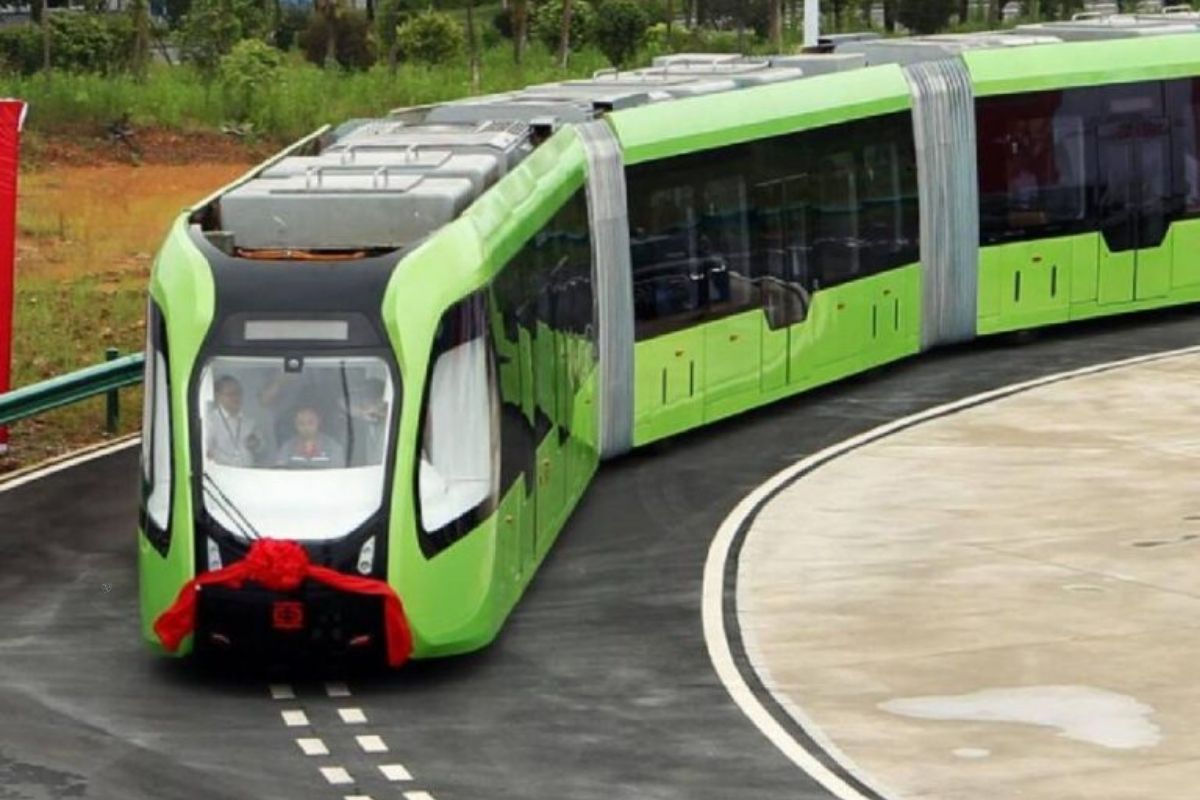


Digital Urban Tram Project Received R$ 6 Million in Tests and Launches in November 2025 with Magnetic Induction Technology and 100% Electric Operation
The state of Paraná announced in September 2025 the arrival of the first urban tram without tracks in South America, known as the Digital Urban Tram (BUD). With operations set to begin in November, the vehicle will connect the municipalities of Pinhais and Piraquara in the metropolitan area of Curitiba, offering an unprecedented alternative to traditional public transport.
The project has already received R$ 6 million in investments just for the testing phase and promises to combine innovation, sustainability, and cost reduction compared to conventional rail systems.
How the New System Works
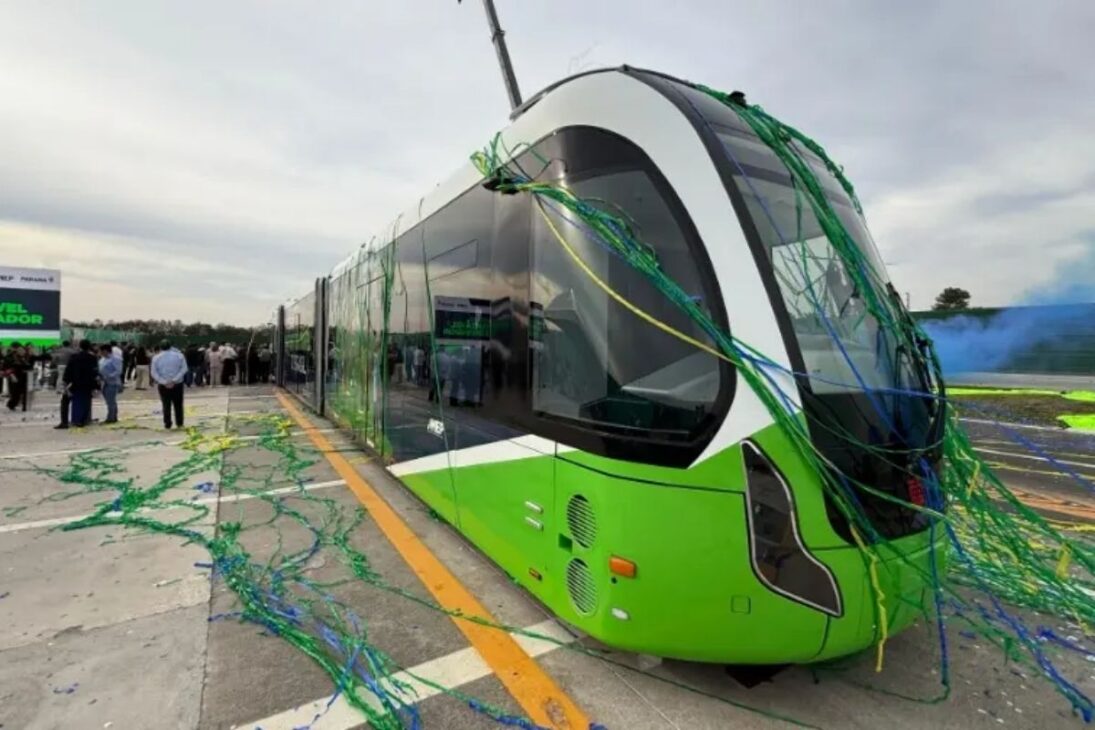
Instead of physical tracks, the BUD uses magnetic induction and sensors installed in the asphalt, which create a virtual track to guide the vehicle accurately.
-
Neither Brazil nor the USA: China produces over 60% of the world’s farmed fish and accounts for about 40% of all global seafood, using industrial-scale aquaculture megafarms to influence the international market and supply billions of people.

-
Archaeologists opened the only Etruscan chamber never looted in 2,600 years and found four individuals lying on stone beds with 110 intact objects around them, and the inscriptions found in the tomb have not yet been deciphered because the Etruscan language is a mystery that science has not yet solved.
-
Health issues urgent alert for flu and calls for the vaccination of the elderly, children, and pregnant women this Saturday with Day D and drive-thru in Curitiba.

-
What seemed like waste has turned into a barrier, and now human hair collected from salons helps retain debris in the water of ancestral channels in Latin America.


This solution eliminates the need for major infrastructure works, reducing implementation costs and allowing for rapid adaptation in urbanized areas.
According to the Government of Paraná, a line of up to 15 km can be constructed in just one year, a much shorter time than traditional VLT works.
Vehicle Capacity and Autonomy
The BUD measures 30 meters long, can carry up to 280 passengers, and reach speeds of up to 70 km/h.
The vehicle is 100% electric, equipped with lithium-ion batteries and an ultra-fast charging system: 30 seconds of charging ensures up to 5 km of travel, while a full charge of 12 minutes allows for autonomy of 40 km.
Another highlighted point is its durability.
While conventional buses have a lifespan of 10 to 12 years, the BUD is designed to operate for up to 30 years, representing long-term savings and a lower environmental impact.
Sustainability and Technological Innovation

Being completely electric, the first urban tram without tracks eliminates pollutant emissions, contributing to the reduction of greenhouse gases in densely populated urban areas.
The project envisions autonomous operation in the future.
Although it initially includes human operators, the BUD already has onboard technology for automated driving, in line with global trends in smart mobility.
According to the project coordinators, the innovation places Paraná at the forefront of sustainable mobility in Brazil.
If successful, the model could be replicated in other capitals and even neighboring countries, becoming a reference for low-cost, high-efficiency public transportation.
Expected Impact on the Population
The Government of Paraná emphasizes that the BUD can transform the urban commuting experience by offering more comfort, safety, and efficiency.
The expectation is that the system will reduce operational costs and encourage other cities to adopt similar solutions, especially in metropolitan areas facing traffic congestion and pollution.
For transportation experts, the project signals a paradigm shift: from a polluting and expensive road model to an electric, flexible, and scalable system.
In this sense, Paraná becomes a laboratory for innovation in urban mobility in Latin America.
Do you believe that the first urban tram without tracks could become the future of public transport in Brazil? Do you think it will replace buses and VLT in big cities? Share your opinion in the comments— we want to hear from those who experience this reality daily.








It is a mode of transportation that fits between buses and Light Rail. Light rail can cost up to $210 million per km to install, with both emissions and disruption for years due to the construction of concrete and steel. DRT can be installed for $5 million or under. DRT has resilience as it can have flexibility to move on different paved ways, so if natural disasters like an earthquake it can move paved ways, where Light Rail needs a total rebuild. Also, the added value of value capture of TOD (transit-oriented development) around transport hubs, so walking to catch the DRT. The DRT system has a central computer control system for future autonomous operation or a smart drive for smart cities. So it’s not a competition between bus, light rail, but another added value mode that uses green technology. DRT comes with hydrogen power in all units, so from electrical use of superconductors at the flick of a switch. CRRC International Limited, which manufactures DRT and ART, has portable hydrogen plants so gas from water. Google search Dr Peter Newman at Curtin University in Perth, he is a leading land transport expert and has a lot of research on trackless trams and regeneration of cities and urban environments.
A vantagem do trilhos é que preserva a pista, o que implica em menores custos de manutenção da via. Aqui na cidade do Rio de Janeiro as pistas do BRT afundaram rapidamente com o uso dos ônibus, o que implica em operações de recapeamento constantes.
Bonde Urbano é de segunda a Sexta-feira?Aqui no Paraná quem trabalha final de semana, precisa pagar UBER.