





 Portuguese
  English
  Spanish
  3 min of reading
  1 comment


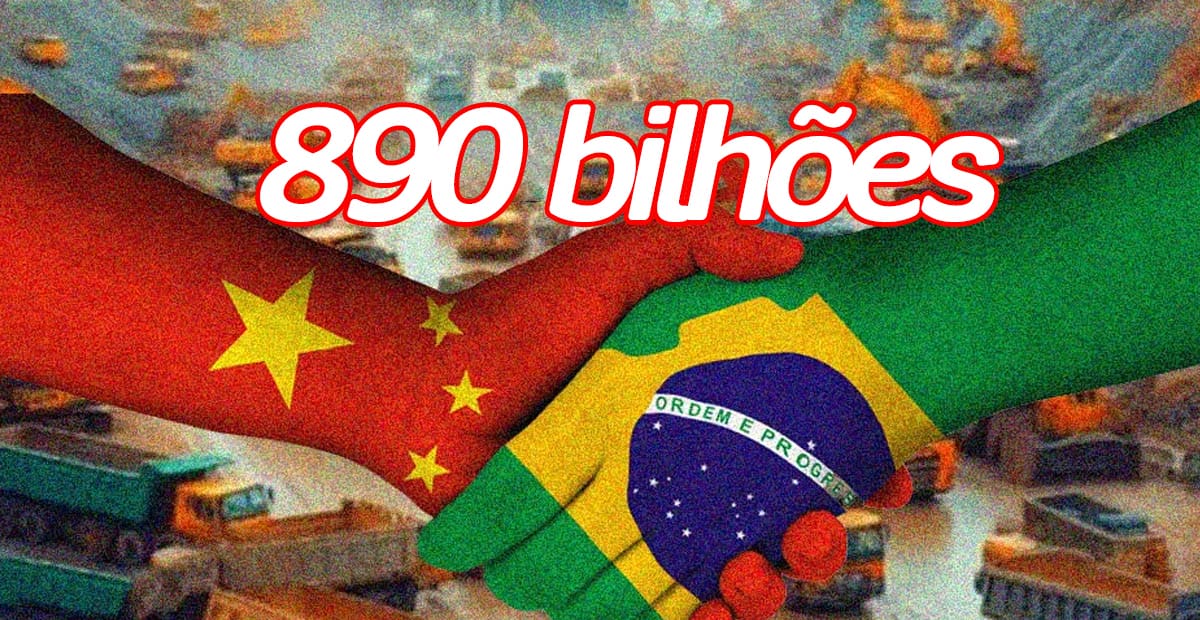

Imagine a scenario where two of the largest economies in the world intensify their trade relations, creating unprecedented opportunities for their industrial and investment sectors. This is exactly what is happening between Brazil and China, and the prospects for 2024 are surprising.
According to the acting president, Geraldo Alckmin (PSB), the trade partnership between Brazil and China grew 7.4% from January to July 2024 compared to the same period in 2023. Alckmin believes that 2024 will mark a new trade record between the two countries.
Participating via videoconference in the closing of the Brazil-China Business Council Seminar, held in São Paulo (SP), Alckmin emphasized the importance of advancing in the areas of trade and investments, with a special focus on the industrial sector.
“We want to neoindustrialize Brazil. There is no economic development without industry, there is no social development without industry. So, we want a neoindustrialization and a densification of production chains,” he stated.
-
Historic bankruptcy of Centauro shocks the market, and the century-old company puts more than 500,000 products, machines, and complete infrastructure up for online auction.
-
Unemployment rises again to 5.8% at the beginning of 2026, raising alarms about the end of temporary positions and its impact on the Brazilian job market.

-
Document organization can cut invisible costs in small businesses, a simple step that prevents waste, rework, and losses in daily operations.

-
Chinese giant worth nearly R$ 4 billion that manufactures cables for electric cars, solar energy, and robotics wants to open a factory in SC.

The Role of Lula in Expanding Bilateral Agreements
Meanwhile, President Luiz Inácio Lula da Silva (PT) is in Santiago, Chile, for a state visit and the signing of several bilateral agreements. Lula plays a crucial role in expanding Brazil’s relations with other nations, reinforcing the country’s strategic position in the global scenario.
Opportunities with the New PAC
Alckmin revealed that Brazilian exports to China in the food, oil, iron ore, and pulp sectors are promising. Additionally, he anticipated that the New Growth Acceleration Program (PAC) will bring many opportunities in the areas of infrastructure, logistics, transport, and energy.
“The tax reform will boost industry and bring more investments and exports because it removes cumulative taxes, thus completely exempting investments and exports,” Alckmin stated.
According to him, a study by the Institute of Applied Economic Research (Ipea) indicates that, in 15 years, the tax reform could increase the Brazilian Gross Domestic Product (GDP) by 12%, investments by 14%, and exports by 17%.
Historic 50-Year Partnership Between Brazil and China
Brazil and China celebrated 50 years of diplomatic relations, with China being Brazil’s largest trading partner for 14 years. In 2023, bilateral trade totaled over R$ 896 billion (US$ 157 billion), with a Brazilian trade surplus of R$ 291 billion (US$ 51.1 billion).
According to Agência Brasil, Alckmin highlighted that this partnership not only strengthens the Brazilian economy but also creates new opportunities for industrial development.
The Brazil-China relationship is an example of how international cooperation can generate mutual benefits and promote sustainable economic growth.
A New Era for the Brazilian Industry
With the tax reform and new investments, the Brazilian industry is about to enter a new era of development. Alckmin reiterated the need to “neoindustrialize” Brazil to ensure robust and sustainable economic growth. The partnership with China is a key step in this direction, providing the necessary resources and market for this transformation.
The relationship between Brazil and China is at a point of continuous growth prospects and new trade records in 2024. The partnership promises significant economic benefits, especially for the Brazilian industrial sector, thanks to tax reforms and new investments.
And you, do you believe that this partnership can be a model for other nations? How can this relationship impact the economic future of Brazil and China? Leave your opinion in the comments!








Vão entregar é tudo para os chineses, vamos logo adotar o mandarim nas escolas, que é melhor. Mas como os políticos brasileiros não sabem administrar o país, talvez até seja melhor entregar para os comunas, no trabalho e segurança pública, eles dão show.